Roofing crew repairing a commercial roof in Louisville, KY

Louisville Commercial Roof Repair Contractor

Fix Open Seams, Loose Flashing, and Clogged Drains Before Water Spreads

As a Louisville commercial roof repair contractor, we trace leaks and repair flat, metal, and industrial roofs on business buildings across Jefferson and Bullitt counties.

  • Leak traced before any patch
  • Matched material on every repair
  • Photos of what we find
  • Commercial and industrial roofs only

Repairs From Your Louisville Commercial Roof Repair Contractor

Your Louisville commercial roof repair contractor handles four kinds of repair work. Each card lists what gets checked on the roof and what gets fixed.

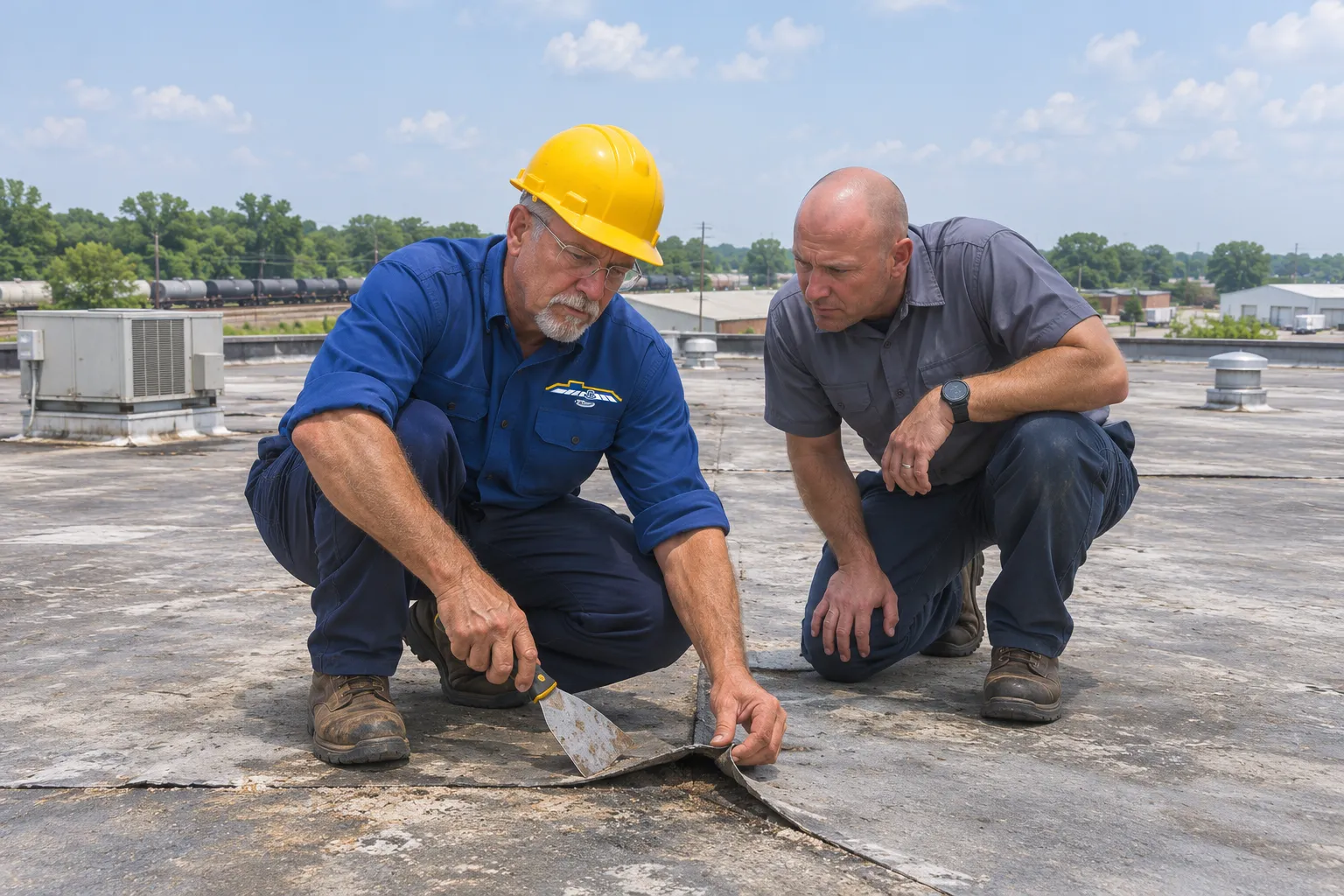
Close view of a worn commercial roof surface in Louisville, KY

Flat Roof Repair

Flat roof leaks start at seams, curb flashing, and drains far more often than out in the open field of a TPO, EPDM, modified bitumen, or built-up roof.

We Check

  • Seam laps along the full run
  • Base flashing at parapet walls
  • Drain bowls and clamping rings

We Fix

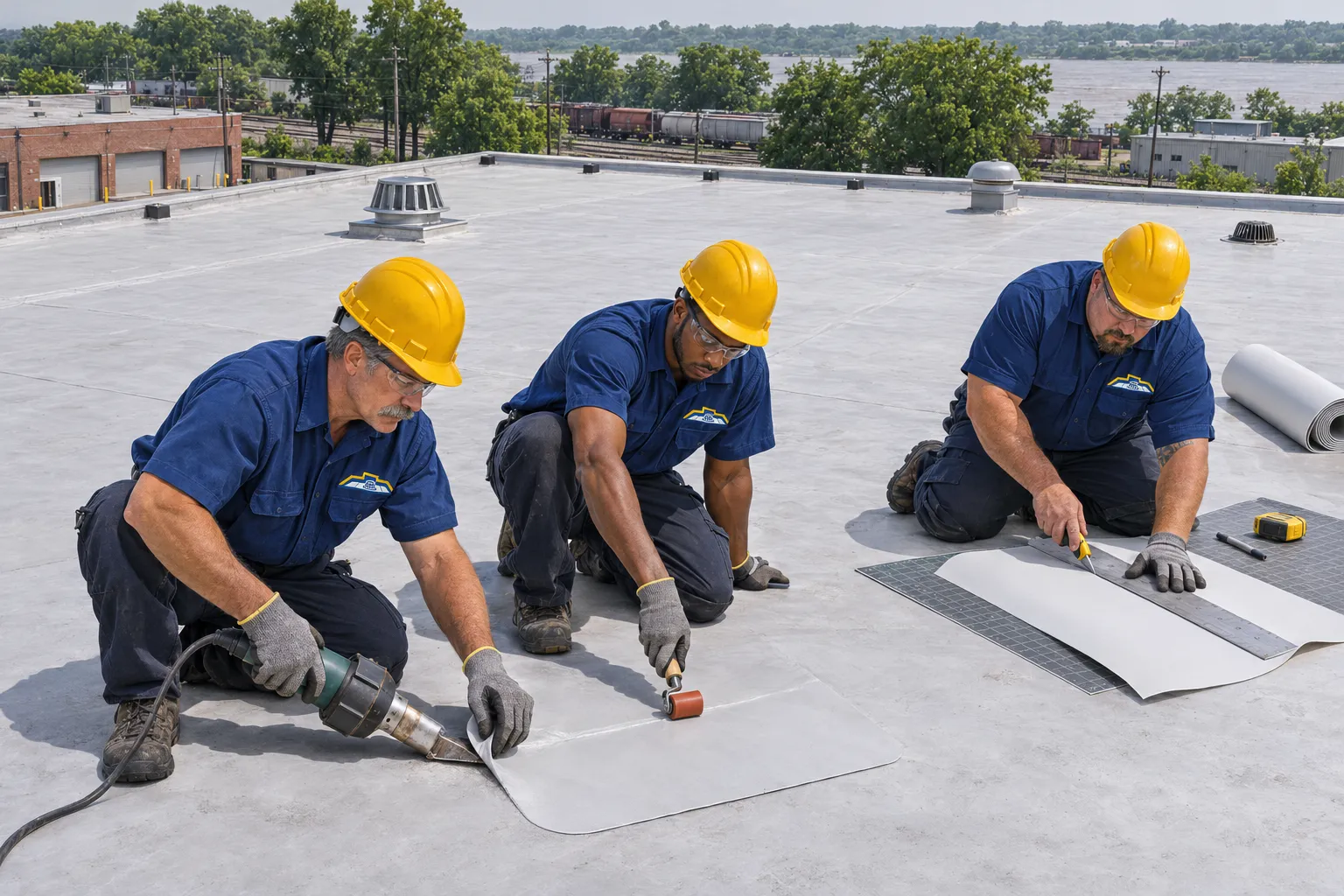
  • Heat-welded or taped seam patches
  • New curb and wall flashing
  • Reset drains and clear strainers
Flat roof repair in Louisville →
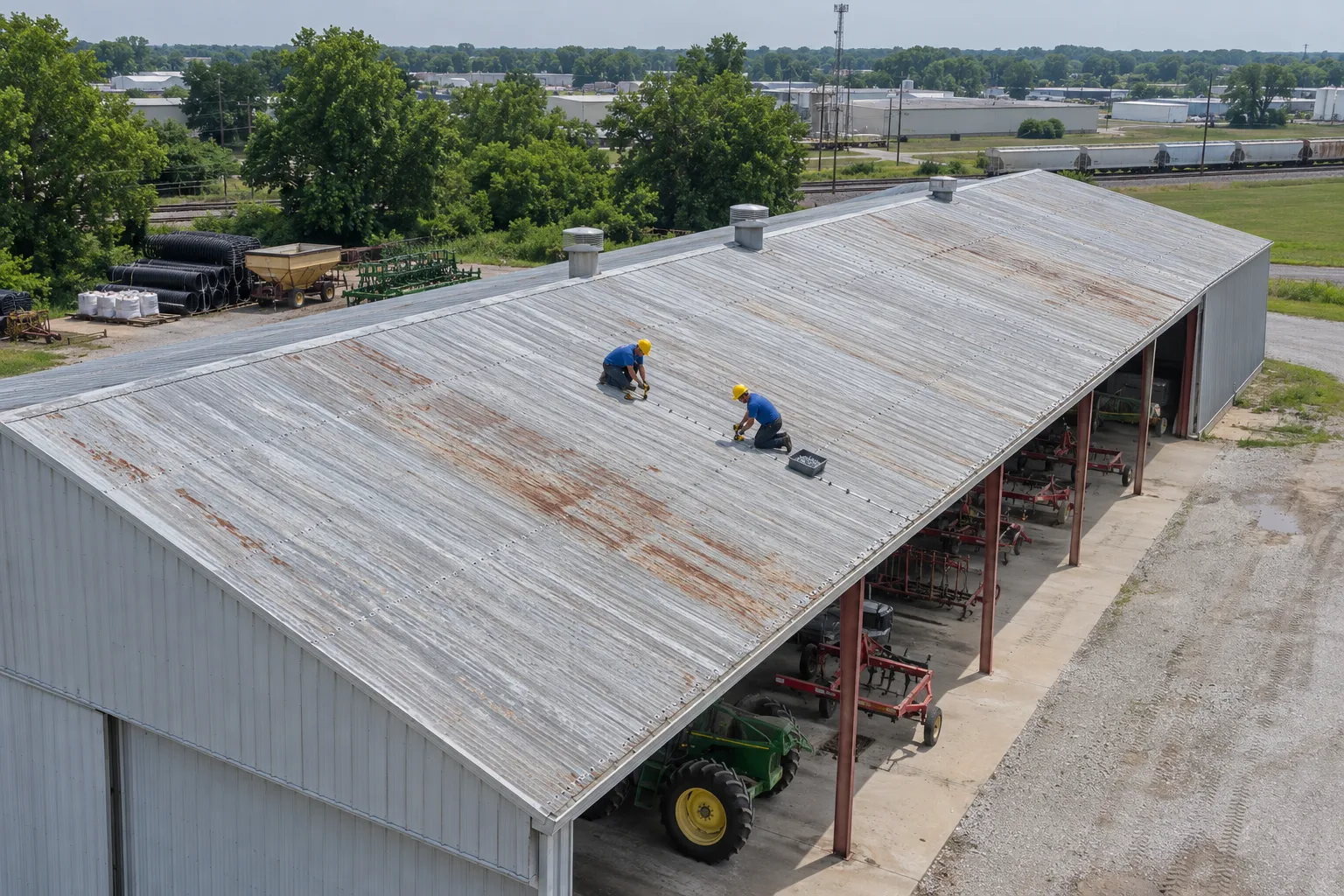
Commercial metal roof seen from above in Louisville, KY

Commercial Metal Roof Repair

Exposed-fastener and standing seam roofs leak where daily panel movement works screws loose, end laps open, and rust settles at gutters and low panel ends.

We Check

  • Fastener rows and rubber washers
  • End laps and side laps
  • Rust at gutters and ridge caps

We Fix

  • Oversized screws with fresh washers
  • Butyl tape and stitch screws at laps
  • Patch plates and new panel sections
Metal roof repair in Louisville →
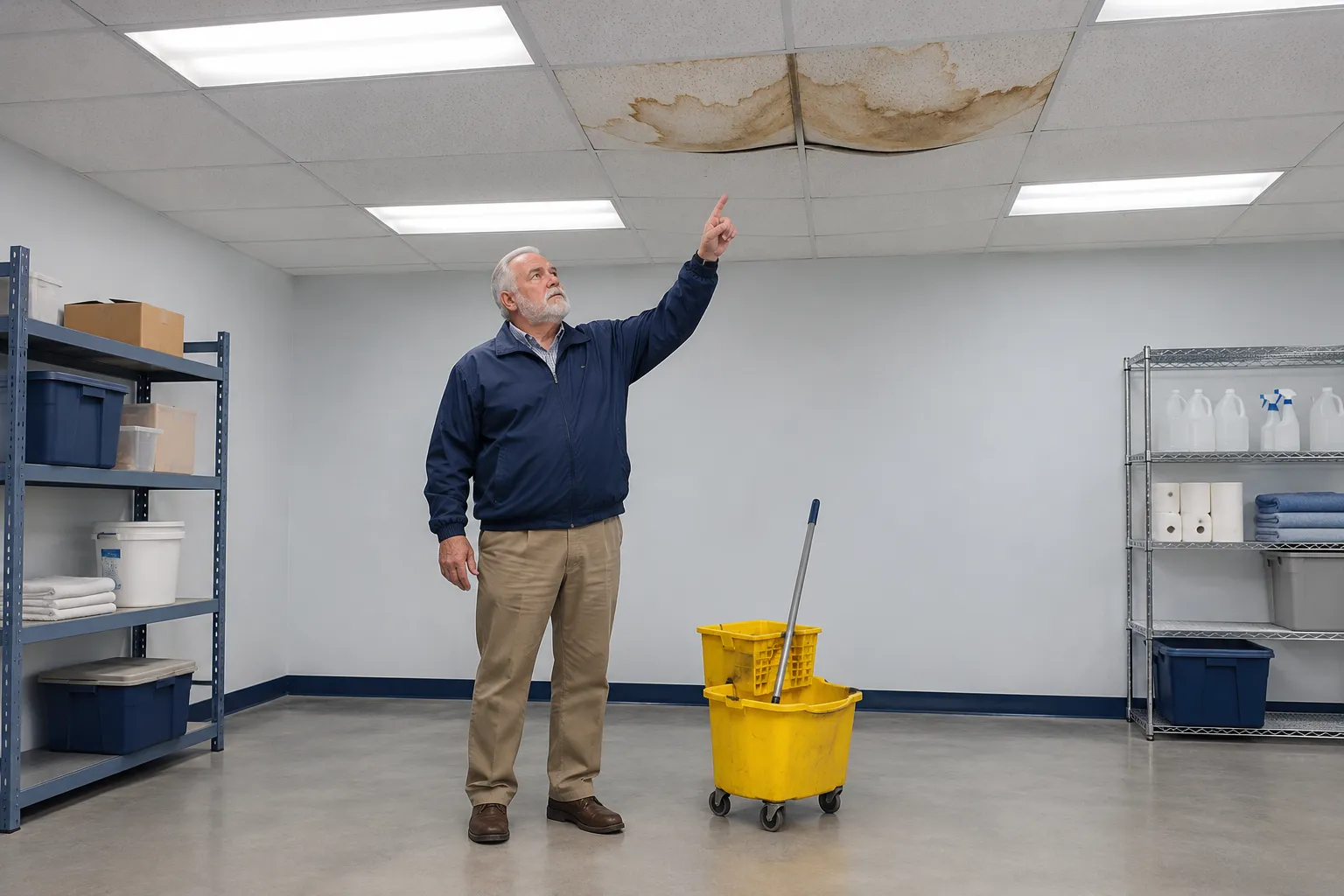
Roof leak showing inside a commercial building in Louisville, KY

Commercial Roof Leak Repair

Ceiling stains rarely sit right under the hole, so leak work starts at the drip inside and follows the water uphill to the seam, curb, or penetration feeding it.

We Check

  • Drip points tied to roof landmarks
  • Wet insulation with a moisture meter
  • Suspect curbs with a water test

We Fix

  • The failed seam, boot, or pitch pan
  • Counterflashing pulled from its reglet
  • Temporary patches, once the roof dries
Roof leak repair in Louisville →
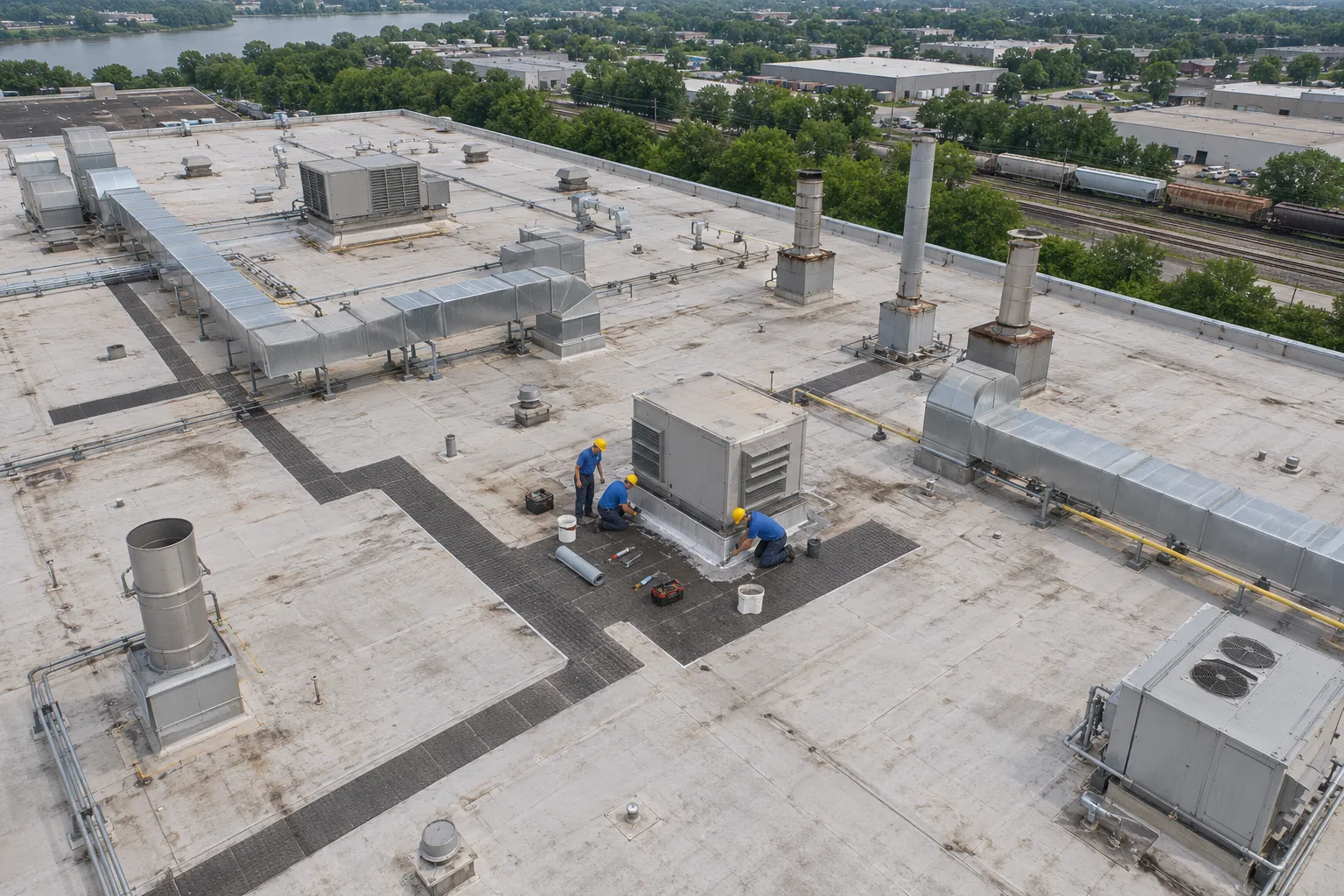
Large industrial roof with rooftop equipment seen from above in Louisville, KY

Industrial Roof Repair

Plant and warehouse roofs get repaired around production, with hot work permits, fall protection at skylights, and every opening sealed before the crew leaves.

We Check

  • Membrane around exhaust fans
  • Walk paths to HVAC units
  • Deck rust visible from inside

We Fix

  • Grease-resistant sheet at discharge points
  • Punctures patched with matching sheet
  • Edge metal, trim, and closures
Industrial roof repair in Louisville →

Commercial Roof Repair Starts Where Louisville Owners Notice Water

Most repair calls begin with something seen from the parking lot, at a desk, or on a roof walk. Here is what each sign points to.

From The Parking Lot

Overflowing Gutters

Water spilling over the front of a gutter in steady rain points to a clogged outlet or an undersized downspout.

Lifted Edge Metal

A bent strip of edge metal at a corner gives wind a handle to peel back the perimeter membrane.

Rust Streaks on Walls

Orange runs below a metal roof line trace back to rusted gutters, failed washers, or corroded panel ends.

Inside The Building

Ceiling Tile Stains

Because water travels along deck flutes and wet insulation, the stain often sits several feet from the opening.

Drips in Wind-Driven Rain

Leaks that show up only with sideways rain come through parapet coping, counterflashing, or ridge closures.

Rust on Deck Flutes

Steel deck rust seen from inside in several bays signals wet insulation spreading under the membrane.

On The Roof

Ponding Rings

Dirt rings left after water dries mark a low area around a drain that sits high or keeps clogging.

Open Seam Laps

Lift a lap with a finger and it has lost adhesion, letting water run under the membrane.

Backed-Out Screws

Screws standing proud of a metal panel have worn washers that leak a little more with each rain.

What Commercial Roof Repair Does for Louisville Buildings

A repair keeps the existing roof in service by fixing the details that let water in. These are the gains owners notice afterward.

Dry Space Under the Roof

Fixing the true entry point stops the drip over inventory, equipment, and offices, so nobody has to move a bucket each time it rains.

Seams

Insulation That Stays Dry

Catching a leak early keeps water out of the insulation boards, which wick it outward and turn a small repair into a section replacement.

Deck

Tight Curbs and Penetrations

Rebuilt curb flashing and a cricket on the uphill side move water around rooftop units, the busiest spots on most commercial roofs.

Curbs

Water Moving to the Drain

Clearing strainers and resetting a drain that sits high shortens the time water stands on the membrane after each Louisville storm.

Drains

Edges Ready for the Next Wind

Refastened edge metal and coping caps leave wind nothing to grab along the perimeter, where peeling damage tends to start.

Edges

Water Coming In Right Now?

Leaking Now

Move stock out from under the drip, set buckets, and note the time and wind direction. Then call us to line up a repair.

Call Us

Planning a Repair

Send the address and a short note about the roof, and we will set up a free inspection and written estimate.

Schedule Free Inspection

Repair, Restore, or Replace Your Roof?

Moisture readings and cores decide which column a roof belongs in, and one building can need repair on one section and replacement on another.

What We FixRepair
Restore
Replace
Roof Condition
Local leaks, a few open seams or loose flashings
Membrane or panels weathered but mostly dry
Wet insulation across wide areas, rusted deck
Typical Work
Patches, new flashing, resealed fasteners
Cleaning, seam reinforcement, fluid-applied coating
Tear-off or recover with a new system
Insulation
Dry outside the damaged spots
Mostly dry across the roof
Wet across large areas
When It Fits
Damage is isolated and the rest of the roof holds
The roof is aging evenly and still sheds water
Leaks keep moving to new spots each month
What We Fix

Repair

Roof Condition
Local leaks, a few open seams or loose flashings
Typical Work
Patches, new flashing, resealed fasteners
Insulation
Dry outside the damaged spots
When It Fits
Damage is isolated and the rest of the roof holds

Restore

Roof Condition
Membrane or panels weathered but mostly dry
Typical Work
Cleaning, seam reinforcement, fluid-applied coating
Insulation
Mostly dry across the roof
When It Fits
The roof is aging evenly and still sheds water

Replace

Roof Condition
Wet insulation across wide areas, rusted deck
Typical Work
Tear-off or recover with a new system
Insulation
Wet across large areas
When It Fits
Leaks keep moving to new spots each month

How a Repair Visit Runs, Start to Finish

Every visit follows the same order, from the first roof walk to the notes you keep for next time.

On The Roof

Step 1: Inspect Your Roof

We walk the roof and the interior leak areas, then check every seam, curb, drain, and fastener row upslope of each stain. Notes on when the drip appears point us to the right side of the building.

Roofer walking a commercial roof to check seams and flashing in Louisville, KY
On The Roof

Step 2: Trace the Entry Point

Moisture meters, an infrared scan at dusk, and water run on one detail at a time separate the real source from spots that only look suspect. Testing one curb or lap at a time keeps the answer clear.

At The Building

Step 3: Set Up Safe Access

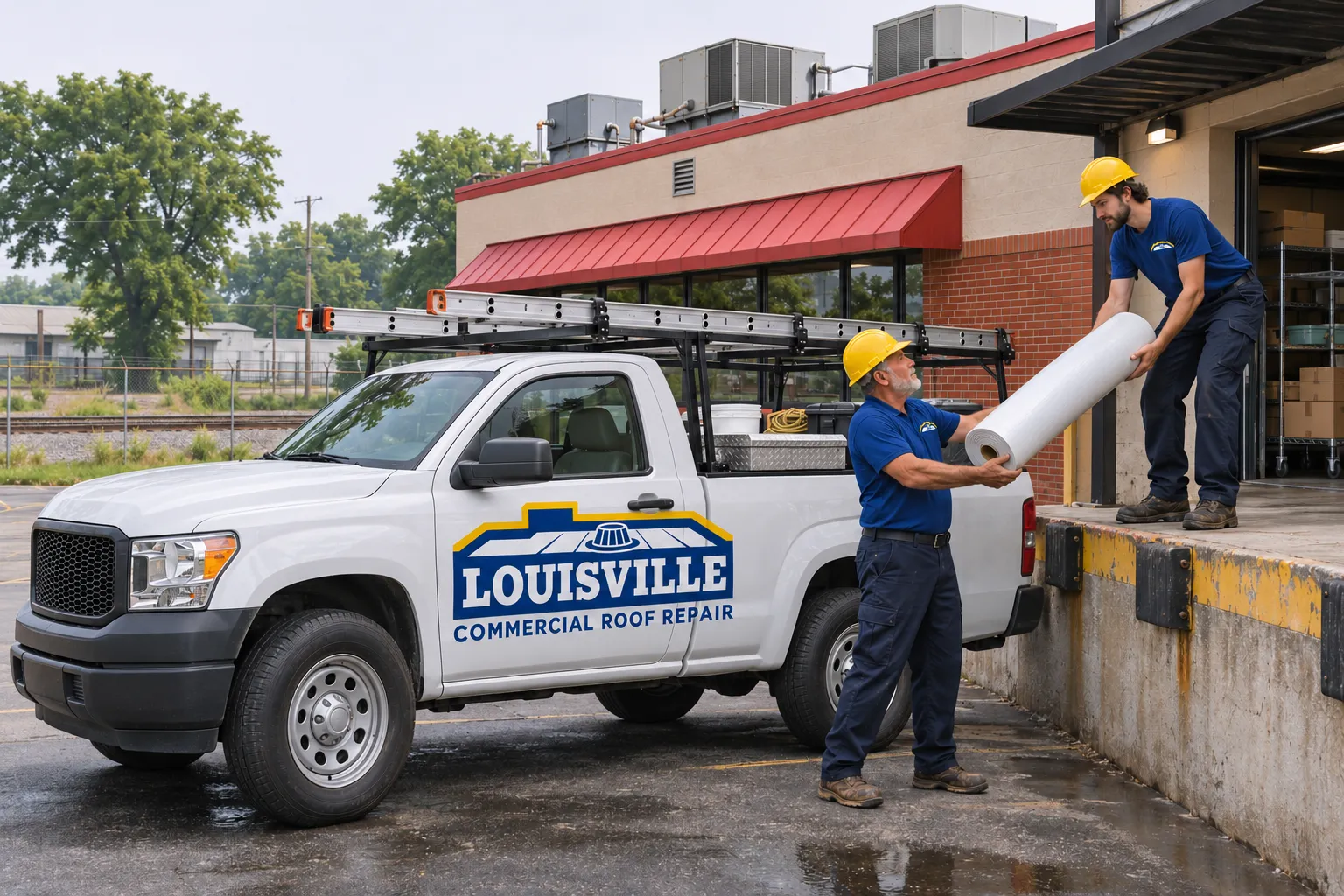
Ladder or hatch access, fall protection near skylights, and a hoist for material get set before any membrane is opened, with walk paths kept clear of tenants and deliveries.

Roofing work truck parked beside a commercial building in Louisville, KY
On The Roof

Step 4: Make the Repair

Damaged material is cut back to solid membrane or metal, cleaned, primed, and covered with a matching patch, flashing, or panel section. Each opening is sealed before the crew leaves for the day.

Paperwork

Step 5: Photograph and Report

You get photos of the repaired seams and flashing, the conditions to watch next, and any section that is heading toward restoration or replacement, ready for your maintenance file.

Nearby Towns We Work In

Is your building near Louisville? We repair commercial roofs in the towns below; for anywhere else, call us or send us a message.

  1. St. Matthews

    Shopping center and office roofs where a curb leak can pull in an HVAC tech, a sheet metal shop, and an electrician.

  2. Shively

    Plant roofs that switch from built-up to metal to single-ply at each addition, each transition a likely leak.

  3. Lyndon

    Storm leaks get a logged temporary patch, and larger section repairs wait on the City Clerk registration.

  4. Okolona

    Commercial buildings along Preston Highway carrying decades of sign brackets, dish mounts, and conduit through the roof.

  5. Watterson Park

    Warehouse roofs with long exposed fastener rows, yellowed skylight panels, and gutters that empty onto truck courts.

  6. Valley Station

    Buildings along Dixie Highway where high winds lift edge metal, shift coping caps, and tear gutter straps loose.

  7. Prospect

    Office and retail roofs approved through the city permit desk, with some parcels on the Oldham County side.

  8. Shepherdsville

    Low sites near the Salt River, where gutters and downspouts need to carry roof water well clear of footings.

  9. Hillview

    Older Bullitt County metal buildings coated in roofing cement that comes off before any new sealant goes on.

Top Commercial Roof Repair Questions From Louisville Owners

Short answers to what owners ask most before a repair visit.

What problems does commercial roof repair fix?

Commercial roof repair fixes the exact places water gets in, such as open seams, punctures, failed flashing, clogged drains, and loose fasteners. On Louisville buildings the common calls are lifted seams, punctures near HVAC units, flashing pulled off parapets, and backed-out screws on metal panels. The aim is a dry building with the existing roof kept in service.

What should I check on the roof after a hailstorm in Louisville?

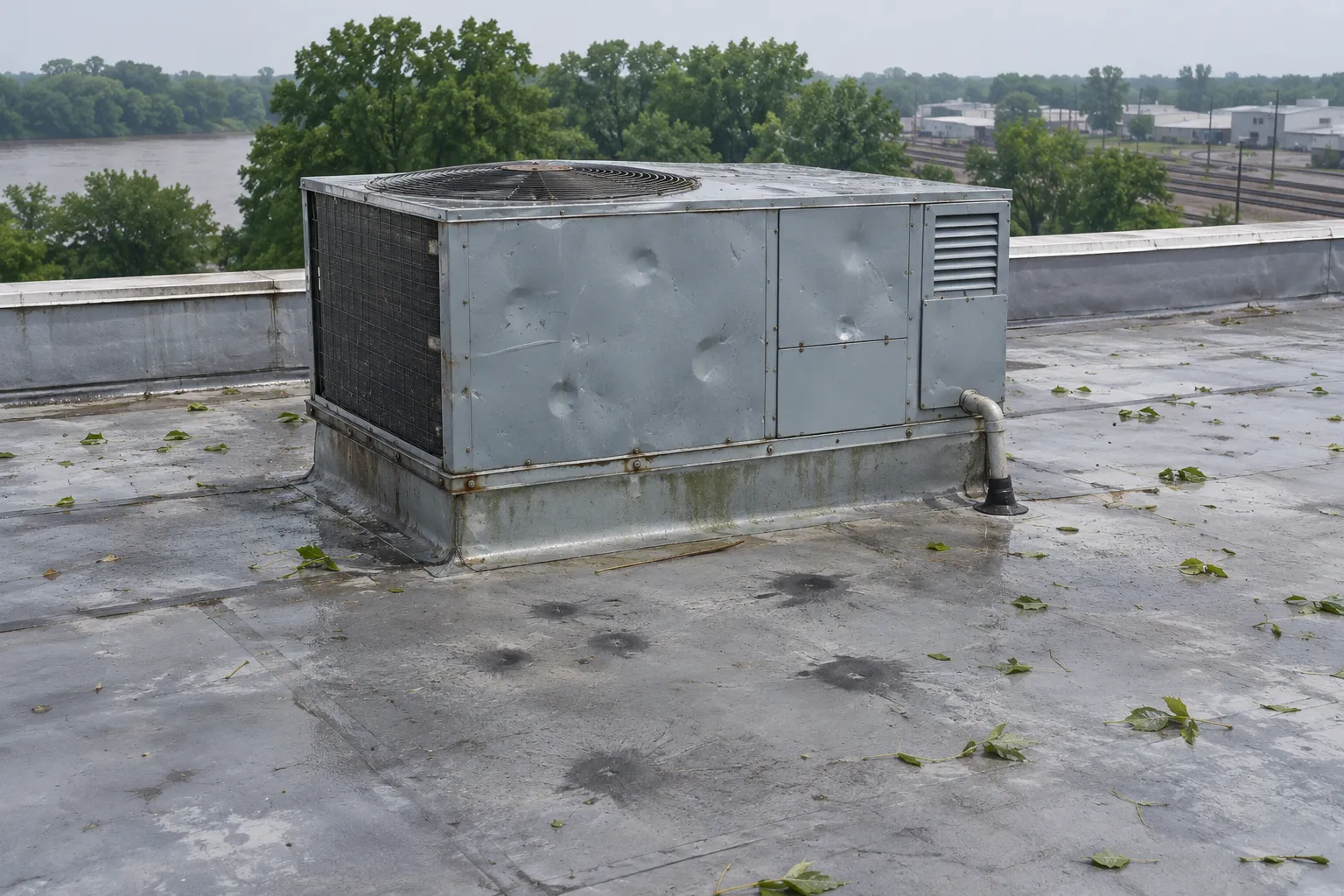
Look for soft, bruised spots on modified bitumen or built-up roofs, dents with cracked paint on metal panels, cracked skylight panels, split vent caps, and granules washed into gutters. Hail damage often stays hidden until the next rain finds it. Take photos soon after the storm, and walk the roof only when it is dry and safe.

What affects the cost of a commercial roof repair in Louisville?

Access, tracing time, and the amount of damaged material drive the price most. A tall building that needs a lift costs more to reach than a one-story shop, and leaks spread across several sections take longer to trace. Wet insulation removal, extra curbs and drains, and after-hours work add to it.

Where do I find storm records for a roof damage claim?

The National Weather Service office in Louisville posts warnings and storm reports for Jefferson County, and adjusters usually ask for the storm date and type. Keep those records with photos of damaged edge metal, coping, or panels, interior photos of new leaks, and notes on hail size or wind. File the repair invoices in the same folder.

Should roof drains or downspouts be moved during a repair?

Repairs leave drains and downspouts discharging where they already do. Moving an outlet changes where stormwater lands on the property, so any move gets cleared first with the Metropolitan Sewer District, which runs sewer and stormwater service across Louisville Metro. Rusted gutter outlets, cracked drain leaders, and debris-choked scuppers get repaired in place.

Can a leak be patched while it is still raining?

Yes, as a temporary fix. Wet-surface mastic, peel-and-stick tape, or a weighted tarp over a damaged section slows the water until the roof dries. Each temporary patch gets logged with its spot and date, and the permanent repair follows in workable weather with material matched to the seam, drain, or flashing.

Talk With a Louisville Commercial Roof Repair Contractor

Tell us where the water shows up and what kind of roof sits above it. We will set up a free inspection and a written estimate.

Call Us (502) 300-9606