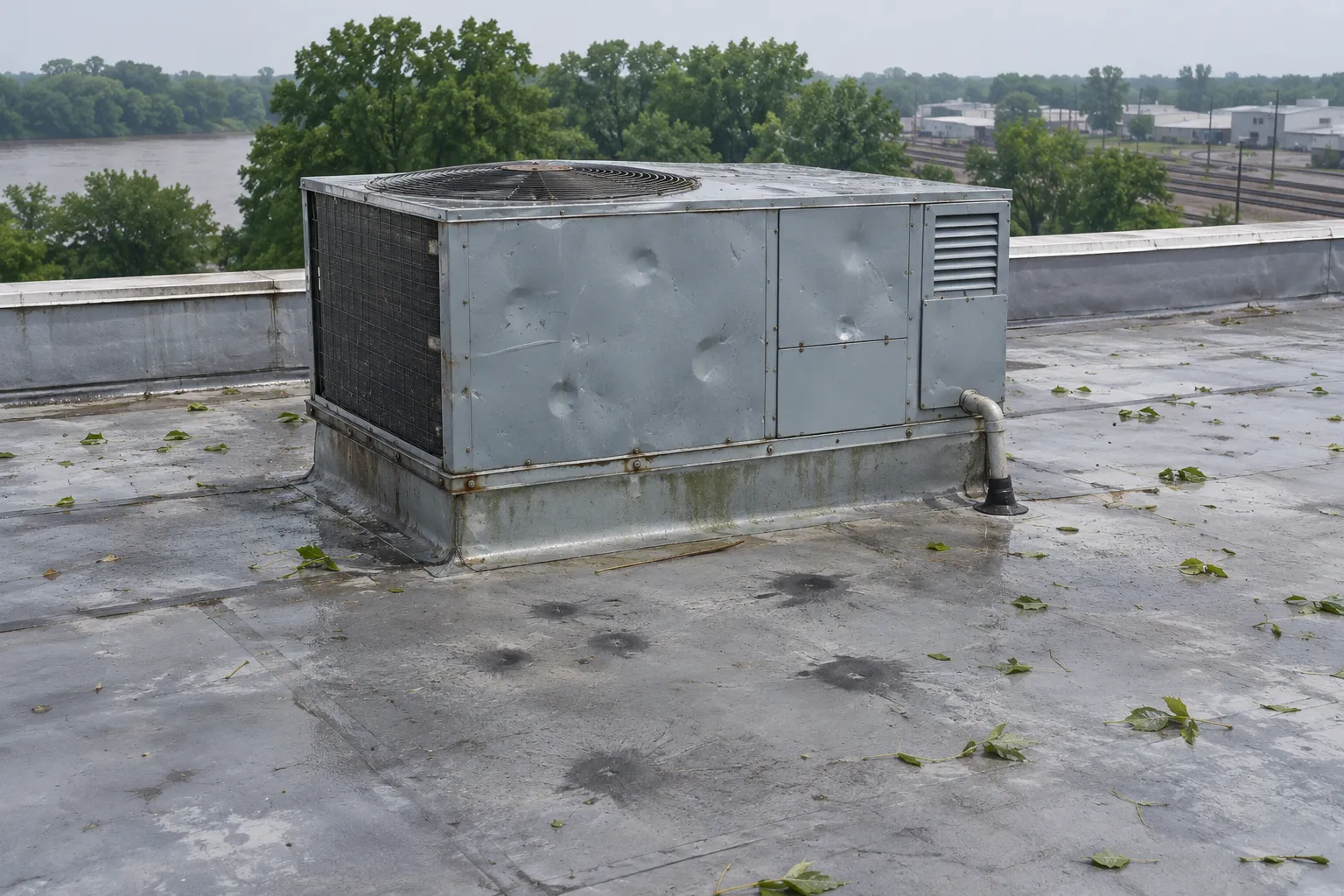
Close view of a worn commercial roof surface in Louisville, KY

Louisville Flat Roof Repair Contractor

Find Out Whether Your Flat Roof Can Be Repaired Instead of Replaced

As a Louisville flat roof repair contractor, we fix split seams, loose flashing, blisters, and ponding on TPO, EPDM, modified bitumen, and built-up roofs.

  • Seams probed along the full run
  • Drains checked before any patch
  • Patches matched to the membrane
  • Temporary patches logged by date

Is This Flat Roof a Fit for Repair?

A Louisville flat roof repair contractor sorts each flat roof section into one of three paths, and moisture readings under the membrane decide which path fits.

What We FixRepair
Restore
Replace
What You See
A few split seams, loose base flashing, a clogged drain
Membrane weathered evenly, seams mostly holding
Blisters and wet spots across wide areas
Insulation Below
Dry outside the damaged spots
Mostly dry across the roof
Wet across large sections
Typical Work
Seam patches, new flashing, reset drains
Cleaning, seam reinforcement, fluid-applied coating
Tear-off or recover with a new membrane
Where It Stops
Leaks stay in a few known places
Field membrane still sheds water
Repairs keep chasing new leaks

What We Fix

Repair

What You See
A few split seams, loose base flashing, a clogged drain
Insulation Below
Dry outside the damaged spots
Typical Work
Seam patches, new flashing, reset drains
Where It Stops
Leaks stay in a few known places

Restore

What You See
Membrane weathered evenly, seams mostly holding
Insulation Below
Mostly dry across the roof
Typical Work
Cleaning, seam reinforcement, fluid-applied coating
Where It Stops
Field membrane still sheds water

Replace

What You See
Blisters and wet spots across wide areas
Insulation Below
Wet across large sections
Typical Work
Tear-off or recover with a new membrane
Where It Stops
Repairs keep chasing new leaks

Flat Roof Repair Warning Signs on Louisville Buildings

Flat roof trouble shows up in three places. Each sign below names the roof detail it traces back to.

From The Parking Lot

Water Over the Parapet

Water spilling over a parapet wall in heavy rain means a scupper or drain is choked and backing up.

Loose Coping Joints

Open joints in the coping cap let wind-driven rain run down behind the base flashing.

Inside The Building

Stains Near Rooftop Units

Ceiling stains below an HVAC unit or exhaust fan point to curb flashing or a puncture on the service path.

Drips After Long Rain

A leak that appears only after hours of steady rain points to a seam lap slowly soaking through.

On The Roof

Ponding Near a Drain

Dirt rings around a drain show water sitting where it should flow, often because the drain sits high.

Lifted Seam Edges

An edge you can lift at a TPO or EPDM lap has lost its weld or adhesion.

Blisters in Built-Up Plies

Raised bubbles on built-up or modified bitumen roofs come from moisture or air trapped between plies.

Flat Roof Repair Options for Louisville

Each repair matches the membrane already on the roof, so the patch and the field around it age together.

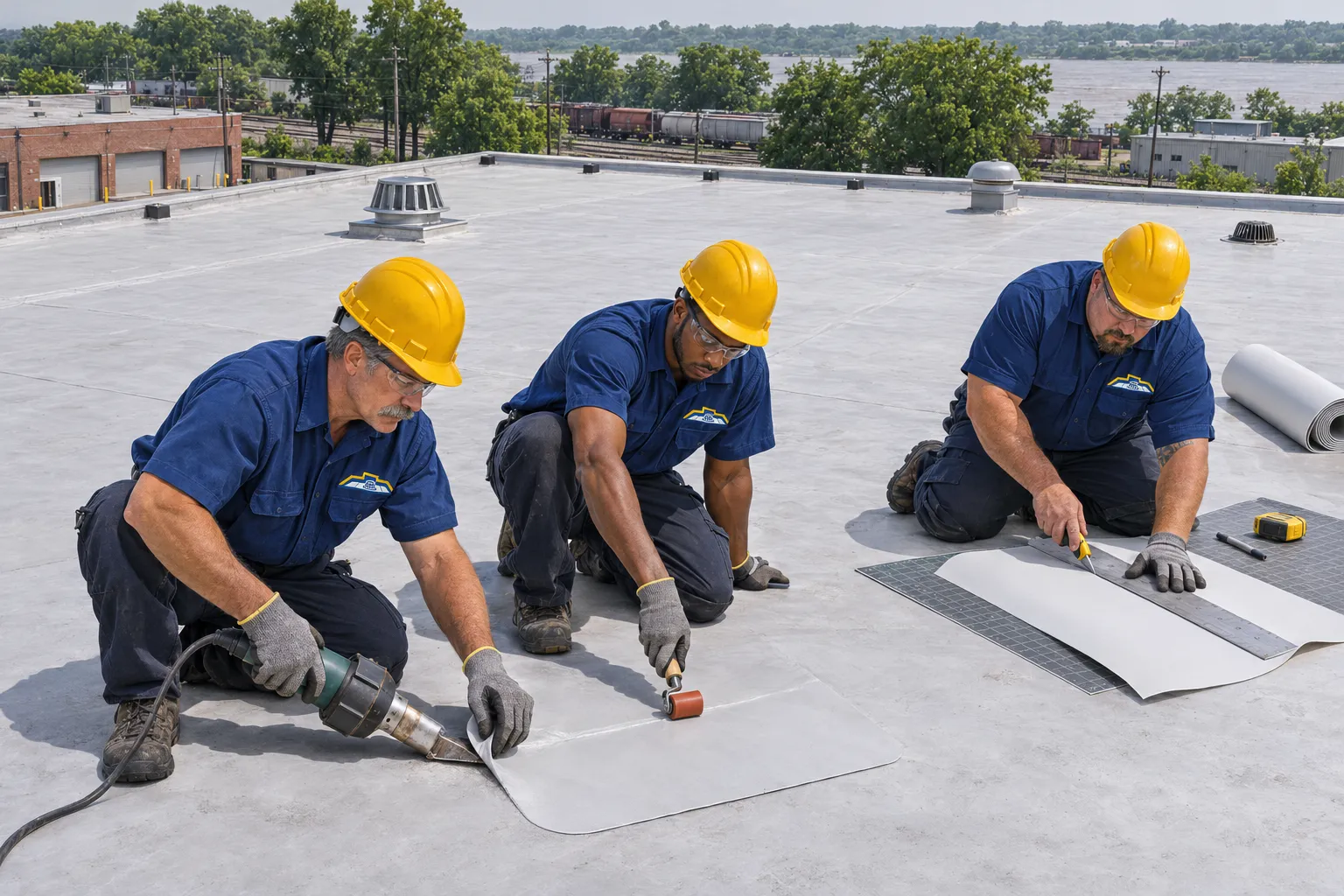
Roofing crew repairing a commercial roof in Louisville, KY
TPO And EPDM

TPO and EPDM Split Seam Repair

TPO patches are hot-air welded after the aged surface is scrubbed with membrane cleaner. EPDM patches go down with primer and seam tape, then lap sealant at the edges. Long seam failures get one continuous cover strip.

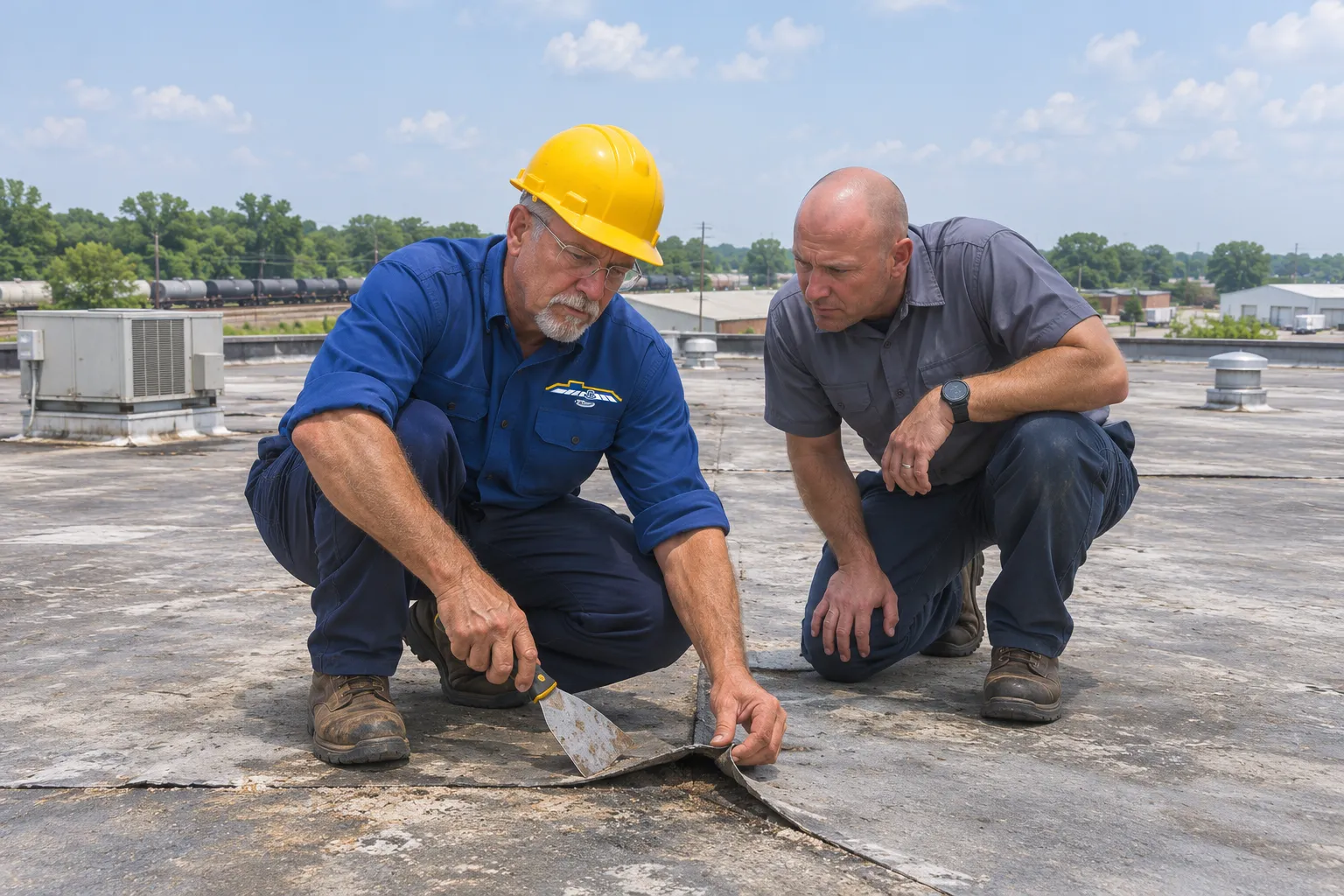
Roofer walking a commercial roof to check seams and flashing in Louisville, KY
Built-Up And Mod Bit

Flat Roof Blister Repair

Broken, soft, or traffic-path blisters get an X cut, the plies folded back, the insulation checked, and the plies reset with adhesive under a patch that overlaps solid membrane. Small intact blisters get marked and watched.

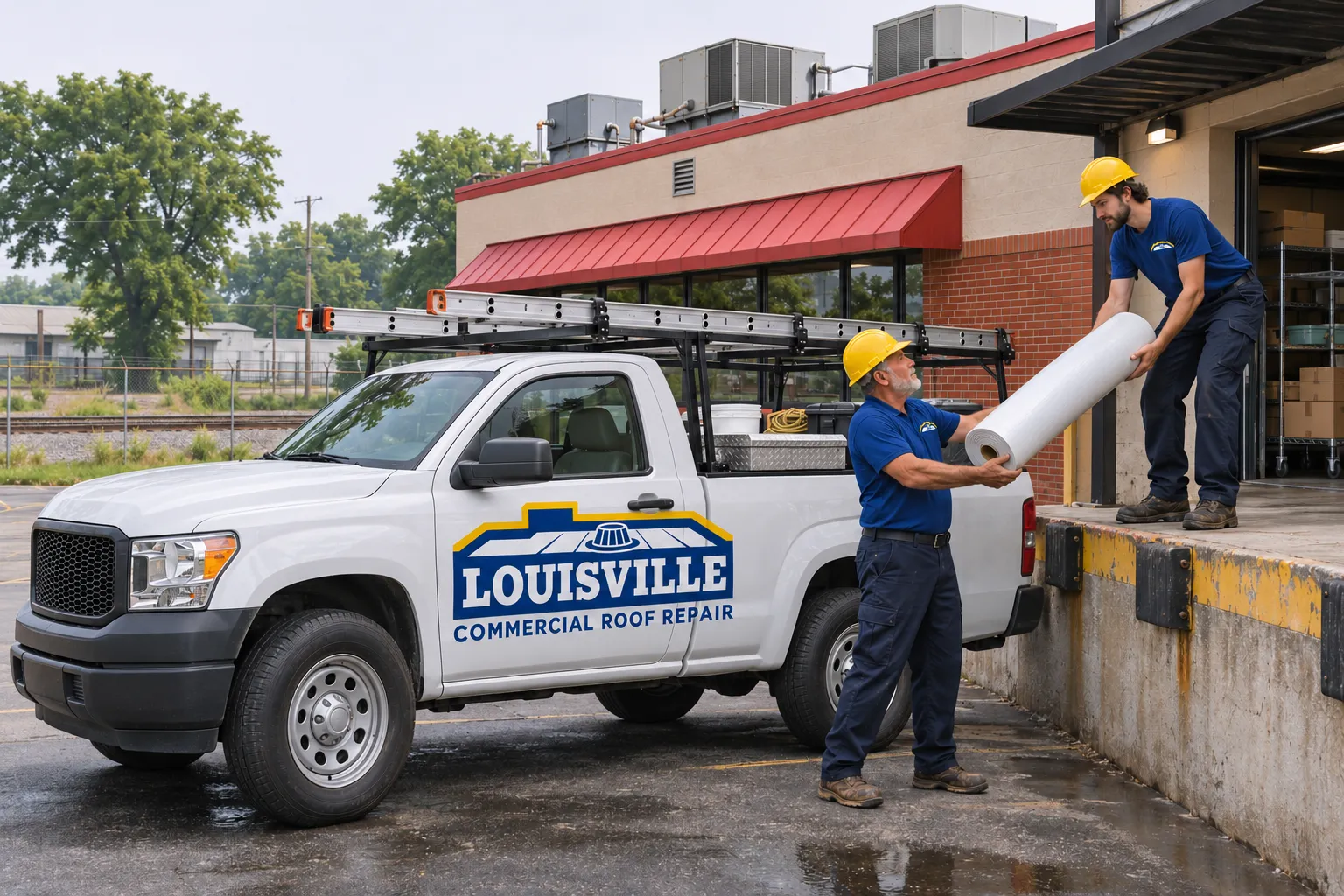
Roofing work truck parked beside a commercial building in Louisville, KY
Cold Or Wet Weather

Temporary Storm Patches

Wet-surface mastic, a peel-and-stick patch, or a tarp weighted at the edges slows water when a permanent repair has to wait. Each patch is logged, then replaced with matched material in dry, workable weather.

Benefits of Repairing Your Flat Roof

Repair keeps a flat roof working when the damage sits at seams, flashings, and drains rather than across the whole field.

Seams Closed With Matching Material

Matched welds and taped patches close split laps with material that moves and ages like the membrane around them, so the repair holds through the seasons.

Seams

Shorter Ponding After Rain

Clearing strainers, lowering a high drain, or adding a cricket moves water off the membrane instead of leaving it to soak one low spot.

Drains

Tighter Parapet Walls

Rebuilt base flashing at parapets and curbs shuts the vertical joints where most flat roof leaks begin on commercial buildings.

Parapets

Insulation Kept Dry

Stopping water at the lap keeps the insulation boards below from soaking, which protects the deck and keeps each repair area small.

Deck

Flat Roof Holding Water Today?

Leaking Now

Clear the strainer if you can reach the drain safely, move stock away from the drip, and call us to set up a flat roof repair.

Call Us

Planning a Flat Roof Repair

Send the address and the membrane type if you know it, such as TPO, EPDM, or built-up. We will schedule a free inspection.

Schedule Free Inspection

Flat Roof Repair Steps for Louisville Roofs

Each flat roof repair follows the same sequence, from probing seams to logging what was fixed.

On The Roof

Step 1: Inspect Your Roof

We walk the membrane field, probe seam laps beside the leak, and check base flashing, curb flashing, and every drain clamping ring upslope of the stain inside the building.

On The Roof

Step 2: Check the Insulation

Moisture readings and small cores show whether insulation under a seam or blister is wet. Wet boards get cut out and replaced before any new membrane goes over them.

On The Roof

Step 3: Fix the Drain Path

Strainers get cleared, high drains reset, and crickets placed so water moves to the outlet. Measuring water depth after a rain helps size the fix for a stubborn pond.

On The Roof

Step 4: Patch With Matched Membrane

Damaged membrane is cleaned back to fresh material, primed or scrubbed, and covered with a TPO weld, an EPDM tape patch, or a reinforced ply that overlaps solid roof.

Paperwork

Step 5: Log the Repairs

Photos and a marked roof plan show each patched seam and flashing, so the next visit finds temporary patches and watch areas quickly and the follow-up work goes faster.

Other Repairs Louisville Building Owners Ask For

Many buildings carry more than one roof system, so a flat roof job often turns up work on another.

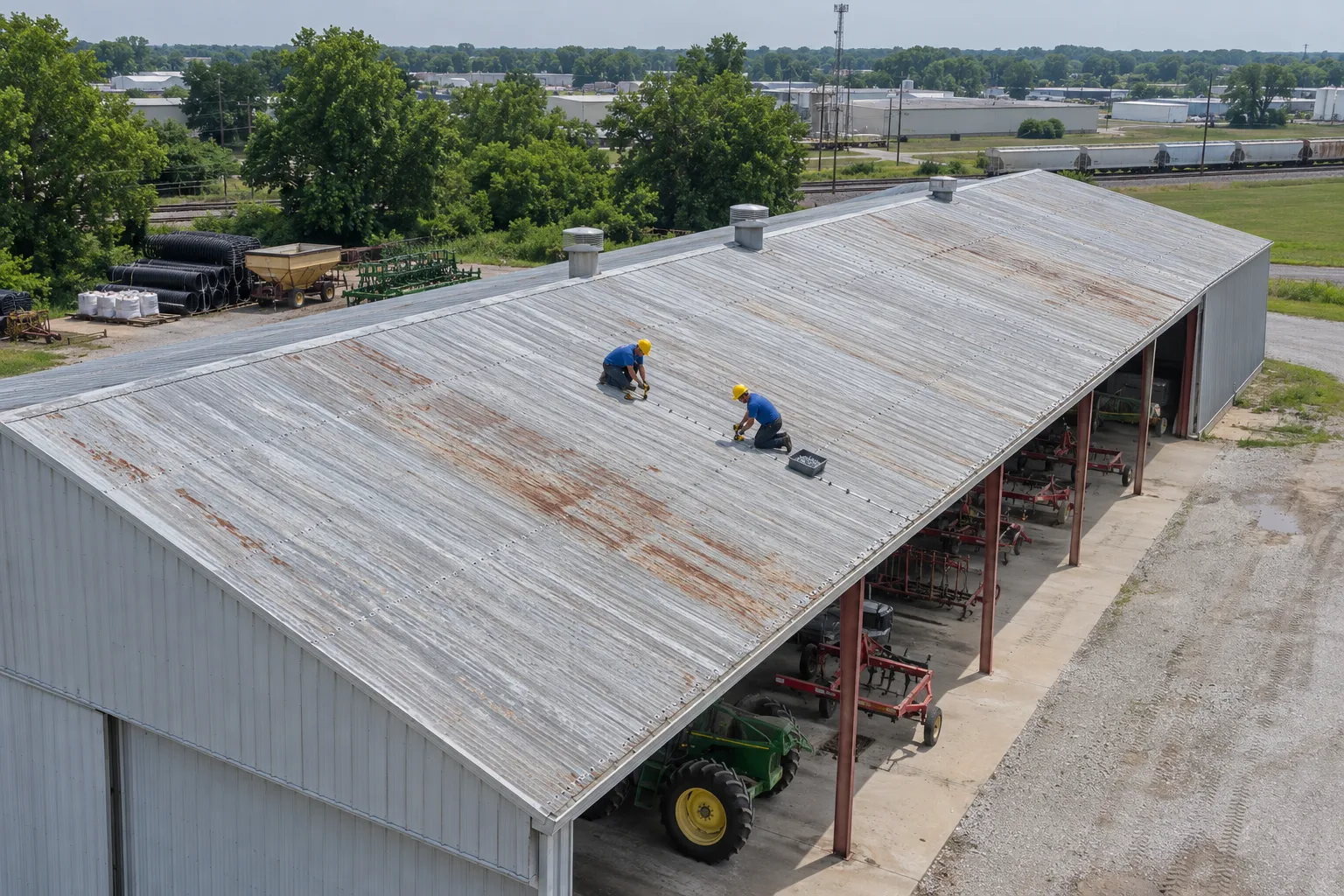
Commercial metal roof seen from above in Louisville, KY

Commercial Metal Roof Repair

Backed-out screws, open end laps, and rust at gutters on exposed-fastener and standing seam panels get matched repairs.

Metal roof repair →
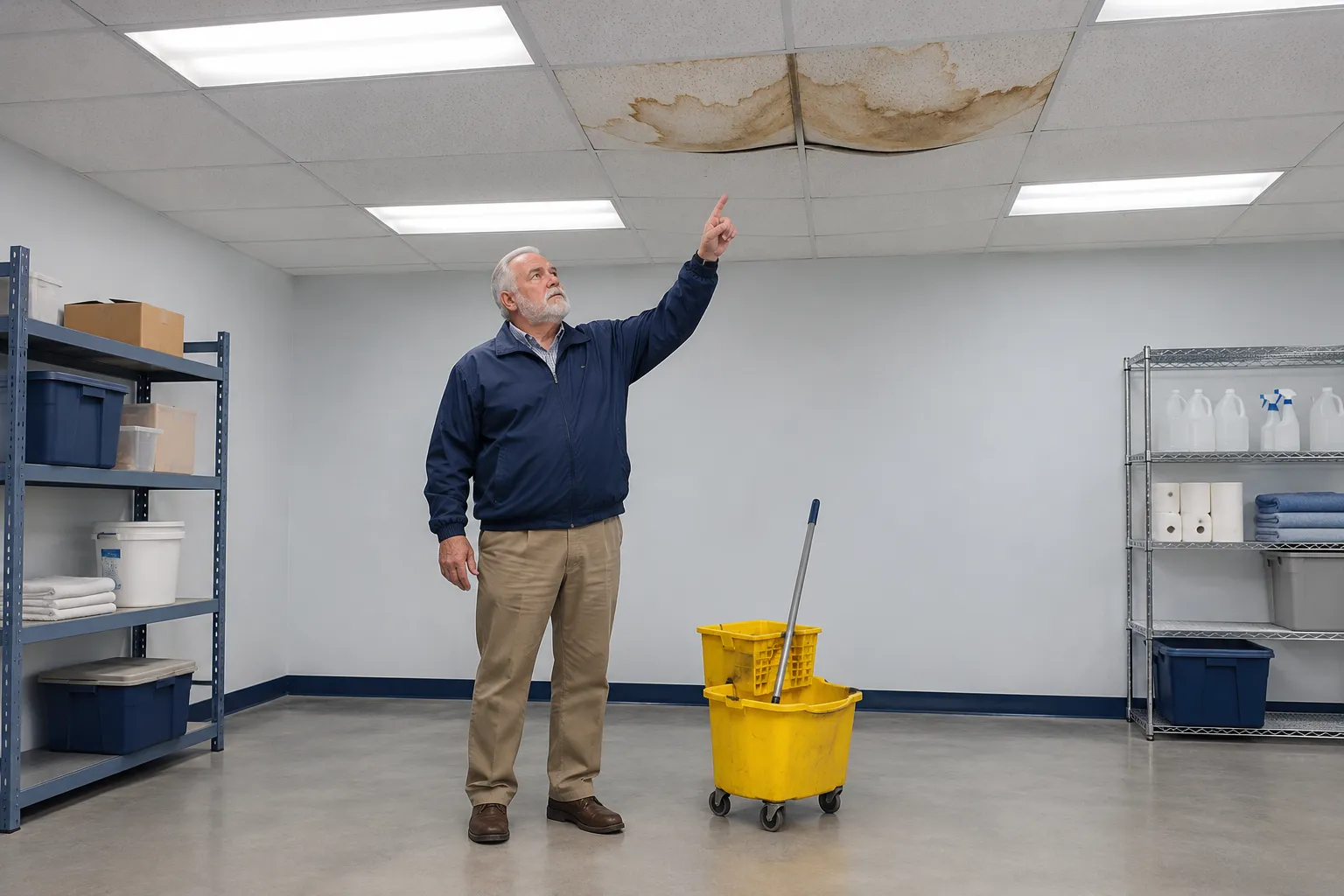
Roof leak showing inside a commercial building in Louisville, KY

Commercial Roof Leak Repair

Leak tracing runs from the ceiling stain uphill to the seam, curb, or pitch pan that lets water in.

Leak repair →
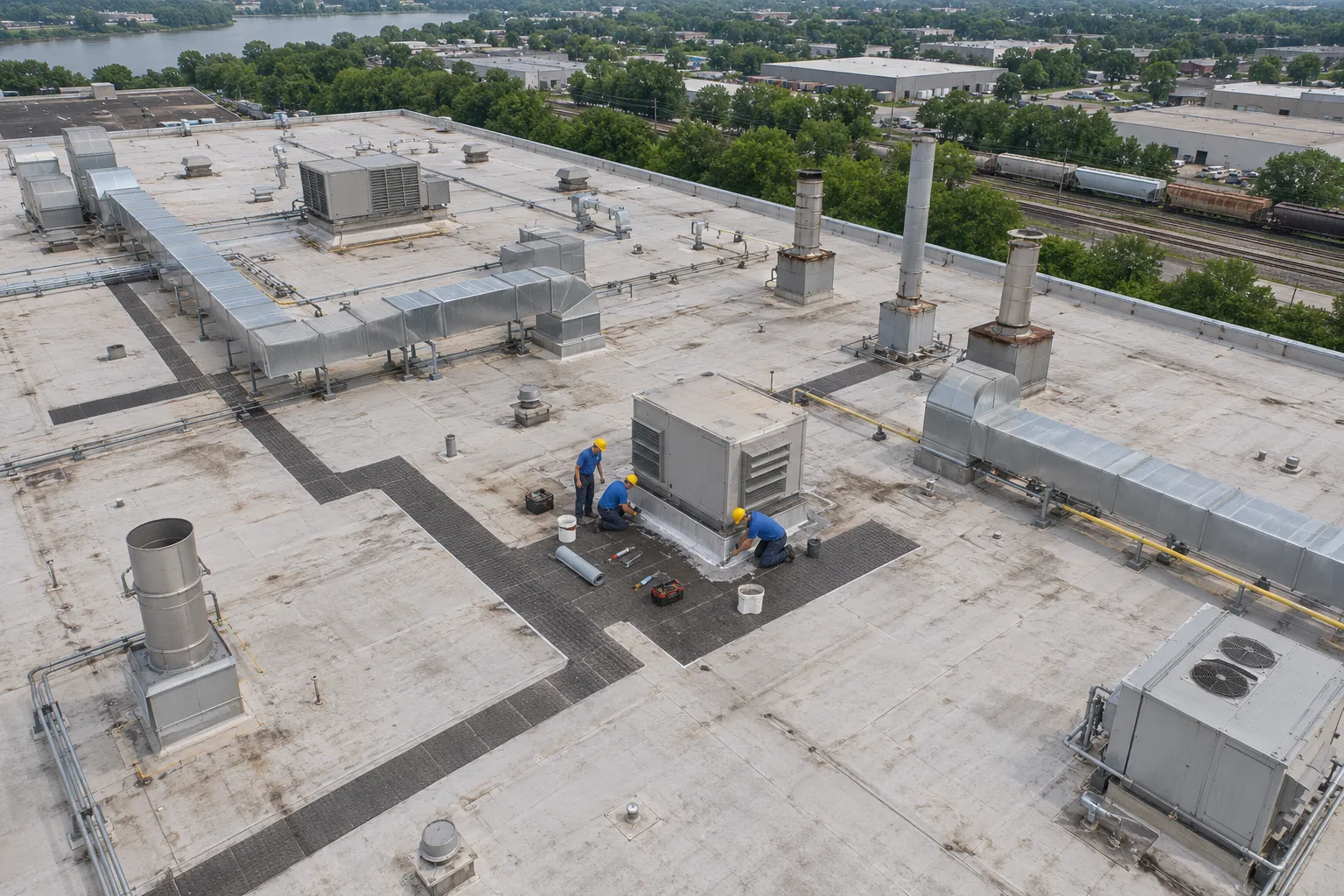
Large industrial roof with rooftop equipment seen from above in Louisville, KY

Industrial Roof Repair

Plant roofs are repaired around production, with exhaust fan damage and foot-traffic punctures handled in sections.

Industrial roof repair →

Flat Roof Questions for a Louisville Flat Roof Repair Contractor

Plain answers on the flat roof problems owners call about most.

What causes most flat roof leaks on Louisville commercial buildings?

Seams, flashings, and drains, where the membrane changes direction or meets another material. Open field areas leak far less often. On Louisville flat roofs the usual sources are opened seam laps, base flashing peeling off parapet walls, curb flashing at HVAC units and exhaust fans, loosened drain clamping rings, and punctures along service paths.

How do you repair a split seam on a TPO or EPDM roof?

The area is cleaned back to fresh membrane and covered with a matching patch that extends well past the damage. TPO patches are hot-air welded after the aged surface is scrubbed with membrane cleaner. EPDM patches use primer and seam tape, with lap sealant along the edges.

Should blisters on a flat roof be cut open?

Broken, soft, or traffic-path blisters get cut open and repaired, while small intact ones are often marked and watched. Most appear on built-up and modified bitumen roofs, where trapped moisture or air lifts the plies.

How is ponding water on a flat roof fixed in Louisville?

By improving the path to the drain, since patching the membrane under a pond leaves the low spot in place. Fixes run from clearing strainers and leader pipes to lowering a drain that sits high, adding a cricket around a curb, cutting a new scupper, or installing tapered insulation under a new section.

Can a flat roof be repaired in cold or wet weather?

Temporary repairs can go on, while permanent membrane repairs wait for a dry surface and temperatures inside each product's limits, since primers, adhesives, and seam tapes all have minimum application temperatures. Meanwhile, wet-surface mastic over a split seam, a peel-and-stick patch on a toweled-dry area, or a weighted tarp slows the water.

Hire a Louisville Flat Roof Repair Contractor

Tell us which section of the flat roof leaks and what membrane it carries. We will set up a free inspection and a written estimate for the repair.

Call Us (502) 300-9606