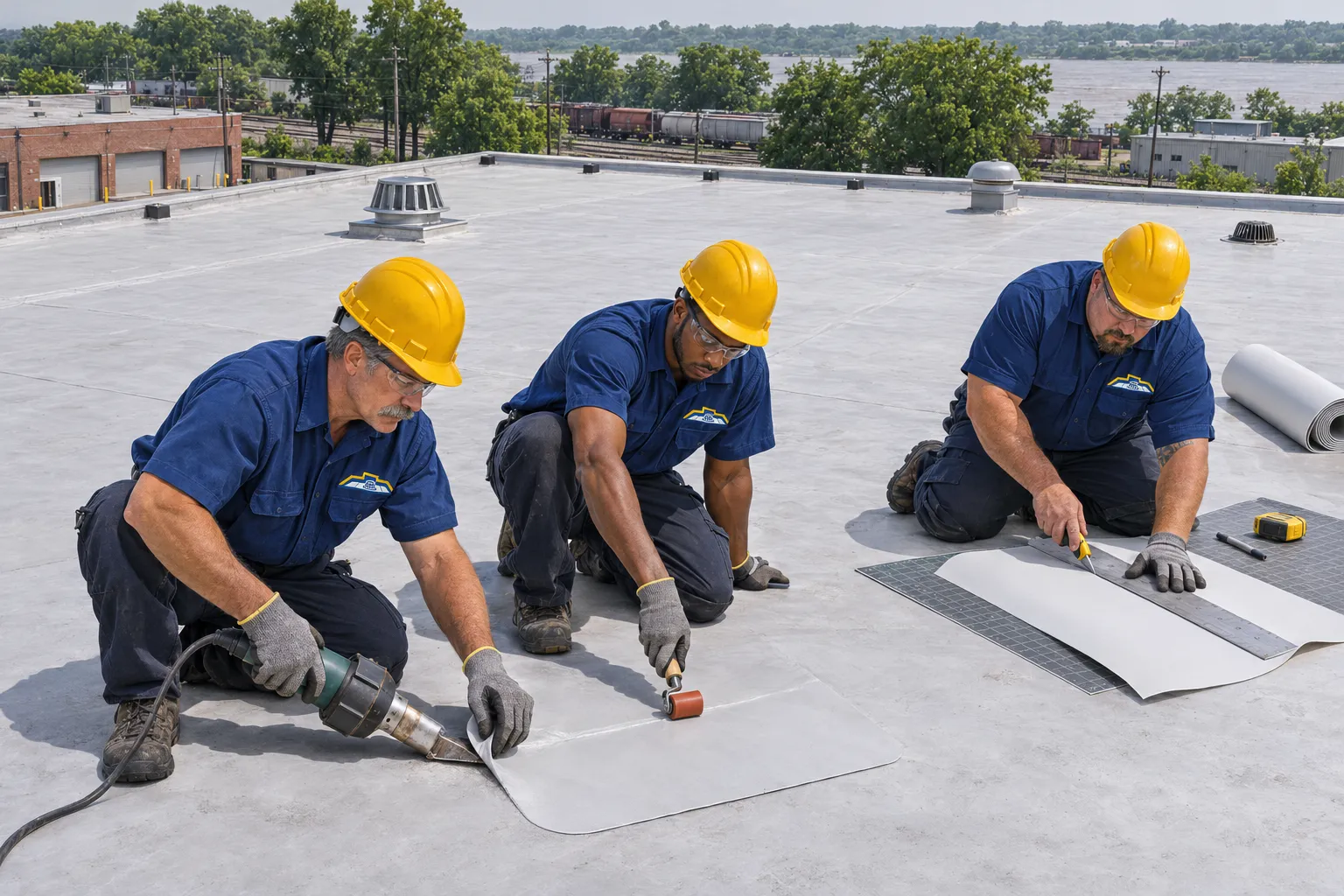
Fastener Rows
Fastener and Washer Repair
Roofing cement removal and fastener repair in Hillview means scraping each screw head clean, then replacing backed-out screws with oversized fasteners and fresh washers.

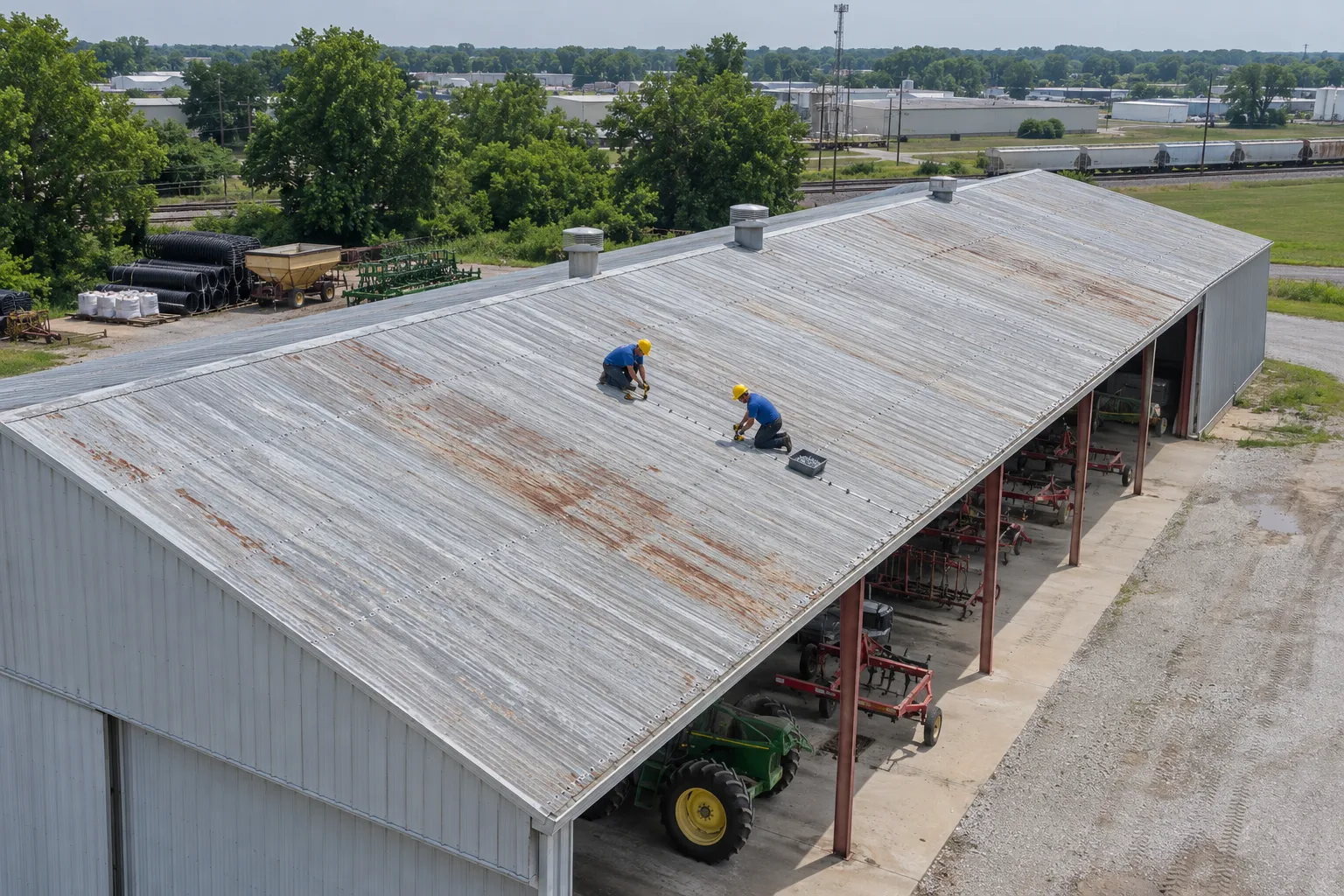
As a Hillview commercial roof repair contractor, we strip old patches off older metal buildings and reseal fasteners, laps, and panels so the new work bonds.
A Hillview commercial roof repair contractor spends the first part of most jobs taking off earlier fixes. Roofing cement globbed on fasteners, replacement panels with the wrong rib profile, and dried caulk at laps all come off, because new sealant bonds only to clean metal.
Permits for this northern Bullitt County city start at Hillview city hall, with the Bullitt County building inspector after it. Neighboring Louisville Metro follows its own process, so we confirm the address falls inside city limits.
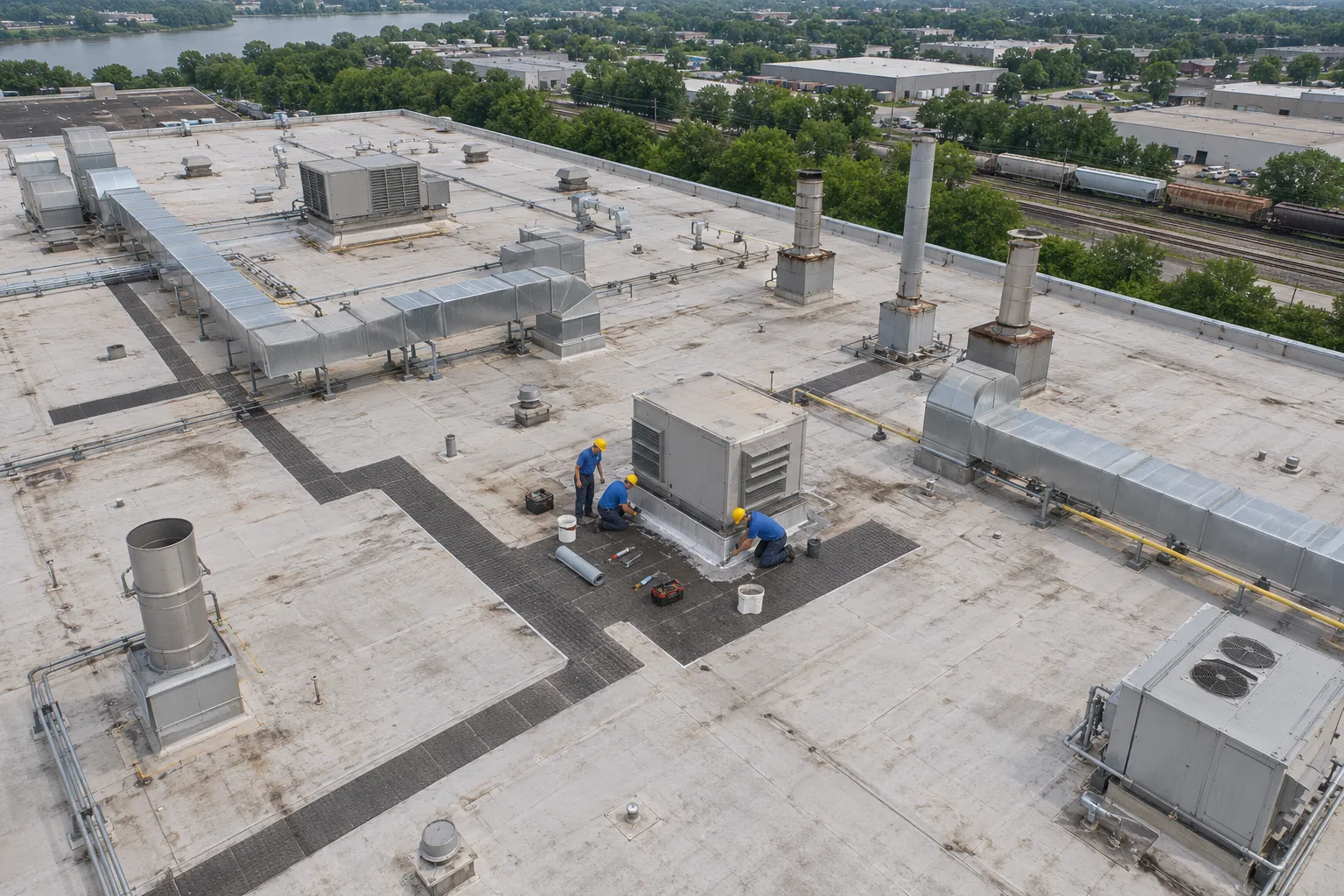
Earlier fixes on older Hillview metal buildings leave clues you can spot before anyone climbs up.
Tar visible from the ground marks old patches over fasteners or laps that will need stripping.
A panel with another color or rib shape is a past replacement that rarely laps tightly.
Rust runs under the eave trace to fasteners and laps sealed over instead of repaired.
Leaks that return after each patch point to cement trapping water over a failed washer.
Drips that move along a purlin before falling started at a lap upslope.
Light showing through a lap from inside means the old caulk has shrunk away.
Roofing cement on screw heads hides whether the washer underneath still seals.
Dried, cracked caulk along end laps lets water creep between panels.
Panels that ride up on the neighboring rib leave a gap that wind drives rain into.
Taking earlier fixes off before resealing is slower at first and gives the new repair something solid to bond to.
Scraping cement off screw heads shows which washers failed, so only the leaking rows get new oversized fasteners.
Cleaning laps to bare, dry metal lets butyl tape and new sealant bond, where sealant laid over old caulk peels away.
Swapping off-profile panels for matching ones closes the gaps that drive rain into the building in wind.
Removing tar exposes rust hidden under it, so surface rust gets primed before it eats through the panel.
Repairs made on clean metal hold, so the same panel stops showing up on the leak log every few months.
Older metal building roof repair in Hillview usually combines these three jobs on one visit.
Roofing cement removal and fastener repair in Hillview means scraping each screw head clean, then replacing backed-out screws with oversized fasteners and fresh washers.
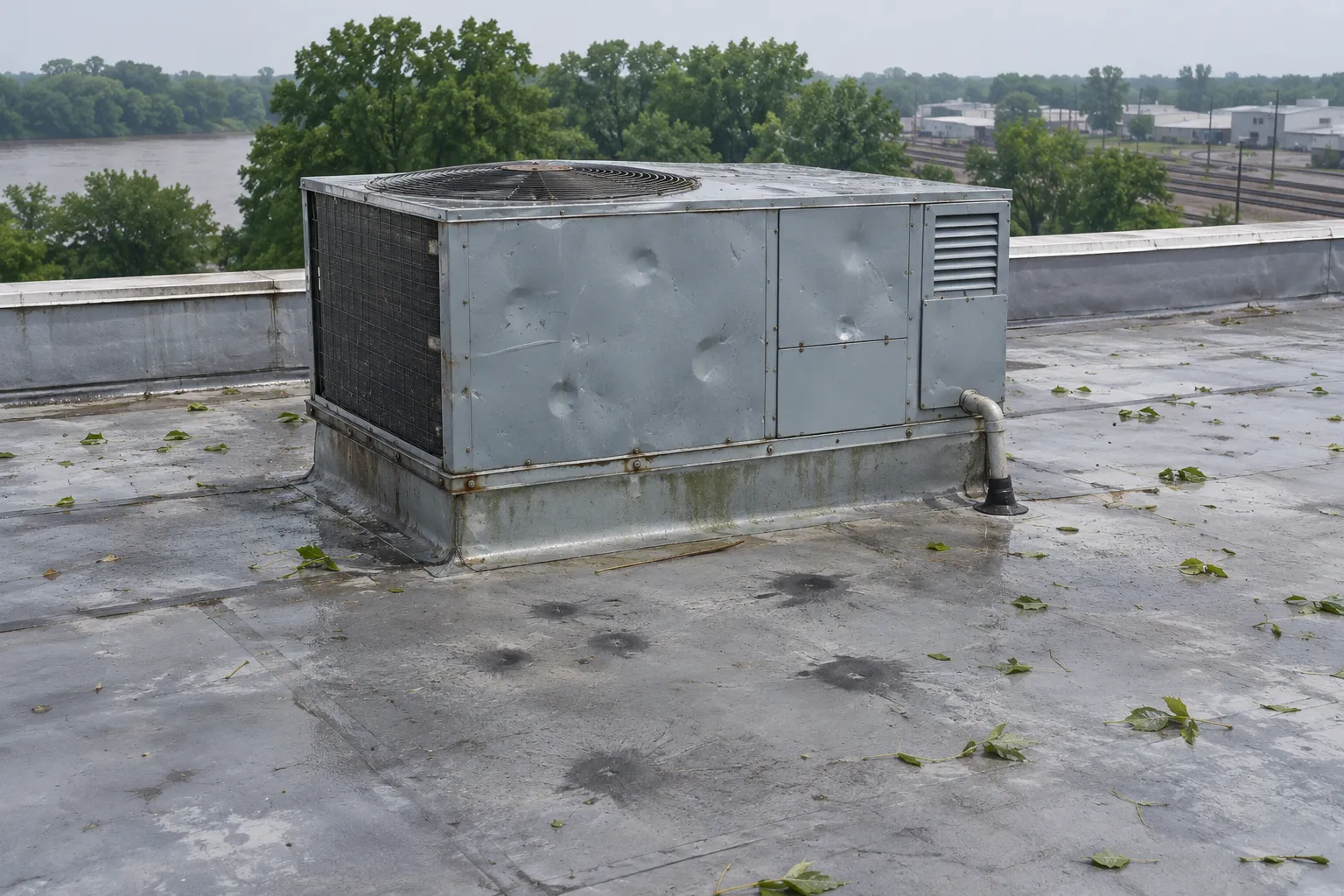
Old caulk is scraped out, laps are wire-brushed to bare metal, stitch screws pull them tight, and reinforcing fabric goes on in compatible sealant.
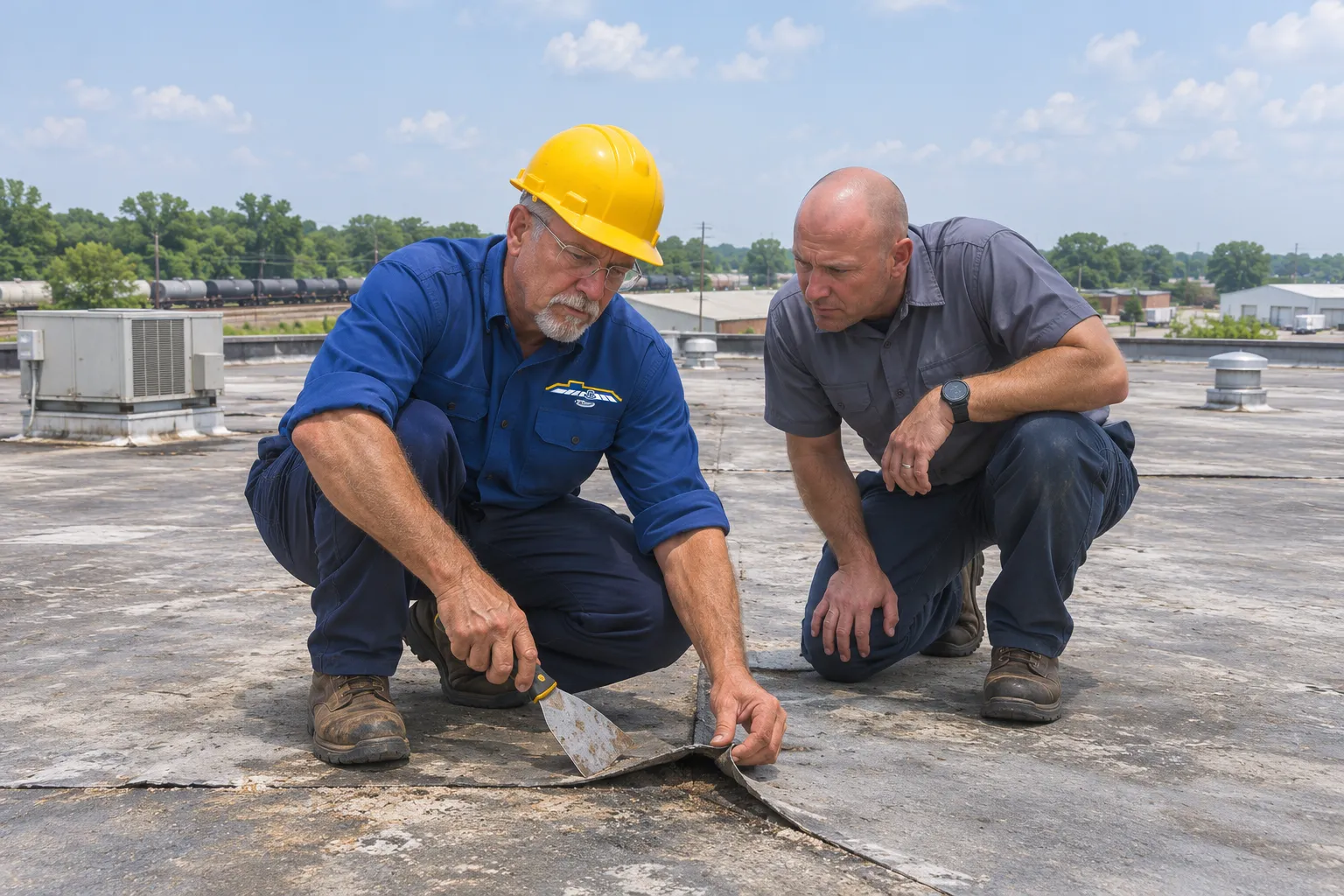
Off-profile replacement panels and panels with rust holes are swapped for sections that match the existing rib profile.
Move stock from under the drip, note which panel it comes from, and call us to get the spot closed.
Call UsSend the address and a note on past patches, and we will set up a free inspection and estimate.
Schedule Free InspectionOlder metal roofs in Hillview get the same five steps, with stripping before any sealing.
We check every fastener row, end lap, side lap, and gutter, and note where tar, cement, or caulk covers a detail that has to be opened up.
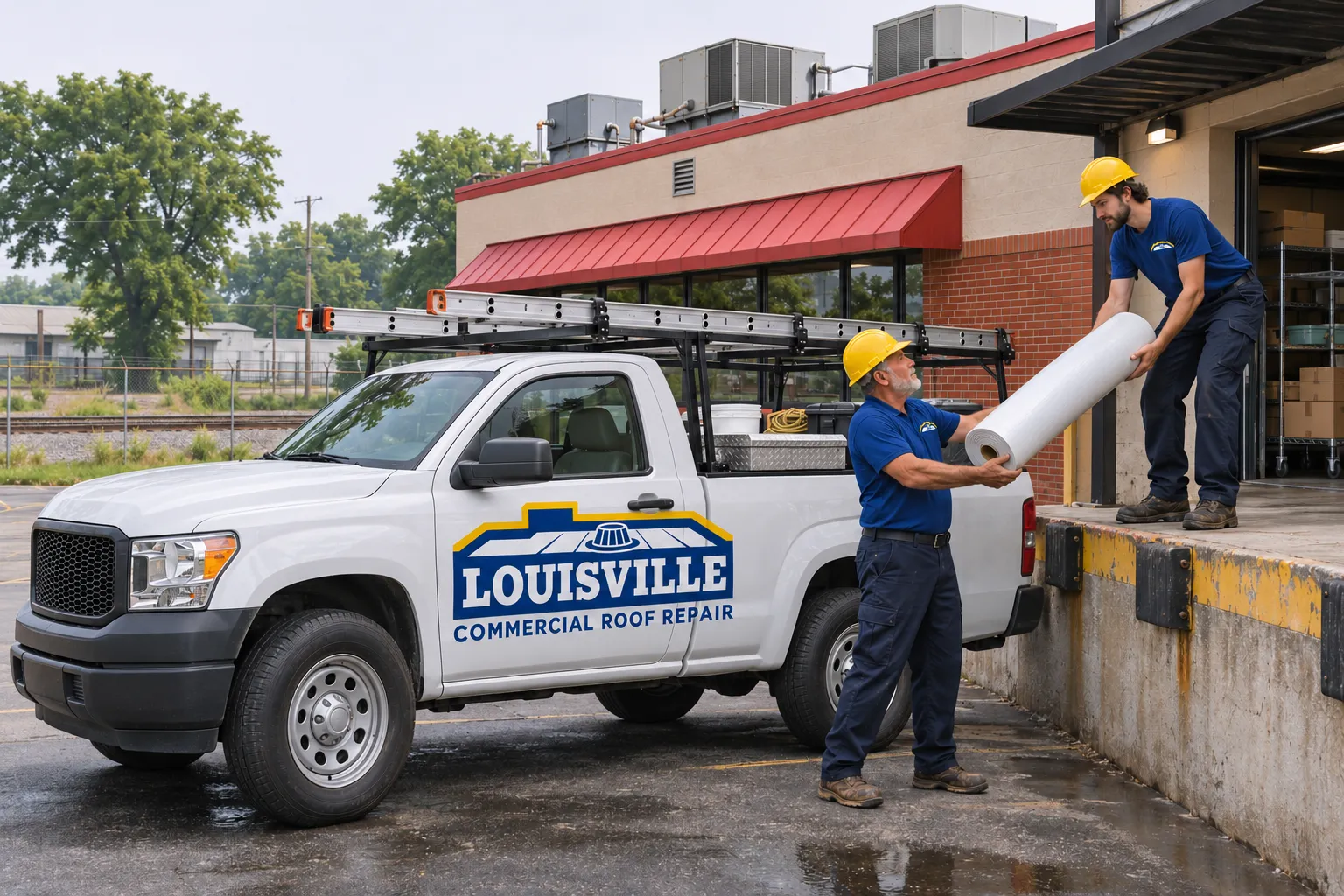
For larger roof work we confirm the address sits inside Hillview city limits, then start with city hall and bring in the Bullitt County building inspector after it.
Cement comes off screw heads, dried caulk comes out of laps, and loose tar is scraped from panels and bagged for disposal before any sealant goes on.
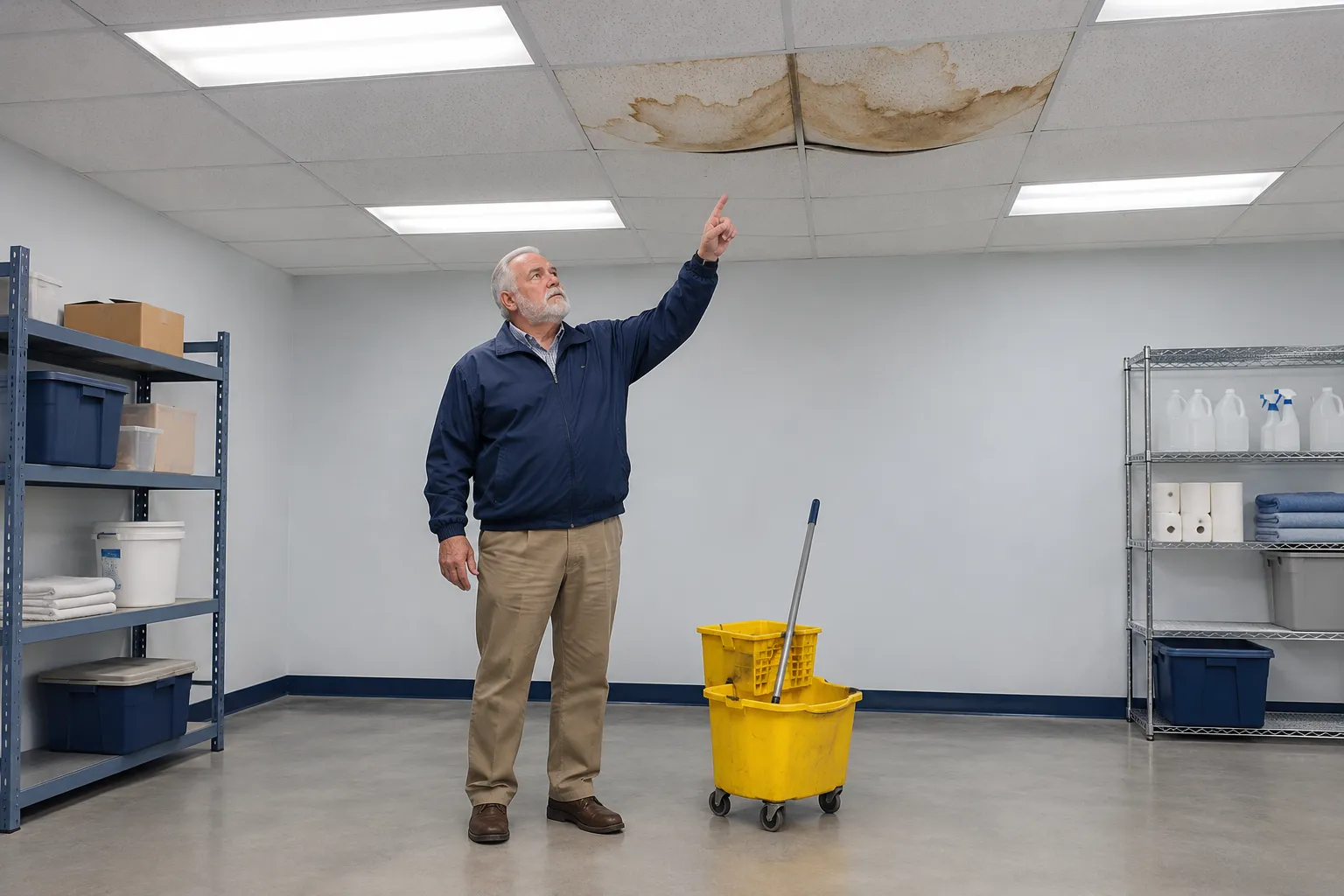
Laps are cleaned down to dry metal and resealed, failed screws are replaced, and mismatched panels are swapped for sections with matching profiles.
You get photos of each stripped and repaired detail, plus notes on rust spots to watch at gutters and low panel ends.
Wondering whether we cover the towns around Hillview too? We repair commercial roofs in each town below, and owners outside them can call us or send us a message.
Retail and office roofs crowded with rooftop units and coping.
Older industrial roofs where systems change at each addition.
Storm leak patches now, section repairs after registration.
Sign brackets, dish mounts, and conduit through older roofs.
Warehouse skylights, fastener rows, and truck-court gutters.
Edge metal, coping caps, and gutter straps after wind.
Office and retail roofs, city permit desk first.
Gutters and downspouts on low ground near the Salt River.
Answers for Hillview owners of older commercial and metal buildings.
Repairs start by stripping earlier fixes, such as roofing cement globbed on fasteners, off-profile replacement panels, and dried caulk at laps, since new sealant bonds only to clean metal. Prep means scraping cement from screw heads, swapping panels that mismatch the rib profile, and cleaning laps down to bare, dry metal.
Permits for this northern Bullitt County city start at Hillview city hall, with the Bullitt County building inspector after it. Check that the address falls inside city limits first, since neighboring Louisville Metro follows its own process. Spot repairs and section work differ in size, so describe the scope when you ask.
Cement smeared over a screw or lap traps moisture under it and hides whether the washer or seam beneath still seals. As the metal moves each day, the cement cracks and lets water in behind it. Scraping it off shows the real condition, so the failed fastener or lap gets a proper repair.
Usually, yes. A panel with the wrong rib profile rides up on its neighbor and leaves a gap at the lap. Swapping it for a section that matches the existing profile closes the gap, and the laps get stitch screws and sealant. Replacement comes up when rust has perforated panels across large areas.
Surface rust with solid metal underneath gets wire-brushed, primed, and sealed. Flaking scale gets ground down and covered with a patch panel, and panels with holes get the section replaced. Rust tends to start at low panel ends, gutters, and under debris, so clearing those areas slows the next round.
Yes, it speeds up the repair. Note where earlier patches went, what was used, and when leaks came back. That list points the crew to laps and fastener rows that will need stripping, and it helps separate one-time leaks from spots that fail after every patch.
Tell us which panels keep leaking and what has been tried. We will inspect the roof, strip what needs stripping, and send an estimate.