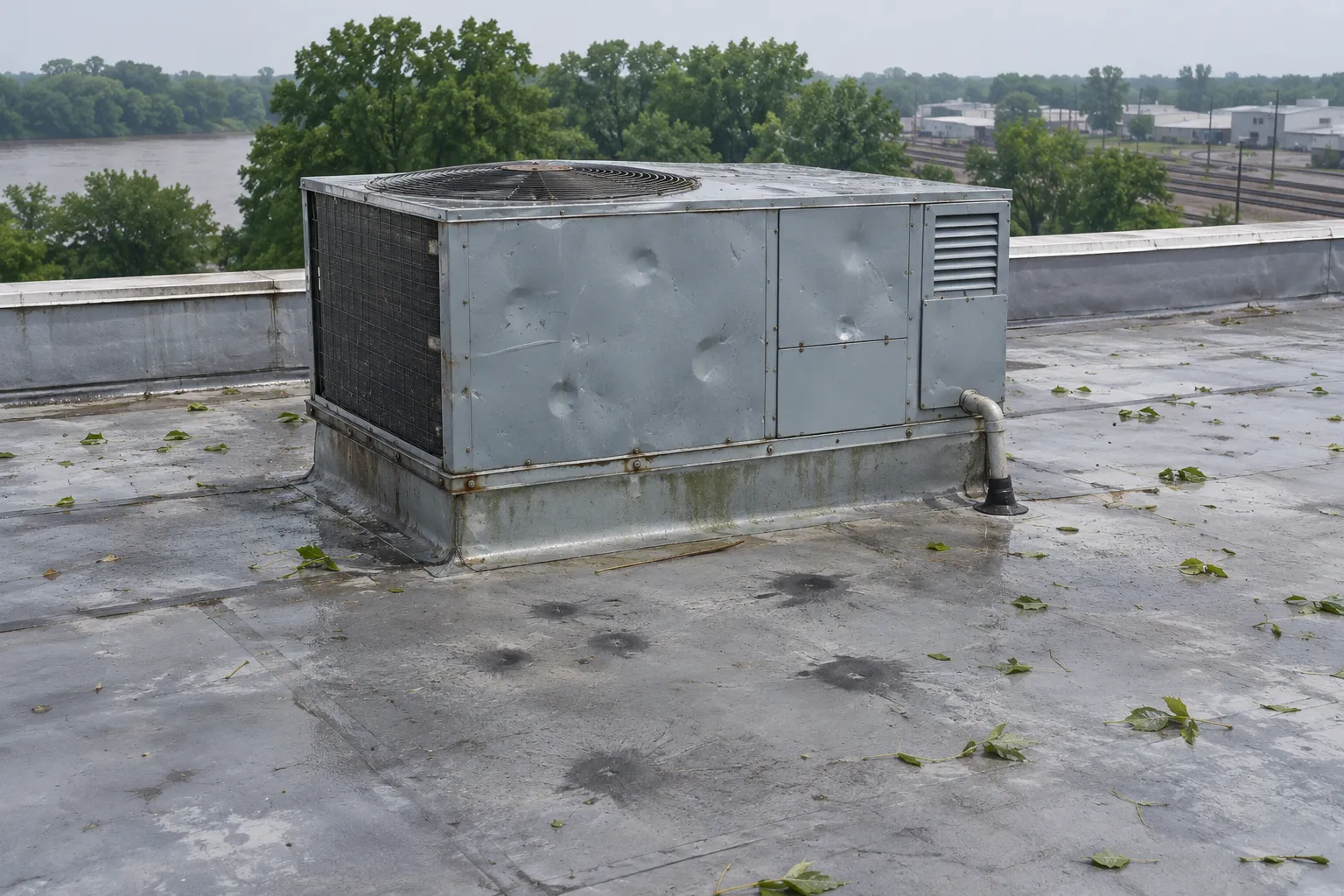
Storm Work
Temporary Leak Patches
Storm leak temporary patch work in Lyndon KY uses wet-surface mastic, peel-and-stick patches, or weighted tarps to slow water until the roof is dry enough for a permanent repair.

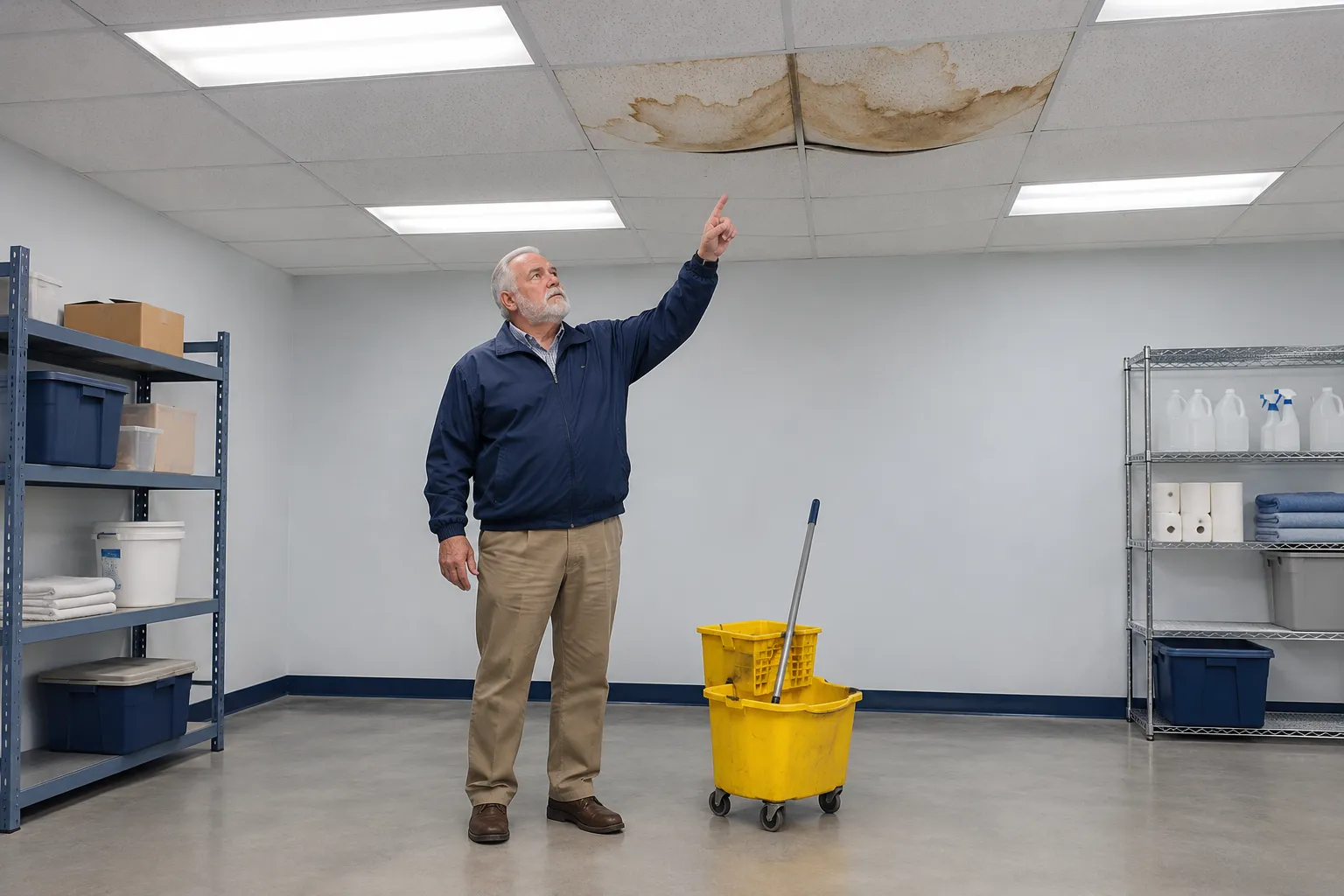
Your Lyndon commercial roof repair contractor slows storm leaks with logged temporary patches, then plans larger section repairs around the city registration rule.
A Lyndon commercial roof repair contractor works with two clocks. A storm leak needs water stopped right away, while Lyndon's city code calls for plan registration with the City Clerk 30 days or more before work begins.
That rule is likeliest to apply when whole roof sections, insulation, or deck get replaced. Settling it with the clerk ahead of time means a temporary patch can hold while the paperwork for the permanent repair runs its course.
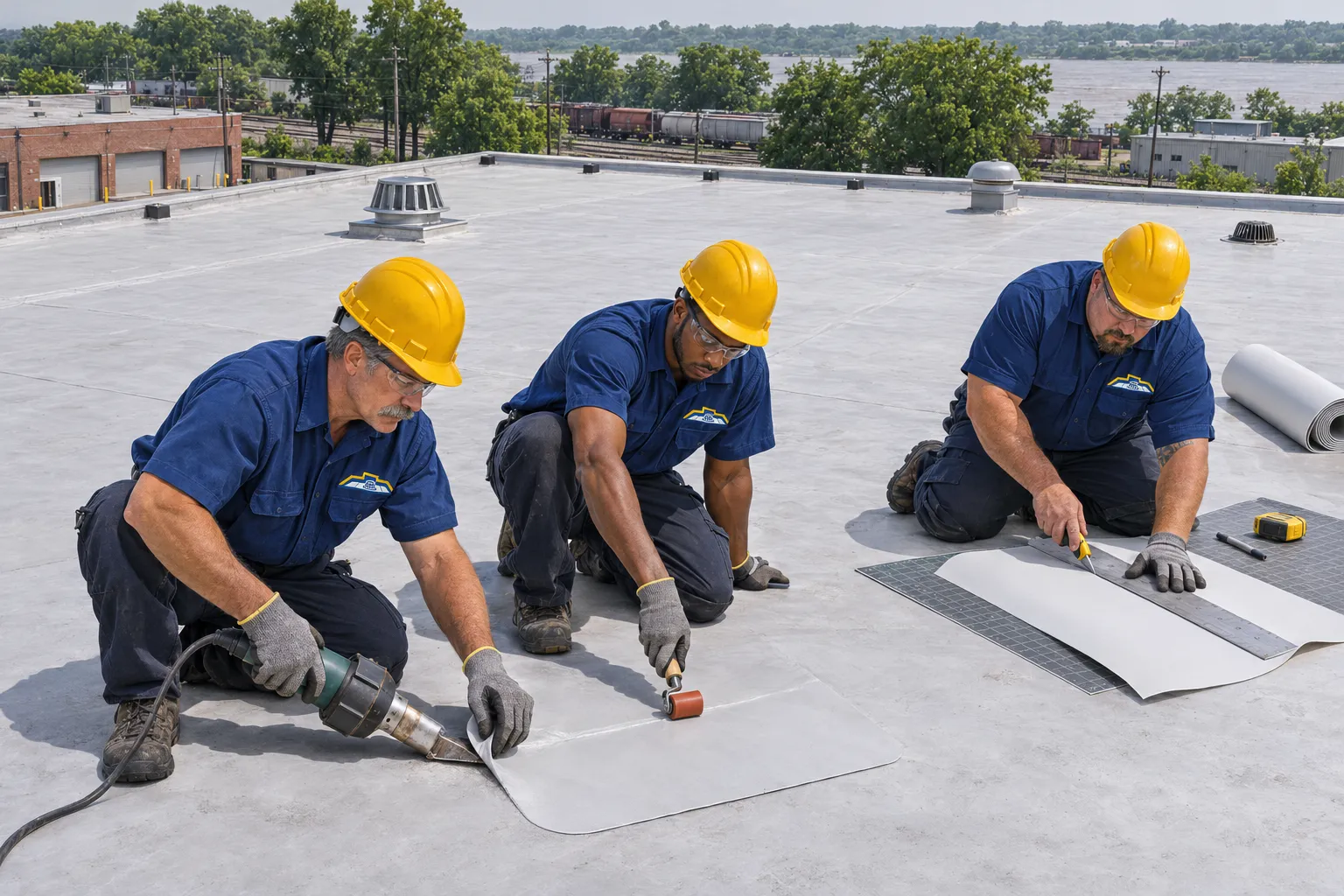
After a heavy storm, the first signs often appear before anyone climbs the ladder. These point to the repair that comes next.
Perimeter sheet lifting in the wind means edge metal came loose and the field is next.
Leaves and granules washed into gutters after a storm can back water up under panel ends.
A fresh stain after a single heavy rain points to a puncture or split seam from that storm.
Leaks showing in new spots each rain suggest wet insulation spreading under a whole section.
Storm wind flexes the roof and opens laps that had already lost some adhesion.
Soft spots after hail on modified bitumen mark places where the next rain gets in.
Ponds that stay a day after rain point to a clogged strainer feeding the leak.
A two-step approach keeps a storm leak small while the larger fix is planned. Here is what each step protects.
Temporary mastic and peel-and-stick patches slow water through a split seam or puncture until the roof dries, so damage under the leak stays small.
Moisture readings right after a storm find wet boards early, which keeps a section repair from turning into a full roof replacement.
Talking with the City Clerk early means a section repair can start once registration clears, with the temporary patch holding until then.
Logged temporary patches are removed and replaced with matched membrane or flashing once a dry, workable window opens.
Repairs in Lyndon split between quick storm work and planned section work. Most roofs need some of both.
Storm leak temporary patch work in Lyndon KY uses wet-surface mastic, peel-and-stick patches, or weighted tarps to slow water until the roof is dry enough for a permanent repair.
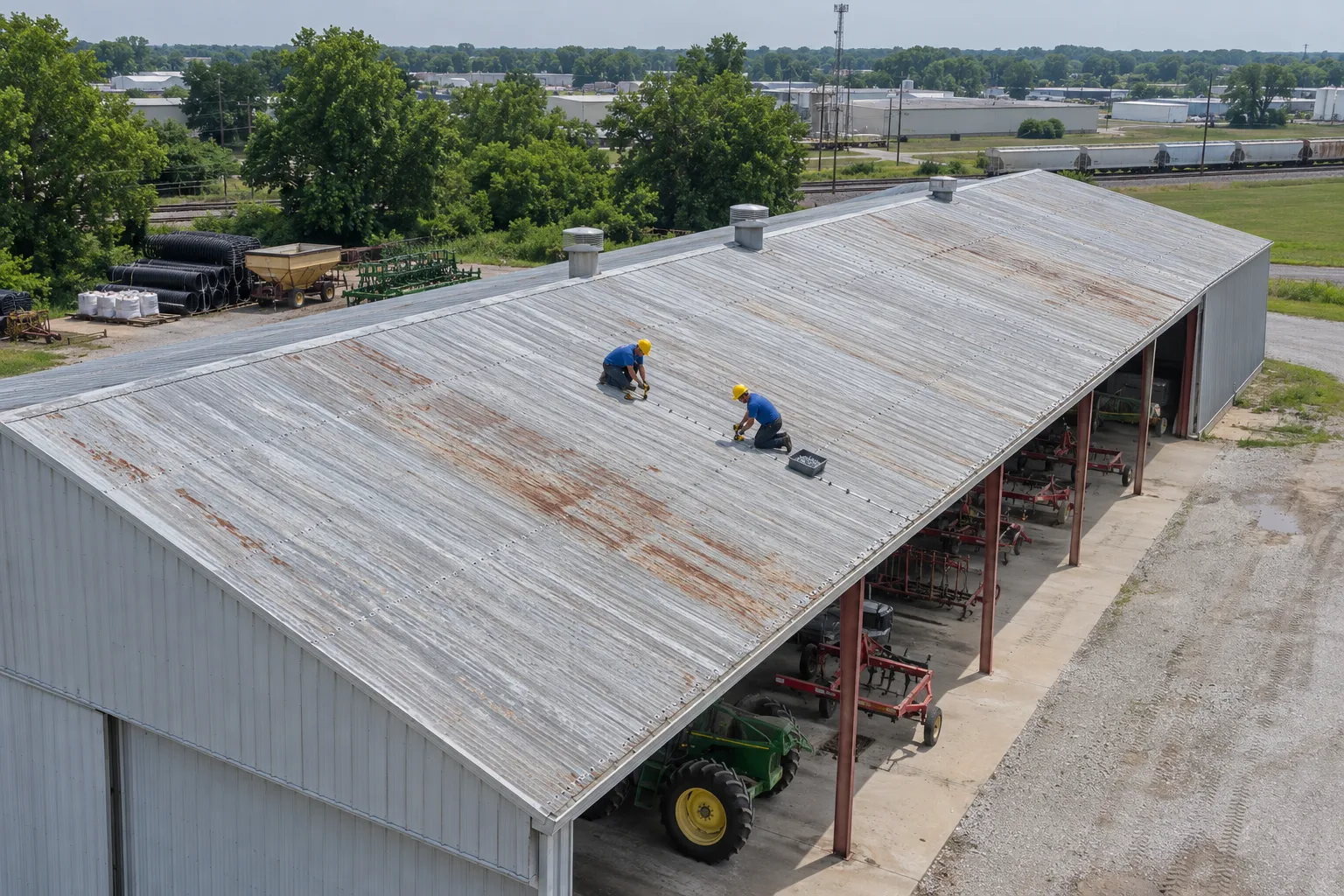
Small permanent fixes such as a resealed seam, new curb flashing, or a reset drain cover a limited area and are handled once the surface is dry.

Roof section replacement in Lyndon removes wet insulation and failed membrane over one area and ties the new section into the roof around it.
Move what you can from under the drip, set buckets, and write down the time and wind direction. Then call us.
Call UsSend the address and the size of the area, and we will set up a free inspection before you talk with the clerk.
Schedule Free InspectionStorm repairs in Lyndon follow these steps, from the first patch to the finished section.
We walk the roof after the storm, mark every split seam, puncture, and loose edge, and take moisture readings around each leak to see how far water spread.
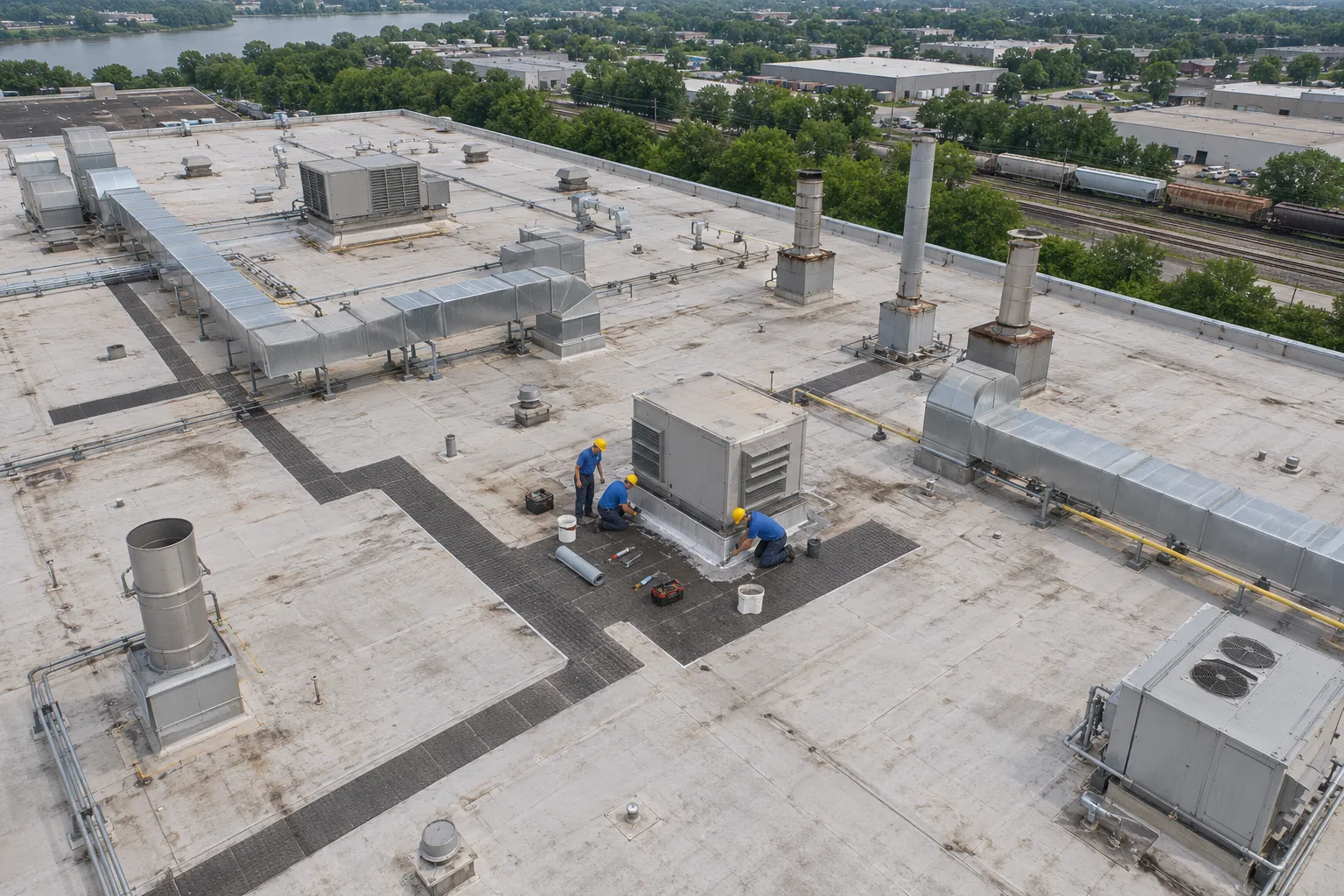
Temporary patches go on with wet-surface materials, and each one is logged with its spot and date so the permanent fix can find it later.
For larger section repairs, the roof area, type of work, and any insulation or deck replacement go to the City Clerk for plan registration.
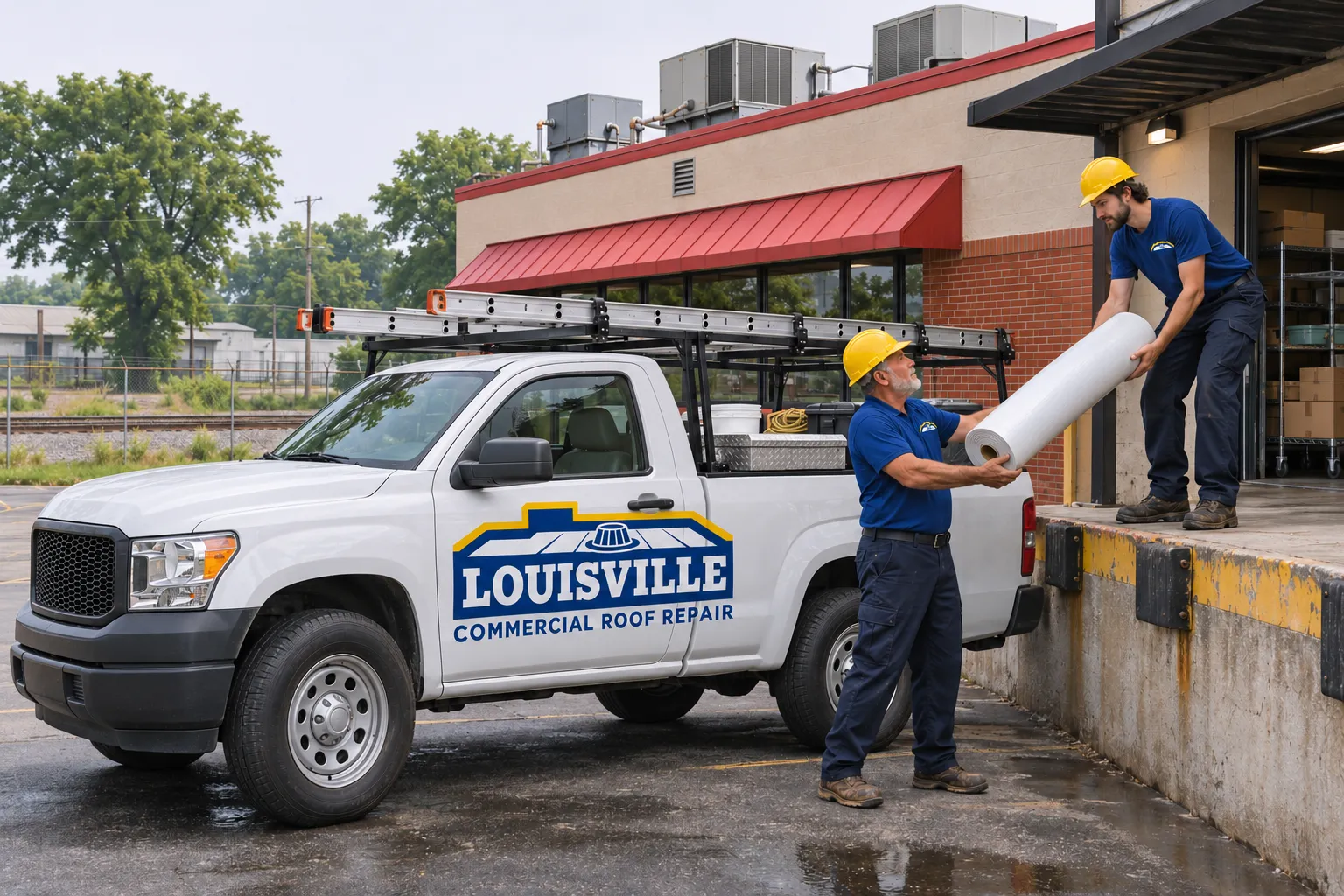
Once the area is dry, temporary patches come off, wet insulation is replaced, and matched membrane and flashing go down over a clean, dry surface.
Photos and the patch log show which temporary fixes were replaced and which areas of the roof still need watching after storms.
Need roof repair somewhere besides Lyndon? We repair commercial roofs across the towns shown below. Outside them, call us or send us a message and tell us where the building is.
Retail and office roofs crowded with rooftop units and coping.
Older industrial roofs where systems change at each addition.
Sign brackets, dish mounts, and conduit through older roofs.
Warehouse skylights, fastener rows, and truck-court gutters.
Edge metal, coping caps, and gutter straps after wind.
Office and retail roofs, city permit desk first.
Gutters and downspouts on low ground near the Salt River.
Metal roofs stripped of earlier fixes before resealing.
Answers for building owners and managers dealing with storm leaks in Lyndon.
Lyndon's city code calls for plan registration with the City Clerk 30 days or more before work begins, so ask the clerk whether your repair triggers it. Larger repairs that replace whole roof sections are the likeliest to need it. Share the roof area, the type of work, and any insulation or deck replacement when you call.
A temporary patch can go on right away to slow water during and after a storm. Settle the registration rule with the clerk ahead of time so the permanent repair is not held up later. The temporary patch is logged and then replaced once the paperwork and the weather allow.
A temporary patch is meant to hold only until the roof dries and a permanent repair can be made. Wet-surface mastic and peel-and-stick tape slow water through a split seam or puncture, but they trap moisture over time. Logging each patch with its location and date makes the follow-up visit faster.
Protect what sits under the leak, record the time and wind direction, and keep people off the roof during the storm. Photos of the stain and the ceiling around it help the repair crew trace the source. If a drain is visible from a safe spot, check whether it is flowing.
Section repair makes sense once wet insulation spreads across an area or leaks keep showing in new places after each storm. Moisture readings and cores show how far the water has gone. Sections that stay dry keep getting spot repairs, so only the wet area is replaced.
Plan to share the roof area involved, the type of work such as seam repair or flashing replacement, and whether any insulation or deck is being replaced. A short scope and a few photos from the inspection give the clerk what it needs to answer whether registration applies.
Tell us when the leak started and what the storm did to the roof. We will set up a free inspection and a written estimate.