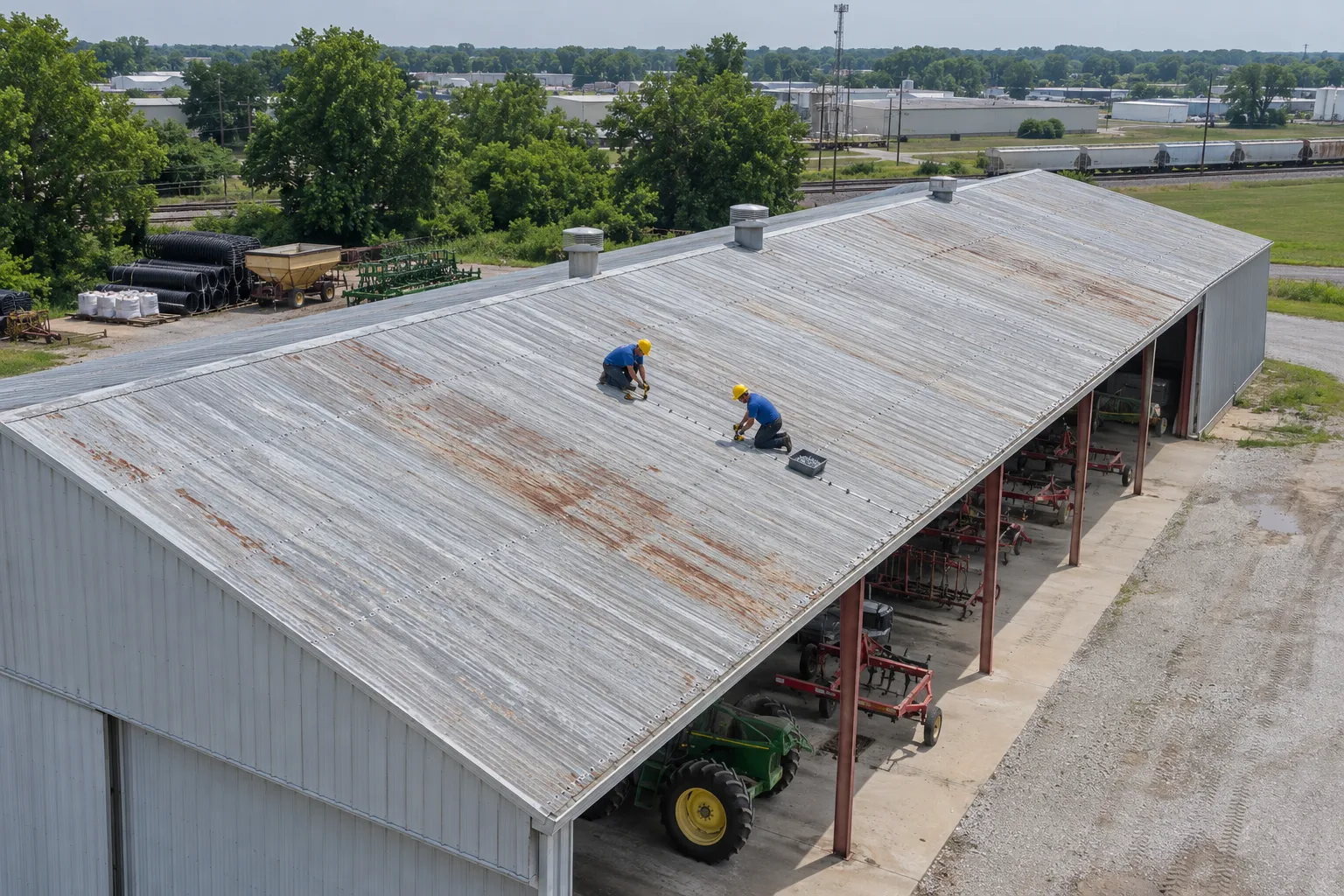
Edge Work
Edge Metal and Coping Repair
Loose edge metal gets new fasteners and bent pieces get replaced, while coping cap repair on Dixie Highway buildings means resetting each cap with sealed joint covers.

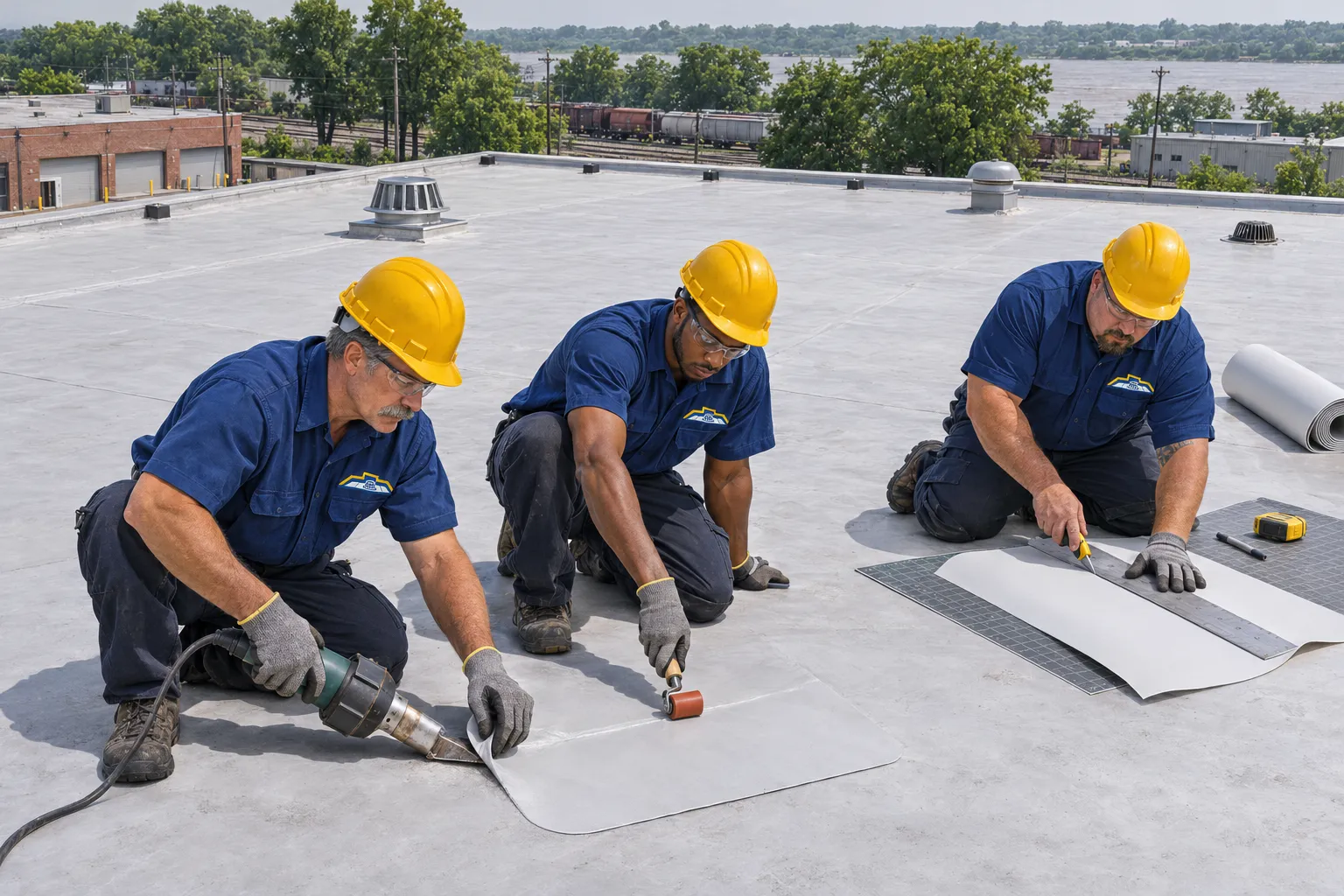
As a Valley Station commercial roof repair contractor, we refasten edge metal, reset coping, and repair wind-torn membrane on business roofs along Dixie Highway.
A Valley Station commercial roof repair contractor starts at the roof edges after high winds. Edge metal lifted at a corner, a shifted coping cap, or a torn gutter strap gives the next storm a handle to peel back more membrane, so those pieces get refastened before anything out in the field.
Warnings for this Louisville Metro community come from the National Weather Service office in Louisville. After one passes, a walk around the building from the parking lot often shows the edge damage before anyone climbs a ladder.
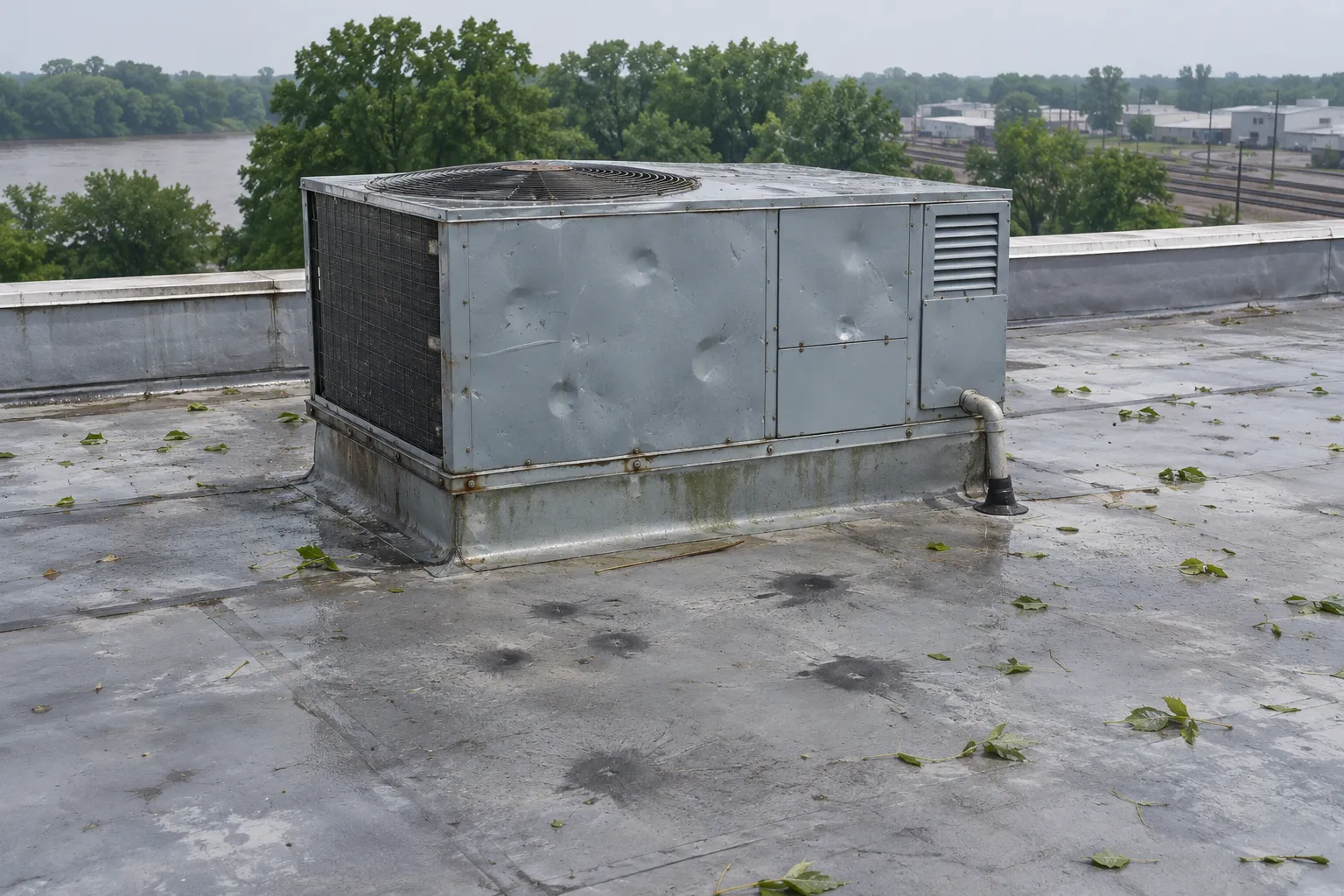
Wind damage shows up first at the perimeter. These are the signs owners along Dixie Highway spot from the lot, the office, and the roof.
Edge metal standing away from the wall at a corner means the fasteners holding it have pulled loose.
A gutter dipping between straps has lost its hangers and will dump water down the wall face.
Open joints between coping caps let wind-driven rain run down behind the parapet flashing.
Water marks near the top of an outside wall trace back to coping or counterflashing above it.
Leaks that appear only in strong wind usually enter through vertical surfaces while the membrane field stays dry.
Noise during gusts can come from loose edge metal or flapping membrane along the roof perimeter.
Ridges in the membrane near the edge show where wind got under it and lifted the attachment.
Screws pulled along the edge line leave open holes that let rain reach the deck.
Corners take the highest wind load, so seam laps there open before laps in the middle.
Fixing the perimeter soon after a storm keeps a small edge problem from turning into a peeled roof section.
Refastened edge metal at the corners and long sides removes the loose piece that wind uses to pry up the membrane during the next storm.
Reset coping caps with sealed joints send wind-driven rain over the wall face instead of down behind the base flashing.
Rehung gutters on new straps carry roof water to the downspouts again, so it stops spilling down the building front.
Catching lifted perimeter sheet early keeps the tear to a strip along the edge, far smaller than a whole section of new roof.
Closing the openings a storm leaves keeps rain out of the insulation boards that sit right under the perimeter.
Wind damage roof edge repair in Valley Station usually falls into one of these three jobs, often on the same roof.
Loose edge metal gets new fasteners and bent pieces get replaced, while coping cap repair on Dixie Highway buildings means resetting each cap with sealed joint covers.
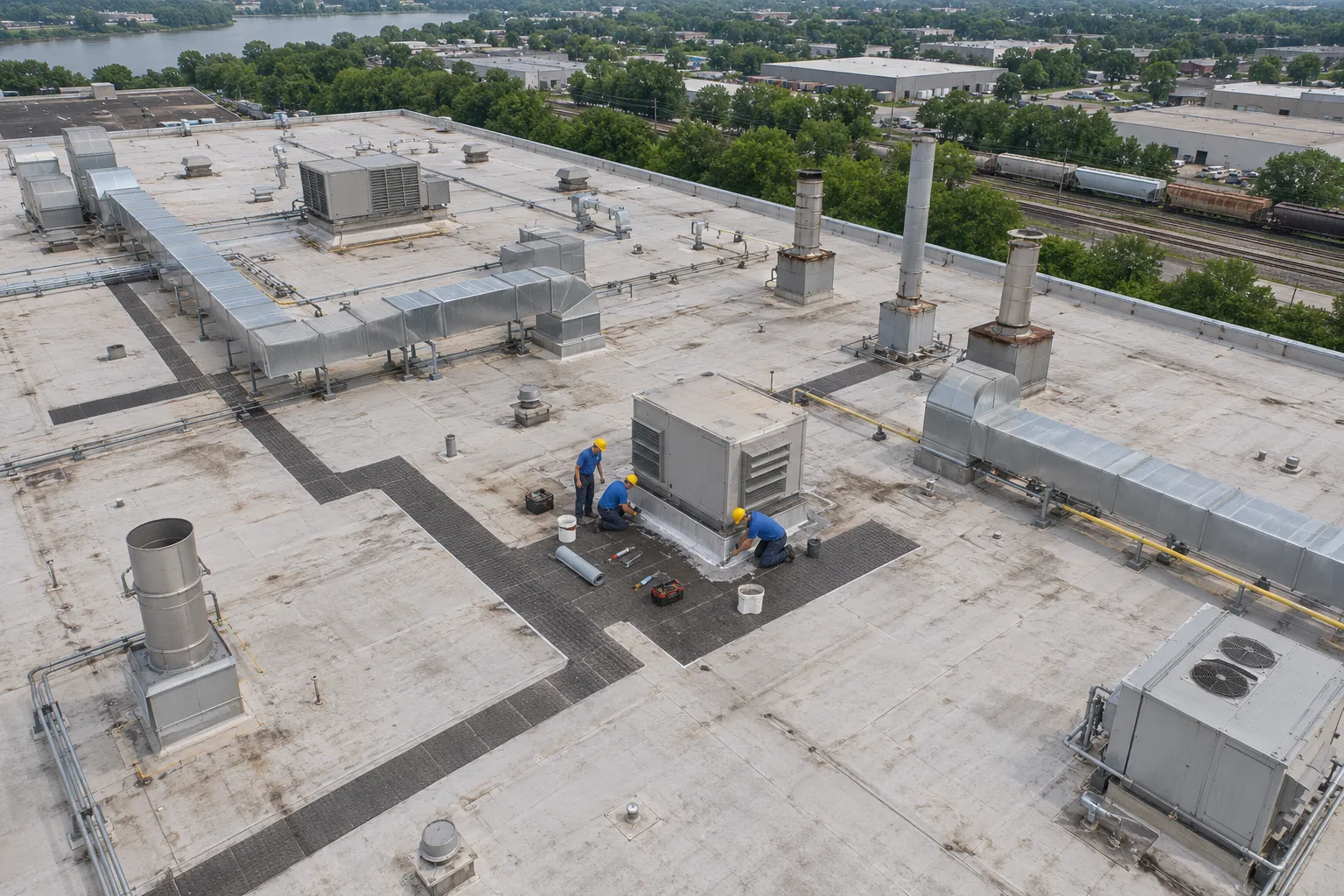
Lifted sheet along the edge is reattached or cut out and patched with matching membrane, then flashed back up the wall or over the edge.
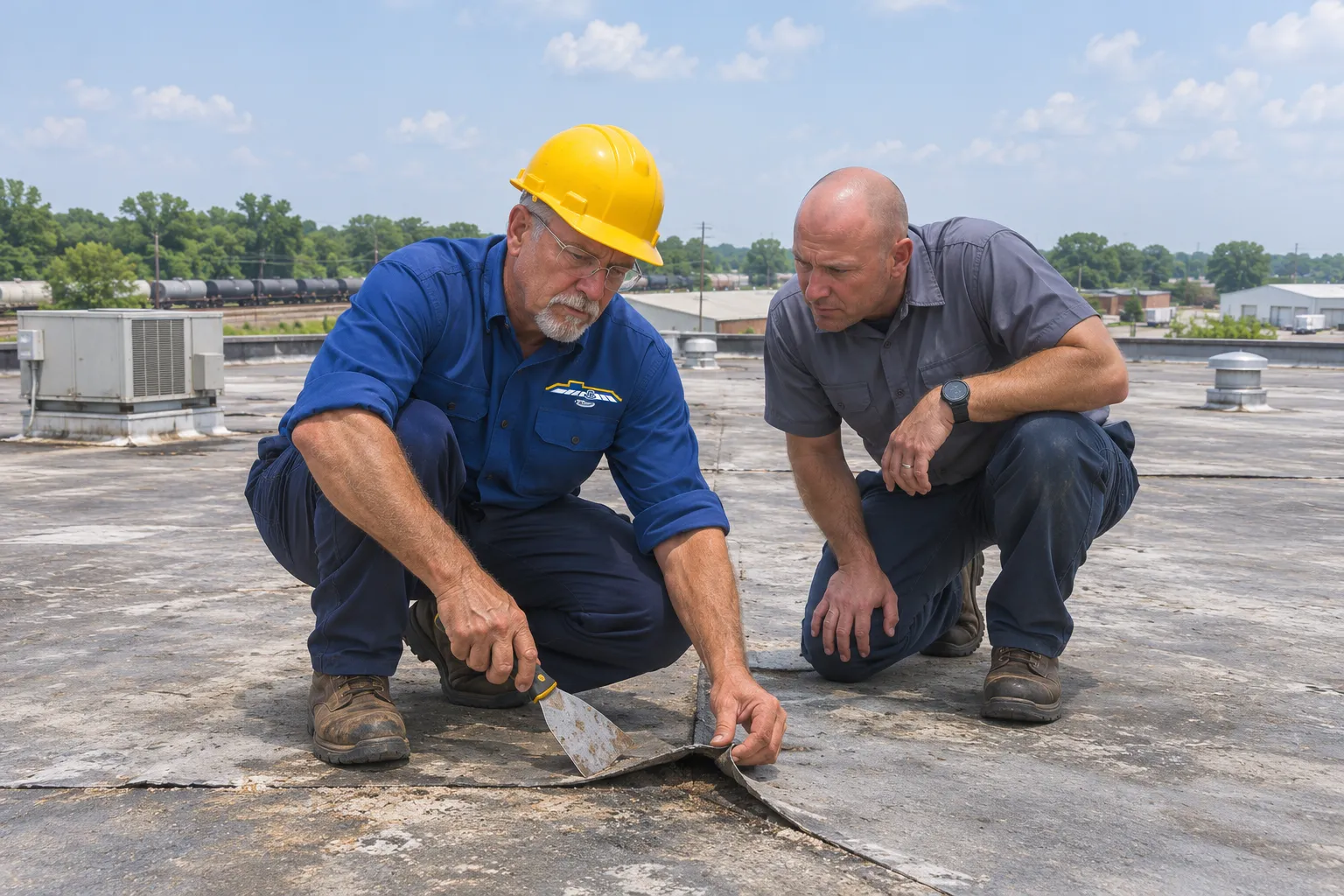
Torn straps are replaced, sagging runs are rehung to fall toward the outlets, and gutter seams and end caps are resealed.
Keep people clear of loose metal at the edge, move stock away from wet walls, and call us so the opening can be closed.
Call UsSend the address and what you saw from the lot, and we will set up a free inspection of the perimeter and roof.
Get A Free EstimateEach wind repair follows the same order, starting at the perimeter and ending with photos for your file.
We walk the full perimeter first, checking edge metal, coping caps, gutter straps, and corner seams, then move into the field to look for punctures from blown debris.
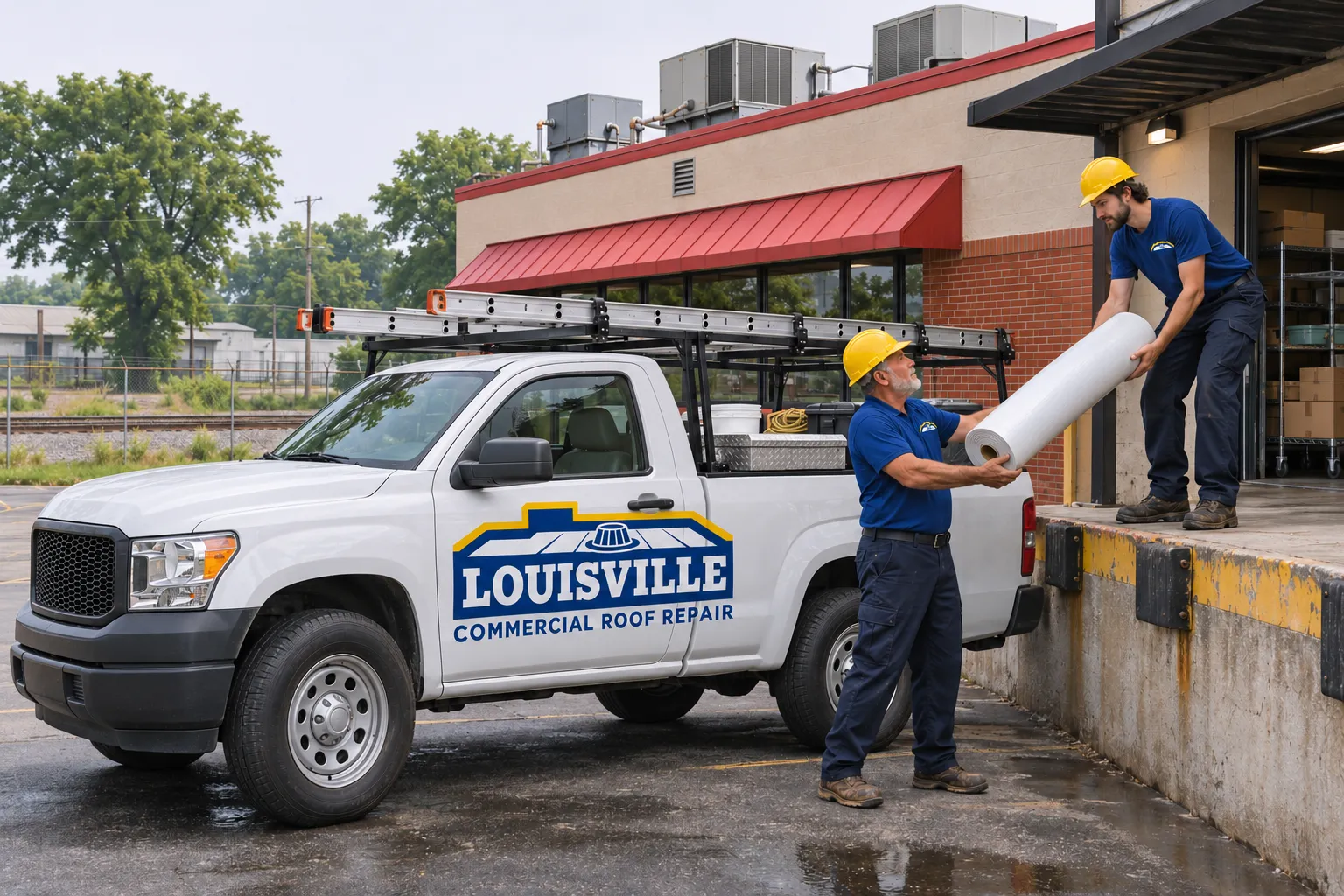
Flapping edge metal and loose coping get fastened down or removed right away, since each loose piece of trim gives the next gust more to grab at the roof edge.
Membrane lifted at the edge is reattached or patched with matching sheet, and new edge metal and coping go on with sealed joints and the right fastener spacing.
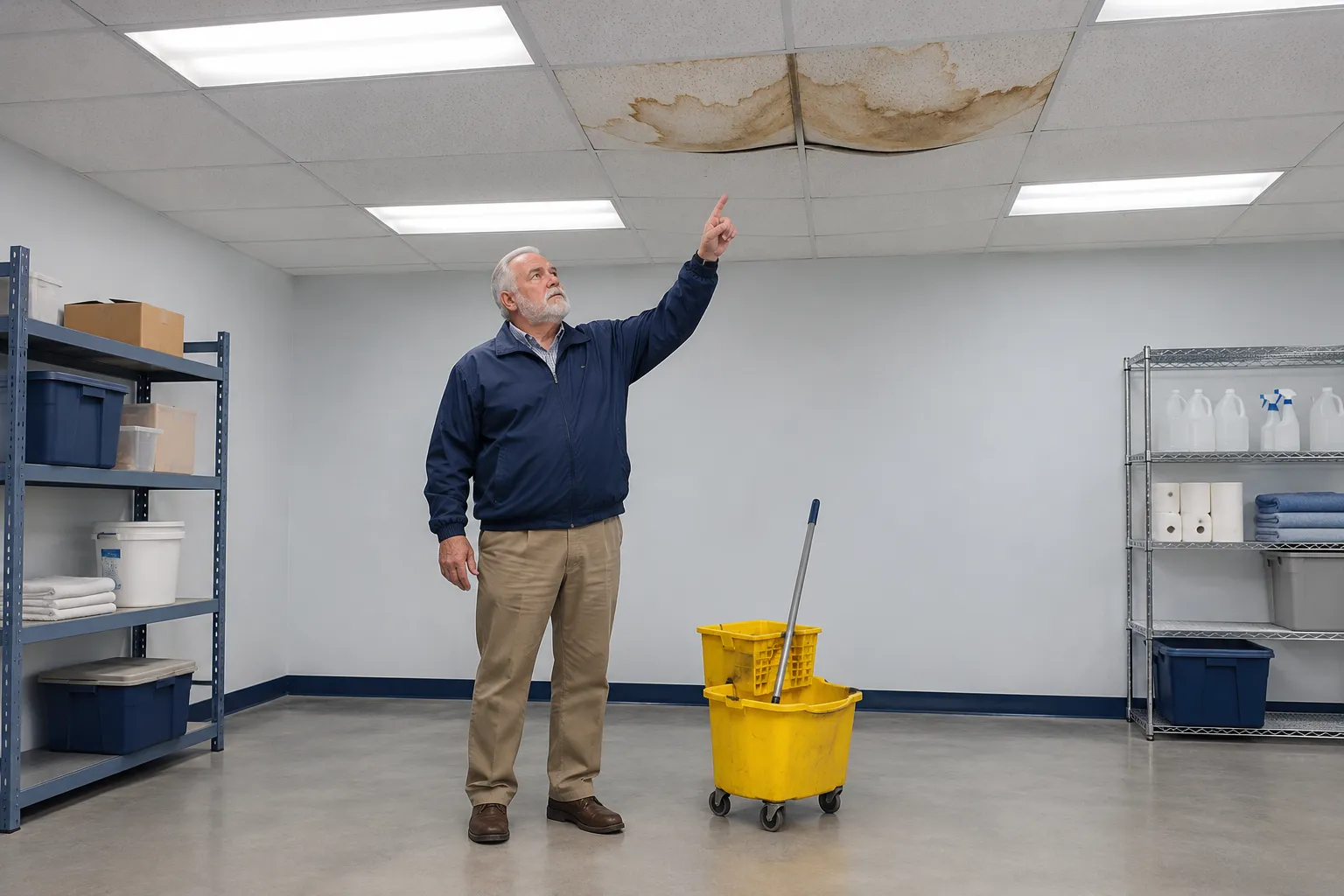
Gutters go back up on new straps with a steady fall to each outlet, and downspouts are reconnected so water leaves the wall instead of running down the brick.
You get dated photos of the repaired edges, coping, and seams, plus notes on anything else the storm loosened, which helps when an insurance adjuster asks for records.
Does your building sit near Valley Station? We repair commercial roofs in each town listed below, and owners anywhere else can call us or send us a message.
Retail and office roofs crowded with rooftop units and coping.
Older industrial roofs where systems change at each addition.
Storm leak patches now, section repairs after registration.
Sign brackets, dish mounts, and conduit through older roofs.
Warehouse skylights, fastener rows, and truck-court gutters.
Office and retail roofs, city permit desk first.
Gutters and downspouts on low ground near the Salt River.
Metal roofs stripped of earlier fixes before resealing.
Answers for Valley Station owners sorting out roof damage after a storm.
Start with the roof edges. Owners along Dixie Highway should look at edge metal, coping caps, and gutter straps, then check whether perimeter membrane is flapping. Each loose piece of edge metal gives the next storm a handle to peel more membrane, so refastening it soon limits the damage.
Much of the edge damage shows from the parking lot. Walk the building and look for metal standing away at corners, gaps between coping caps, gutters sagging between straps, and pieces of trim on the ground. Photograph each spot with the date. That list helps a roofer go straight to the perimeter once the roof is safe to walk.
Usually it comes in through vertical surfaces instead. Parapet coping joints, counterflashing pulled out of its reglet, and cracked masonry above the roof line let sideways rain run behind the base flashing while the membrane field stays dry. Noting which wall gets wet and the wind direction during each leak narrows the search to one side of the building.
Most wind damage stays at the perimeter and gets repaired. Edge metal, coping, gutters, and a strip of lifted membrane can all be fixed with matching material. Replacement comes up when wind lifted a wide area, the insulation under it got soaked, or the deck shows rust from earlier leaks across several bays.
Keep the date and time of the storm, the warning or storm report from the National Weather Service office in Louisville, photos of damaged edge metal and coping, and interior photos of any new leaks. Add notes on wind or hail seen on the property. File the repair invoices with those records, since adjusters often ask for both.
Torn straps are replaced and the gutter is rehung with a steady fall toward each outlet, so water stops pooling in low spots along the run. Seams and end caps get resealed, bent sections are swapped out, and downspouts are reconnected at the outlet so water leaves the wall face.
Tell us which edges, walls, or gutters took the wind. We will set up a free inspection of the perimeter and the roof field.