Exhaust Fan Roof Damage Repair
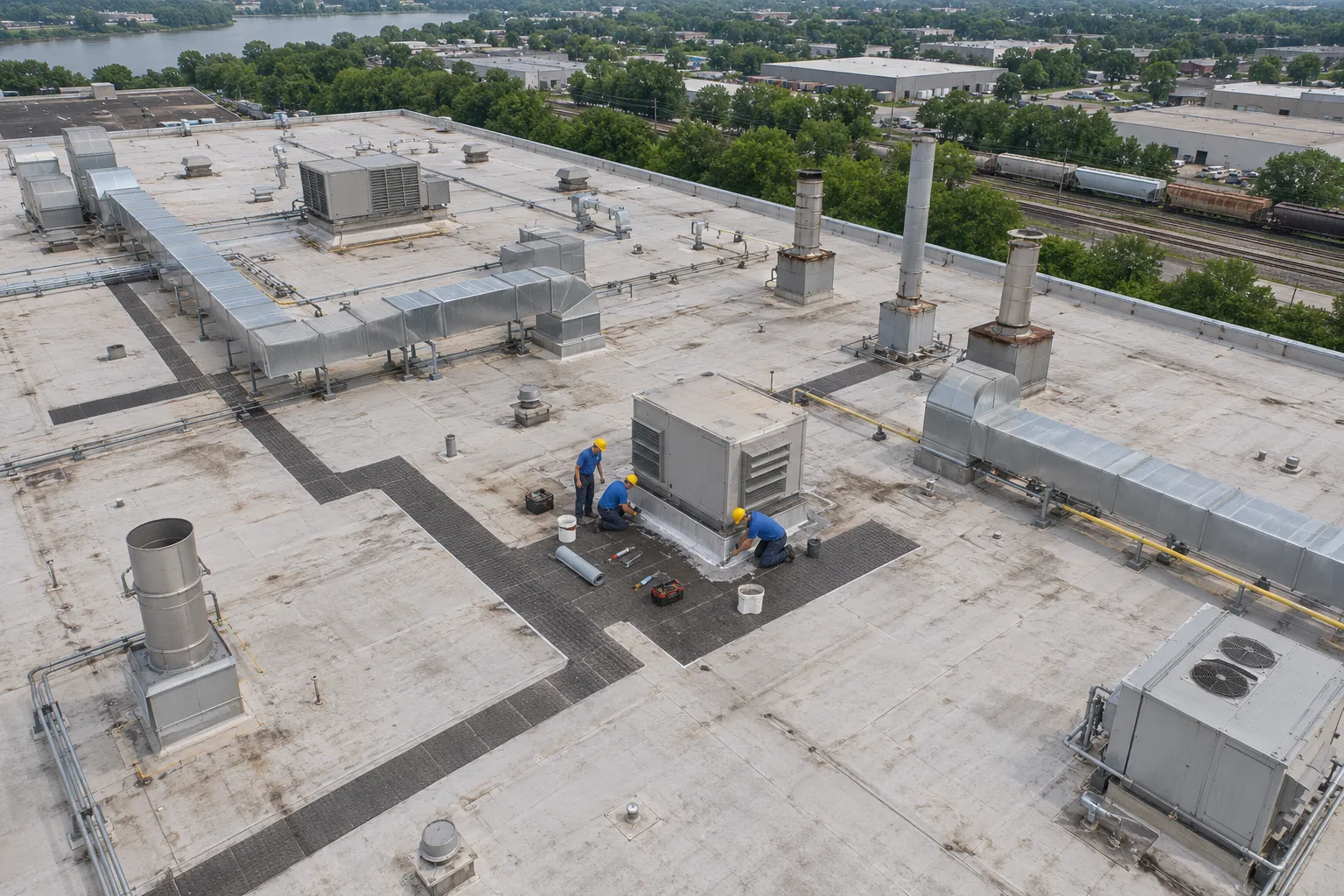
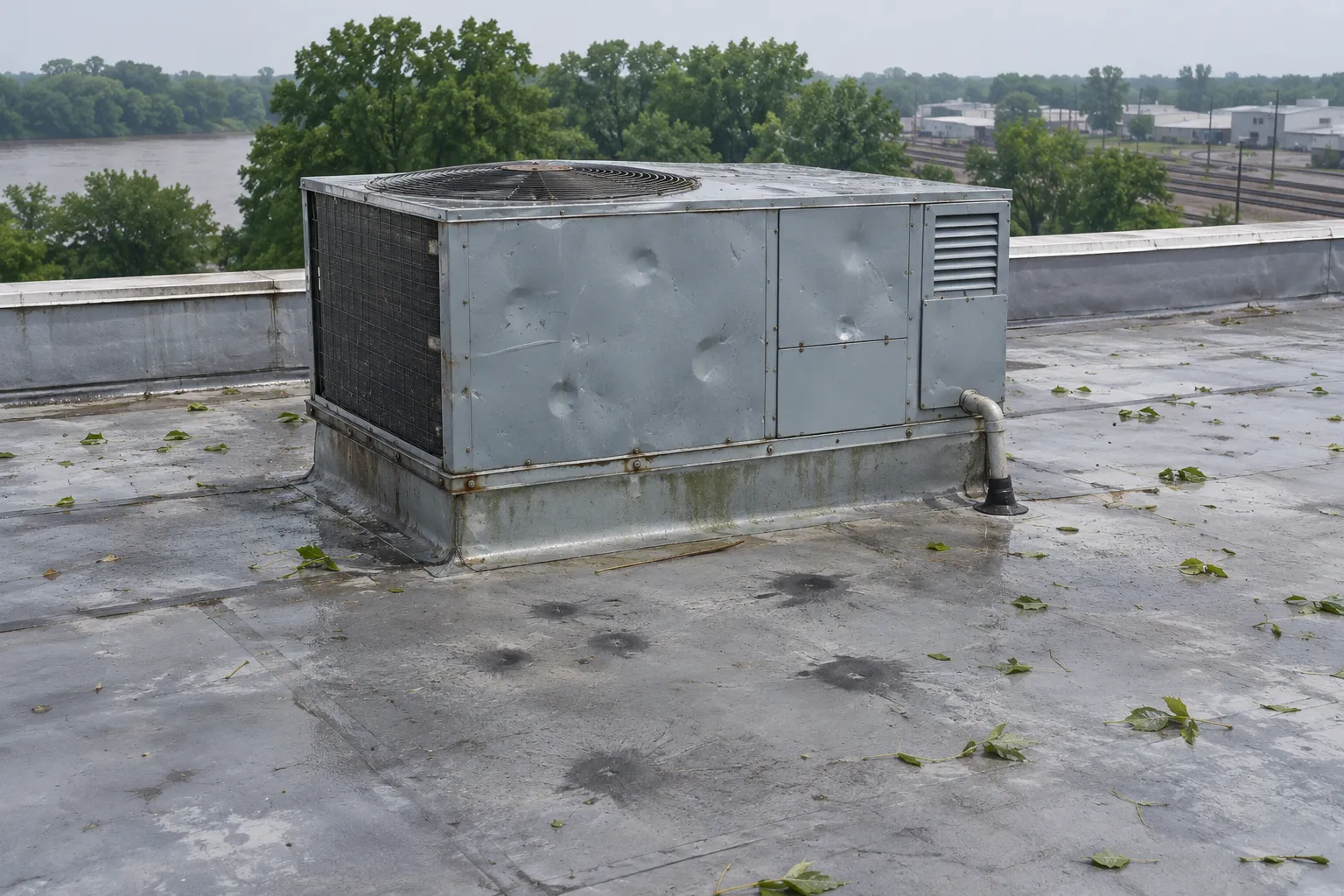
Softened or swollen membrane around fans and process vents is cut out and replaced with a sheet suited to the discharge, such as grease-resistant membrane. A containment box catches grease before it reaches the roof.

As a Louisville industrial roof repair contractor, we repair membrane and metal roofs over working plants and warehouses, staged around production and the plant's safety rules.
A Louisville industrial roof repair contractor sizes each job by how far wet insulation and deck rust have spread, since a plant can repair one section while replacing another.
Plant roofs show trouble in the yard, on the floor, and around rooftop equipment.
Water spilling where a canopy meets the wall points to failed flashing at that joint.
Edge trim and closures shaken loose on a tall wall let wind push rain behind the panels.
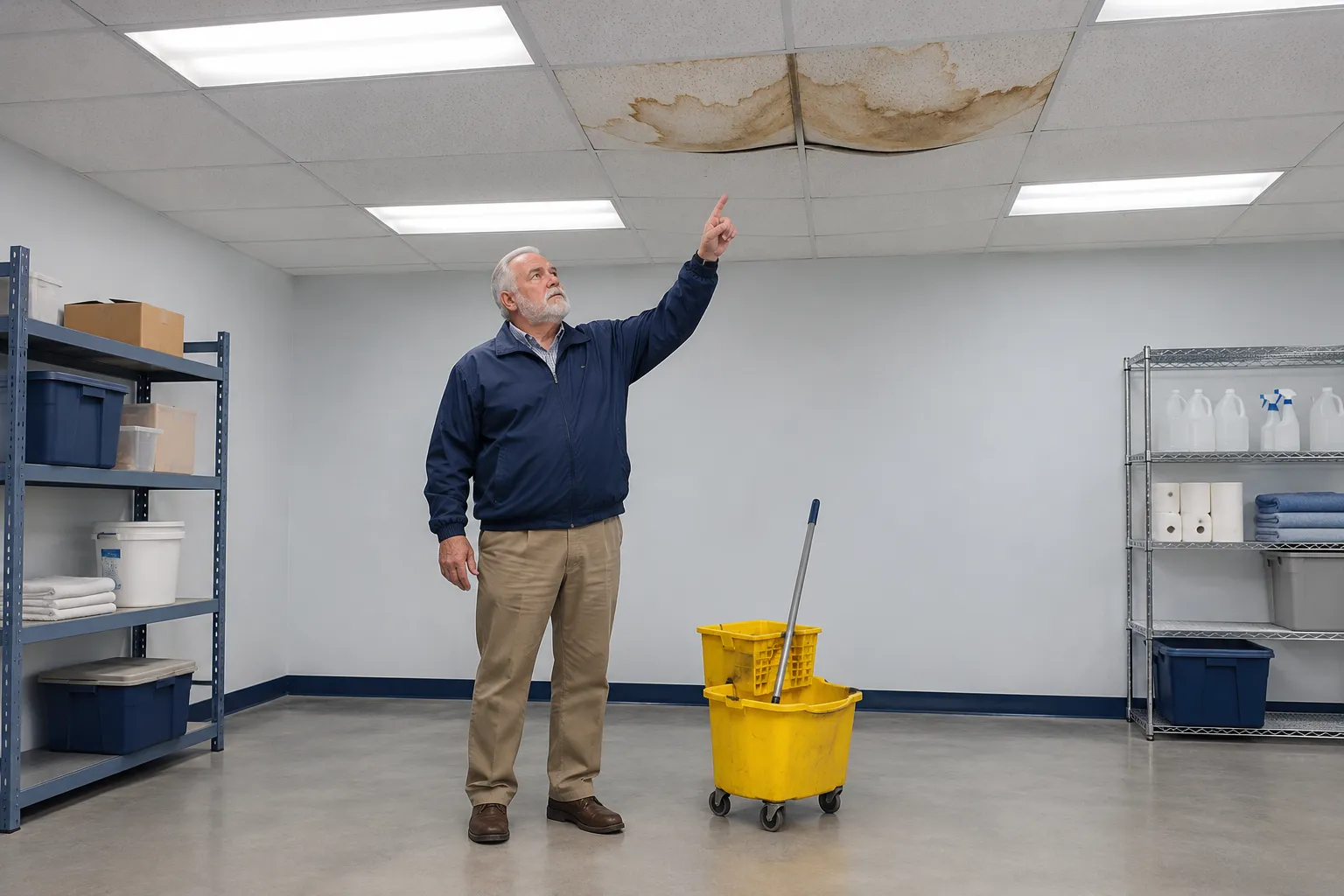
Steel deck rust seen overhead in more than one bay signals spreading wet insulation.
Leaks over equipment get traced and patched first, with work zones marked inside before any roof opening.
Spongy, swollen, or stained membrane forms a ring where grease or chemicals settle near discharge points.
Screws, washers, and scrap left after equipment service get stepped into the membrane.
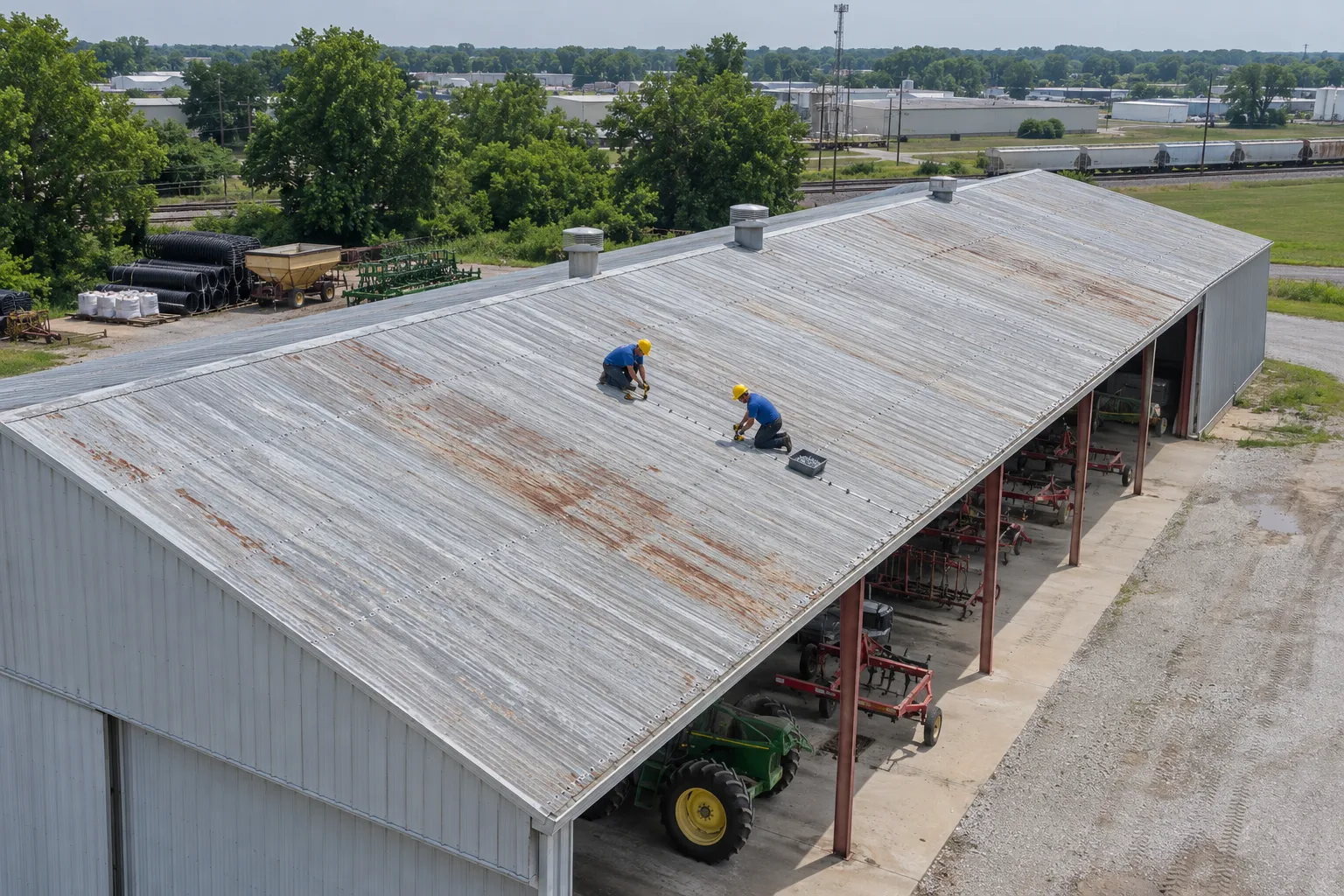
Aging translucent panels crack and leak, and they need fall protection around them during any repair.
Industrial repairs match the system on each building, membrane or metal, and the discharge it faces.

Softened or swollen membrane around fans and process vents is cut out and replaced with a sheet suited to the discharge, such as grease-resistant membrane. A containment box catches grease before it reaches the roof.

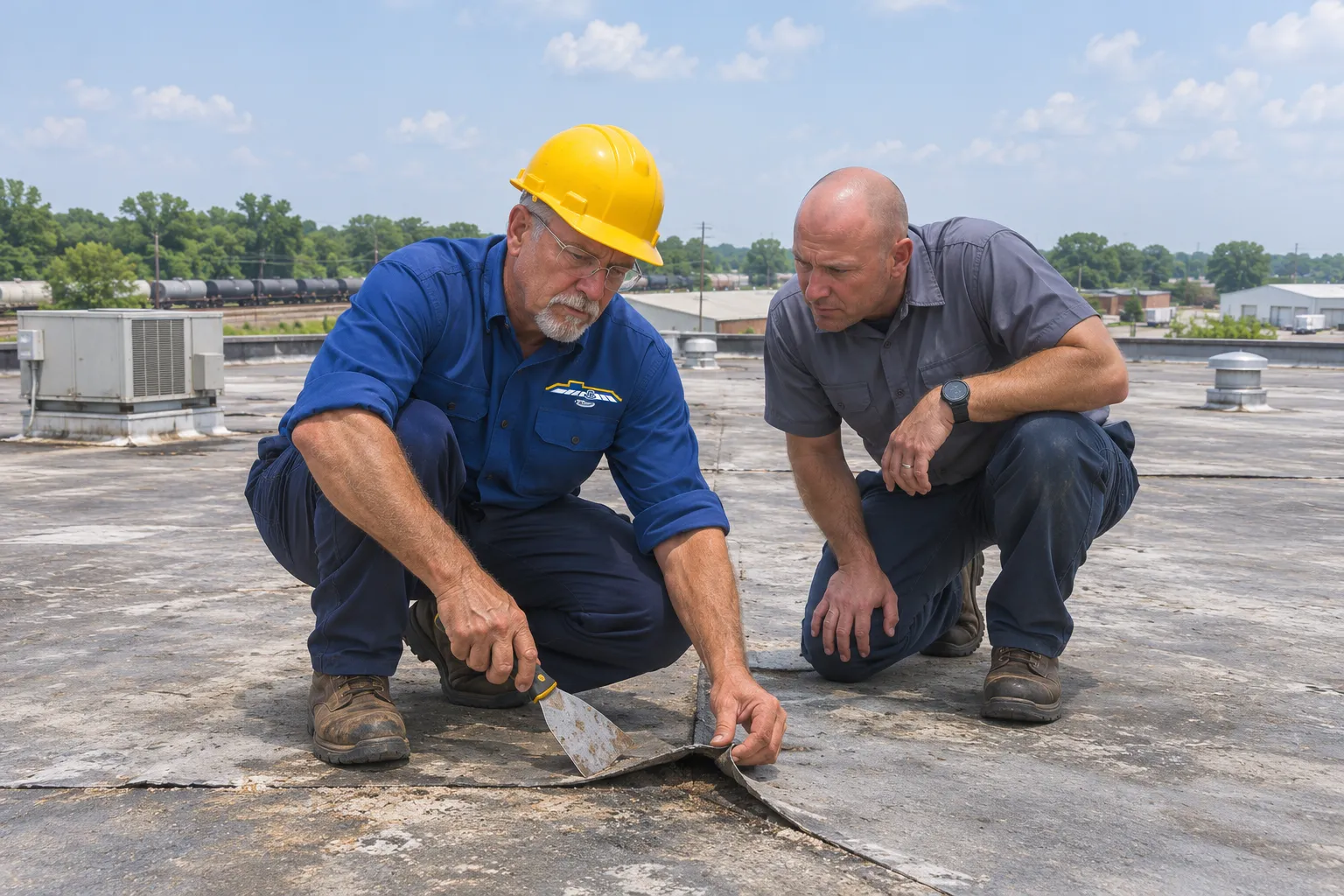
Each puncture is cleaned, dried, and covered with matching membrane after the insulation under it is checked. Walk pads to every unit and tool trays near busy equipment cut repeat damage.

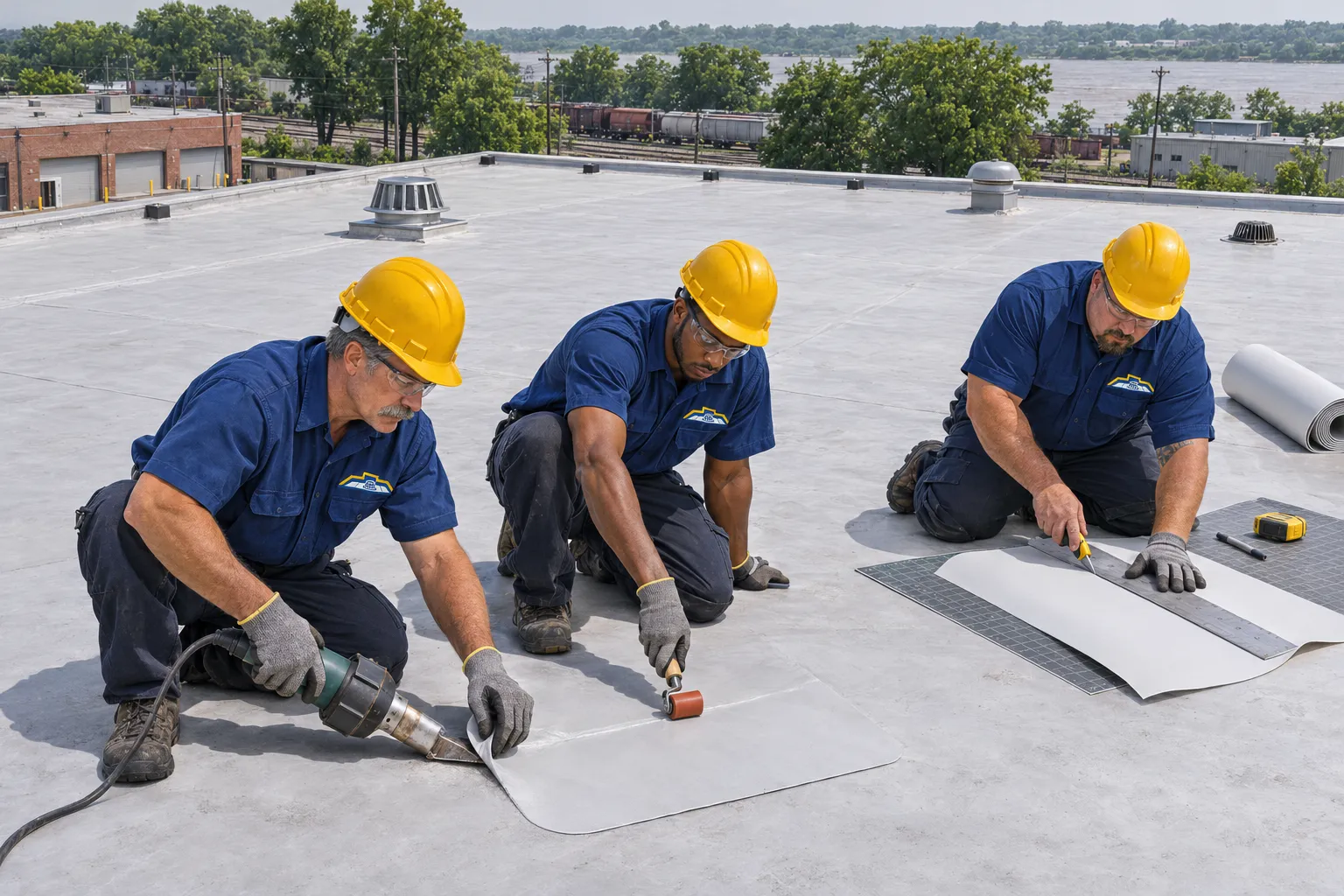
Membrane roofs get welded or taped patches, cover strips, and new boots. Metal buildings get patch plates, butyl tape and stitch screws at laps, and diverters at curbs. Many plants carry both systems.
Repairs keep a plant roof working while production carries on below it.
Small work zones, set lift times, and each roof opening sealed by the end of the day let repairs move forward without shutting down the lines below.
Grease-resistant sheet around kitchen and process exhaust stops the softening and swelling that ordinary membrane suffers at fan curbs.
Walk pads, tool trays, and swept service areas cut down the punctures that equipment visits leave in the membrane around rooftop units.
Repairing punctures and curb flashing early keeps water from spreading through insulation, so a section repair stays a section repair.
Shut down or cover equipment under the drip if it is safe, mark the spot, and call us to plan roof access with plant staff.
Call UsSend the address and the roof systems on each building, and we will schedule a free inspection around your shifts.
Schedule Free InspectionPlant repairs follow the plant's safety rules from the first roof walk to the final seal.
We walk the roof with plant staff, check membrane around exhaust fans and vents, punctures along walk paths, curb flashing, and skylights, and note deck rust seen from inside.
Plant staff mark the areas inside that need protection, and the work zones, lift times for material, and fans to shut down near the work get set before any roof opens.
Hot work permits cover heat welders and torches, lockout covers nearby equipment, and fall protection goes up near skylights and roof edges before work starts.
Damaged membrane or metal is cut out and replaced with matched material, one zone at a time, and each opening is sealed before the crew leaves for the day.
Photos of each repaired area, notes on punctures and exhaust damage, and any roof sections nearing replacement go to plant management for the maintenance file.
Plants often combine flat sections, metal buildings, and leaks that need tracing.

Split seams, blisters, and ponding on TPO, EPDM, modified bitumen, and built-up plant roofs.
Flat roof repair →
Fastener rows, end laps, gutters, and rusted panels on metal warehouse and shop buildings.
Metal roof repair →
Moisture meters, infrared scans, and water tests that find where water really enters the roof.
Leak repair →Answers for plant, warehouse, and facility managers planning roof work.
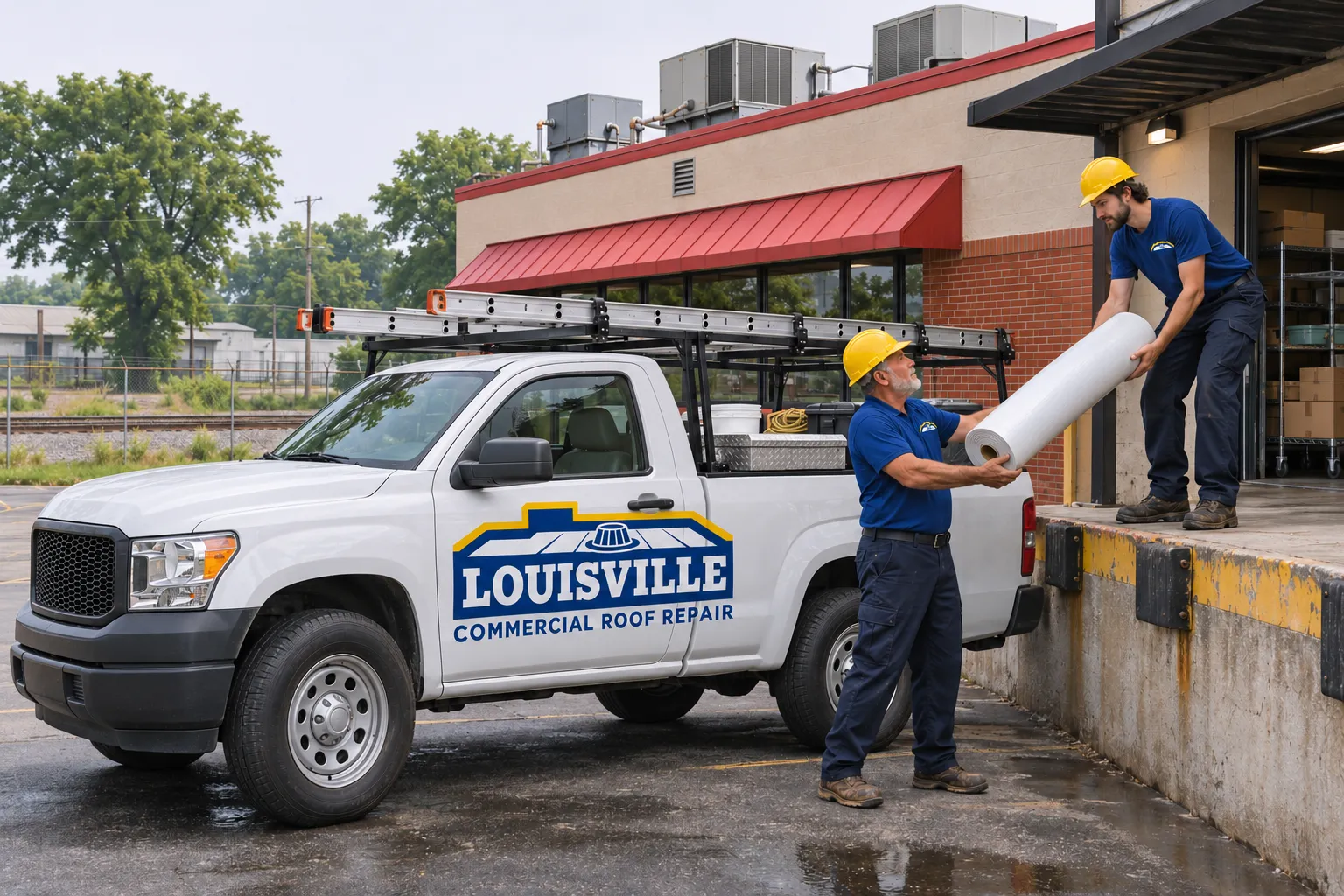
Repairs follow the plant's safety rules, including hot work permits, lockout of nearby equipment, and work zones agreed with plant staff, and they get scheduled around production and deliveries. Fall protection goes up near skylights and edges, exhaust fans near the work shut down, and material is lifted by hoist or crane at set times.
Grease, oil, or chemicals settling on the roof can soften, swell, or stain the membrane, usually in a ring around each discharge point. Signs include spongy membrane near fans, dark staining spreading from vent curbs, and cracked flashing at the fan curb base. Repairs use membrane suited to the discharge, and containment boxes catch grease before it reaches the roof.
Membrane repairs rebuild the waterproof sheet with matching material, while metal repairs reseal joints and fasteners or replace panel sections. An opening gets a welded or taped patch on membrane and a patch plate or new panel on metal.
Each puncture is cleaned, dried, and covered with a patch of matching membrane, and the insulation under the hole is checked for moisture. Service paths around equipment collect the most damage.
Once wet insulation spreads across large areas or the deck has corroded through, patching keeps chasing leaks that come back. Watch for infrared scans showing wide wet areas, deck rust visible inside in several bays, leaks at new spots each month, and membrane shrinking and splitting at many seams.
Tell us about the buildings, the roof systems, and the shifts to work around. We will set up a free inspection and a written estimate.