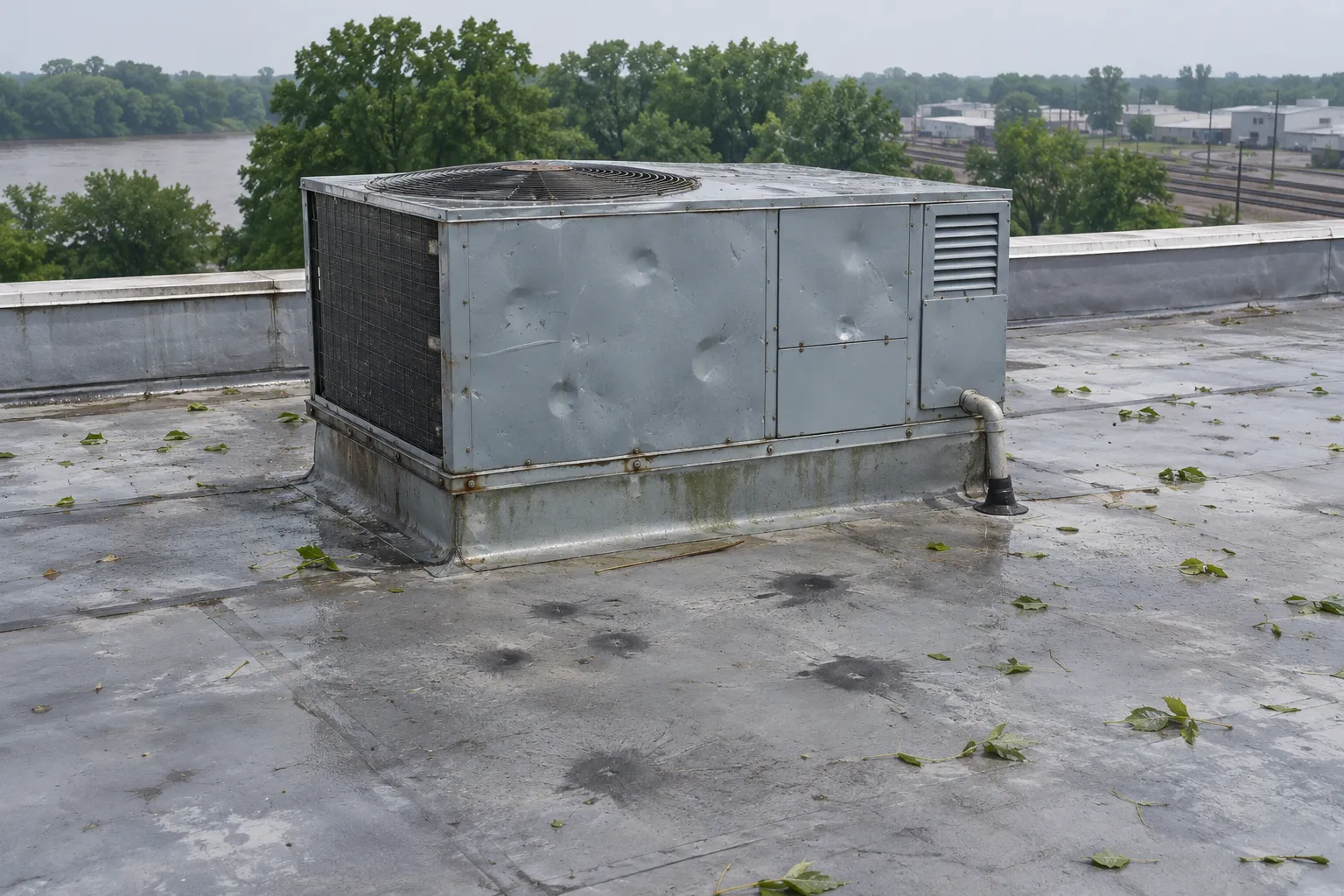
Flat Roof Repair
TPO, EPDM, modified bitumen, and built-up roofs get seam patches, new base and curb flashing, reset drains, and tapered crickets where water ponds against a curb.
See flat roof repair →
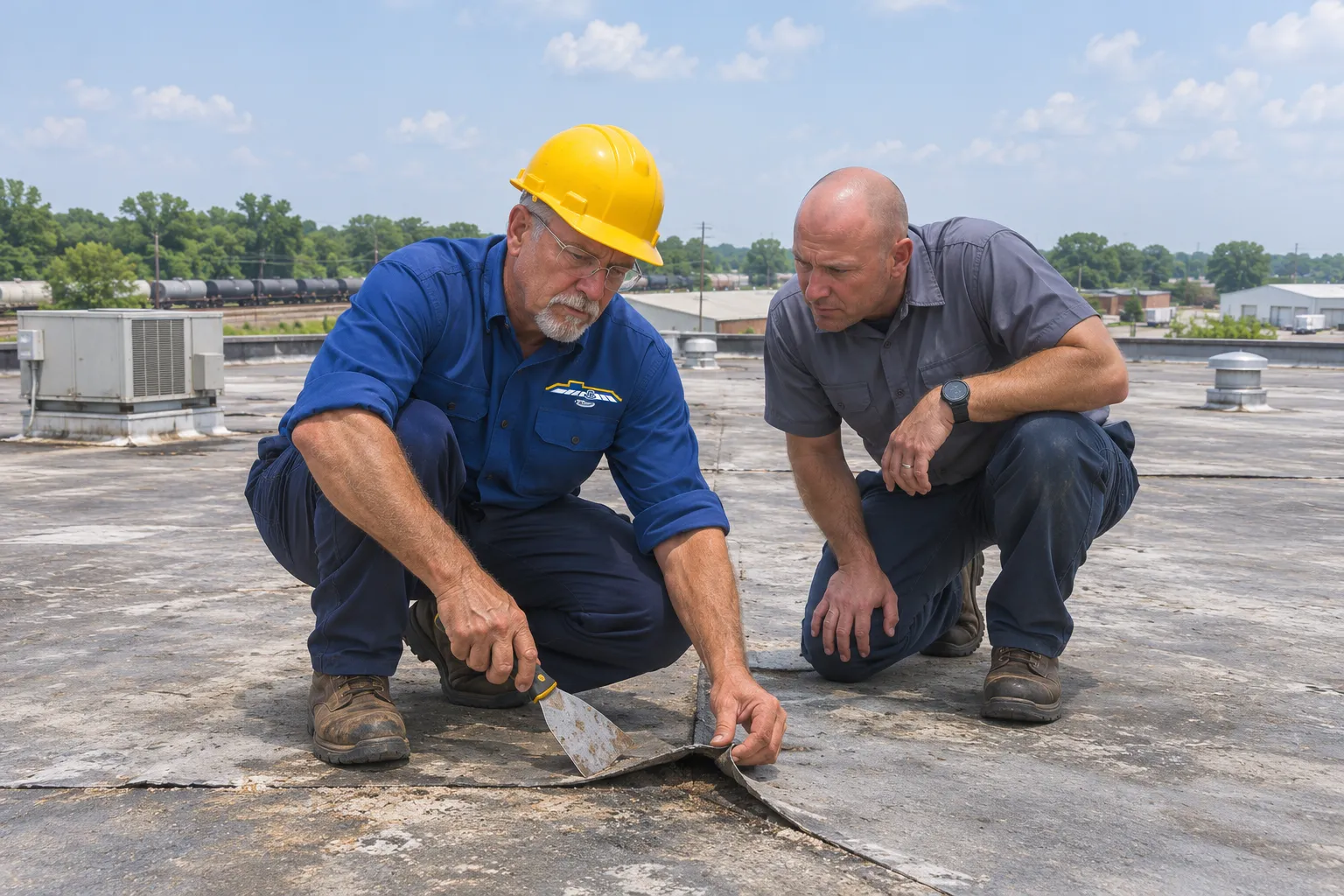
We provide commercial roof repair services in Louisville for flat, metal, leaking, and industrial roofs, fixing the failed details so the rest of the roof stays in service.
These commercial roof repair services in Louisville cover the roofs on shops, offices, warehouses, and plants. Start with the card that matches the roof over your leak.
TPO, EPDM, modified bitumen, and built-up roofs get seam patches, new base and curb flashing, reset drains, and tapered crickets where water ponds against a curb.
See flat roof repair →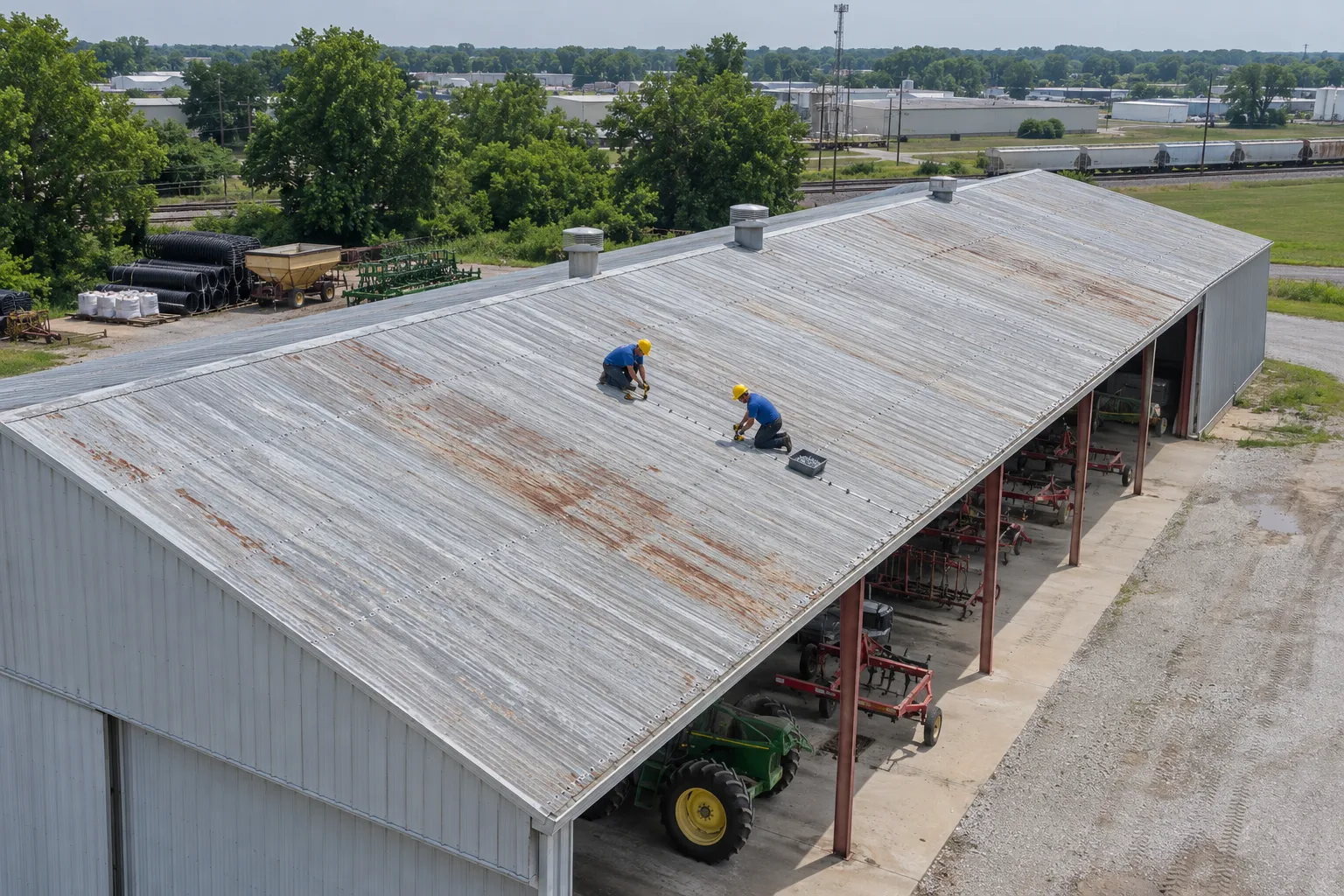
R-panel and standing seam roofs get oversized fasteners, resealed end laps, patch plates over rust holes, matching skylight panels, and new ridge closures.
See metal roof repair →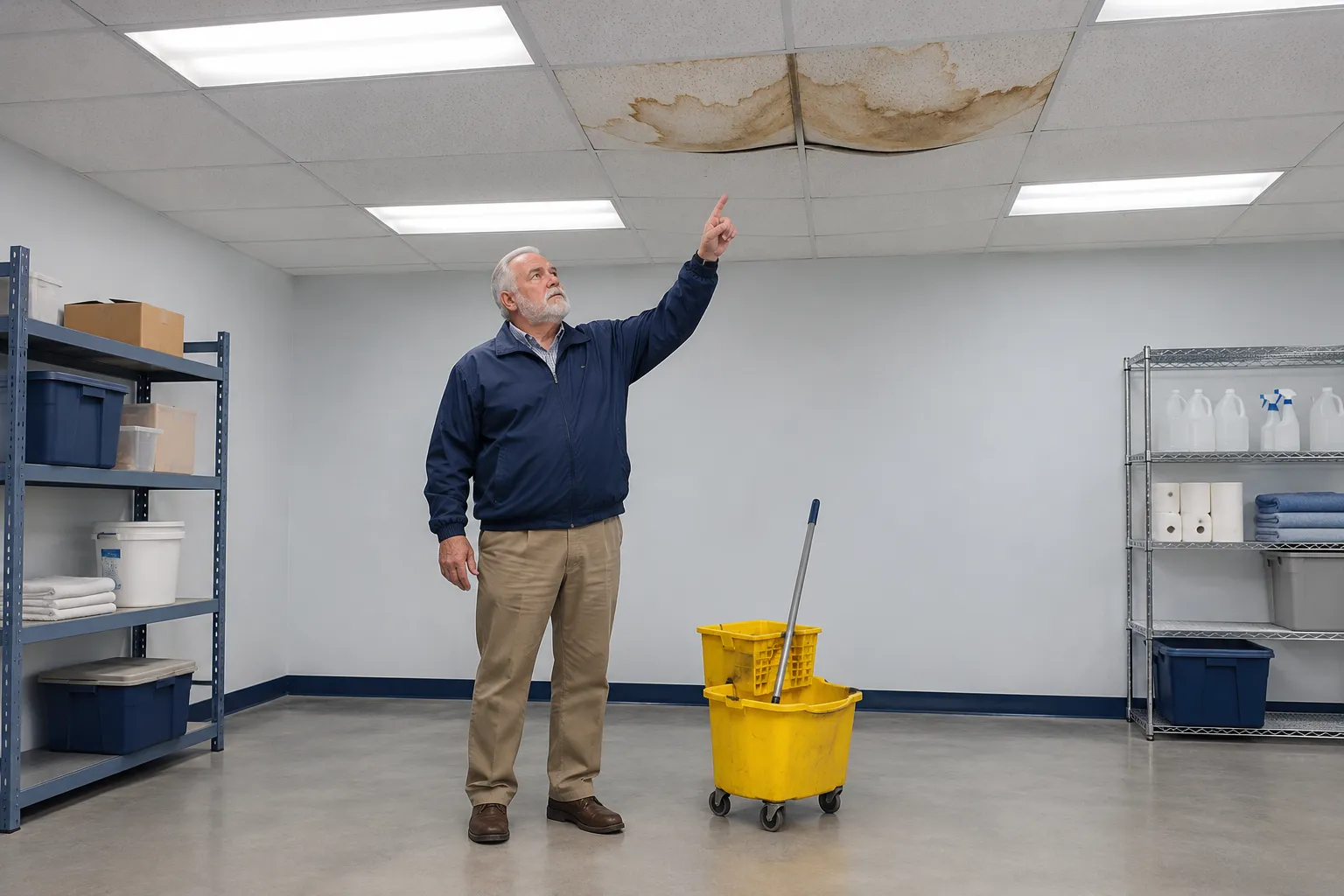
Stains, drips, and wet ceiling tile get traced uphill to the failed seam, curb, pitch pan, or counterflashing, then that single detail gets rebuilt.
See leak repair →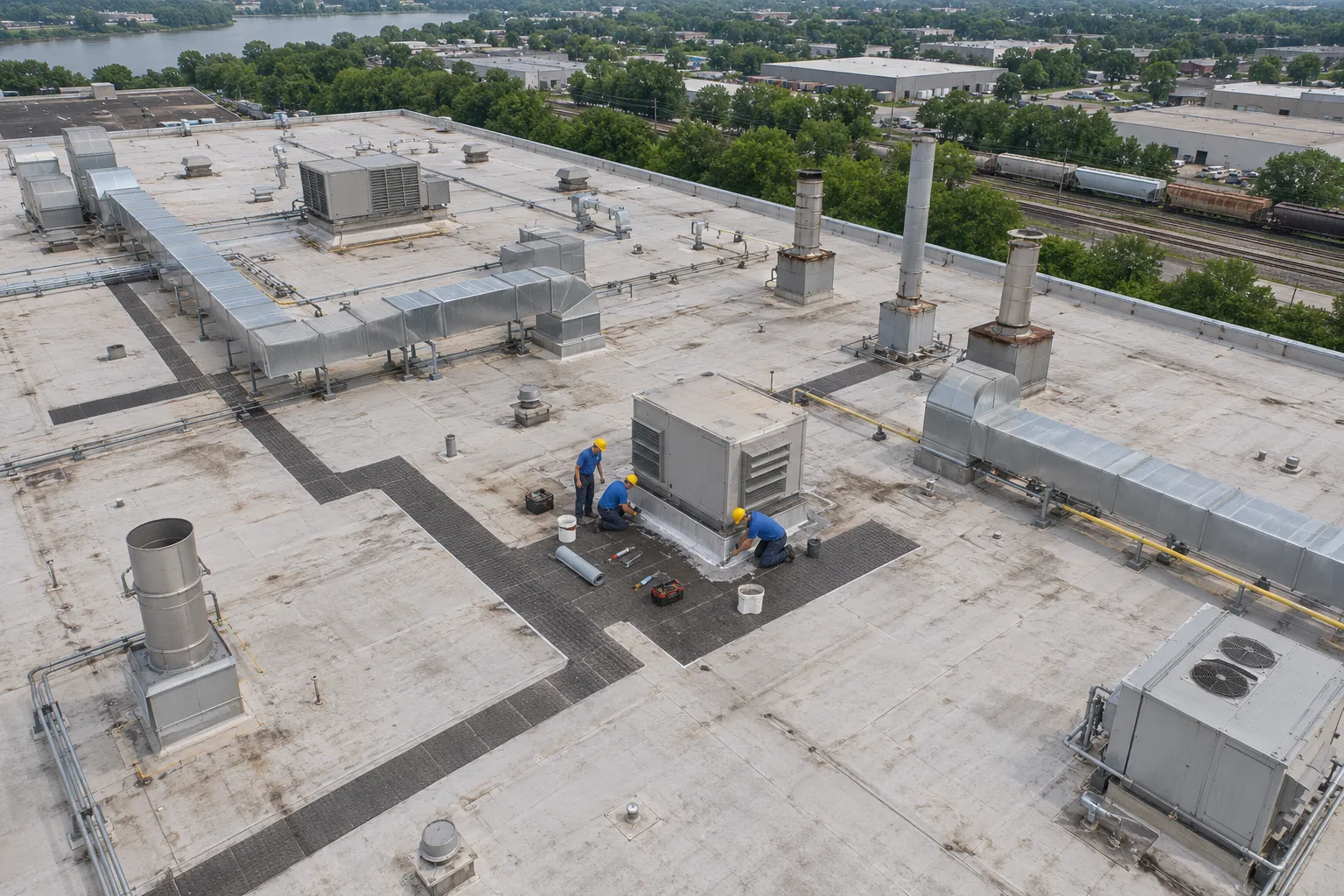
Plant and warehouse roofs get repairs scheduled around production, with hot work permits, exhaust-resistant membrane, and walk pads along service paths.
See industrial roof repair →A temporary patch buys time during bad weather. A permanent repair rebuilds the failed detail, and restoration treats a whole weathered roof that is still dry underneath.
A patch that failed in the last storm needs a fresh look before the next one. Call us and tell us where the drip shows up inside.
Call UsSeveral small repairs on one roof can be handled in a single visit. Send us the address and we will schedule a free inspection.
Get An EstimateEach service follows one work order, so a flat roof seam and a metal roof lap get the same order of checks.
Every repair begins with a walk of the roof and the rooms below it, matching each stain to the seams, curbs, and drains above. Roof age, system type, and past repair invoices help narrow the search.
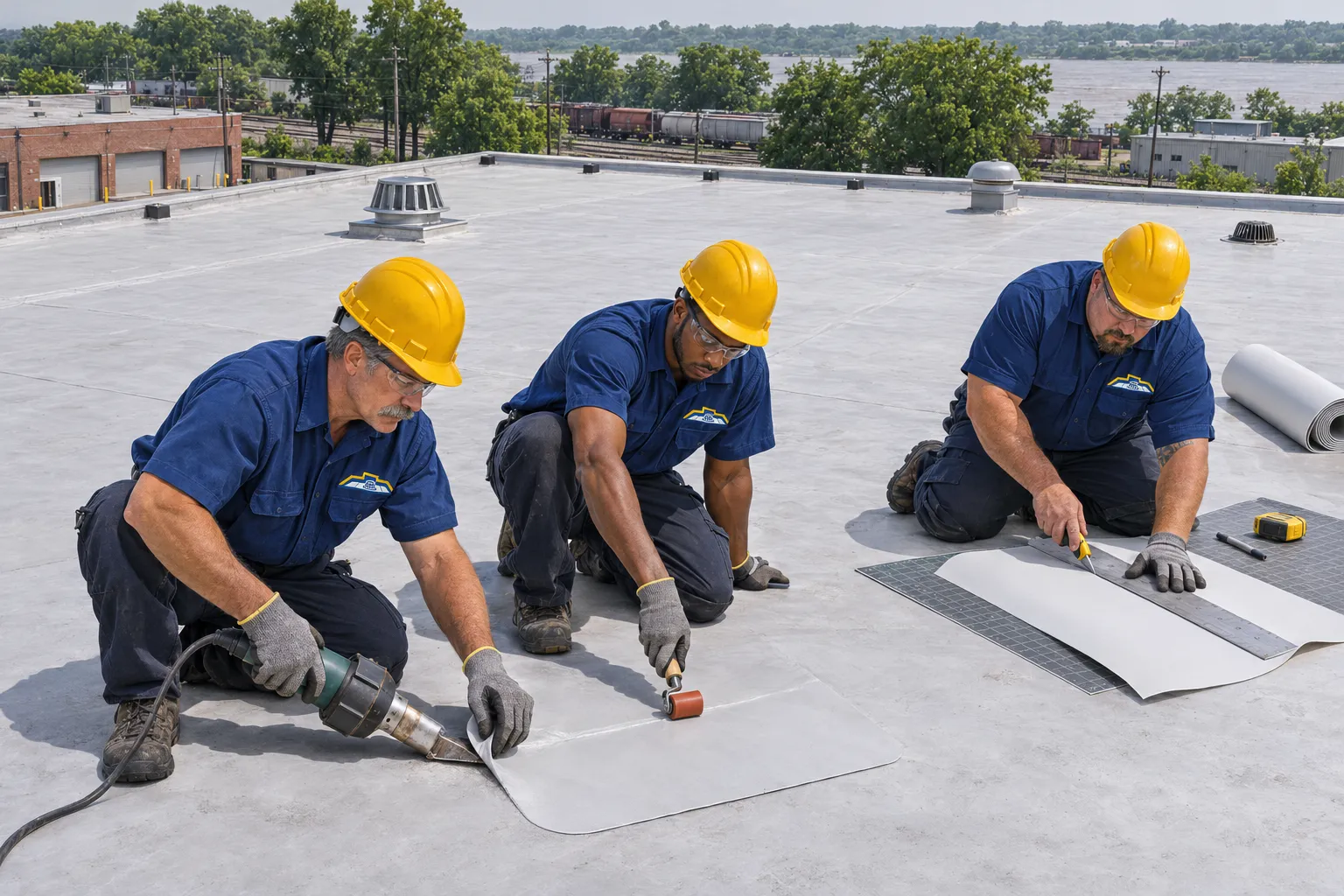
Damaged seams, punctures, loose fasteners, and cracked flashing get chalk marks and photos, so you see the full list before any material is cut or removed.
You get a written estimate that separates permanent repairs from temporary patches and flags any section where wet insulation points toward restoration or replacement.
TPO gets heat-welded patches, EPDM gets primer and seam tape, metal gets butyl tape and stitch screws, and every opening is closed before the crew leaves.
After the next steady rain, the ceiling spots under each repaired seam or curb are checked again, and any remaining wet area points back to the next roof detail upslope.
These answers cover the decision every owner faces when the same roof keeps leaking.
Isolated damage on an otherwise dry roof calls for repair. A roof that is weathering evenly but still dry underneath fits restoration, and wet insulation or a failing deck across large areas points to replacement. Moisture readings and cores settle the question, and one building can need repair on one section and replacement on another.
Only for a short stretch. Temporary patches go on wet or cold surfaces with mastic or peel-and-stick tape to slow water during bad weather. Mastic smeared over a seam can trap moisture, so the patch is marked on a roof plan and replaced with a permanent repair, using matching material on a clean, primed surface, once the roof dries.
Once leaks keep showing up in new spots and wet insulation keeps spreading, ongoing repairs usually cost more than restoring or replacing those sections. Compare repair spending over the last few years with infrared scan results, the number of separate leak locations, and seam condition across the roof. Dry insulation with scattered problems still favors repair or restoration.
Yes. Many Louisville properties have a flat section, a metal addition, and an older built-up area on one building. Grouping the seam patches, fastener replacement, and flashing work into one visit keeps lift rental and setup in one trip, and the matching material for each system comes on the same truck.
Repair work covers TPO and EPDM single-ply membranes, modified bitumen, built-up roofs, exposed-fastener R-panel metal, and standing seam metal. Older buildings with additions often carry three of these on one roof, so each section gets checked for its own weak points, from cold welds on TPO to lifted seam tape on EPDM.
We do. Repair work starts from the roof as it stands, whoever installed it. We identify the membrane or panel type, check how seams and flashings were built, and match the repair material to that system, so patches bond and laps stay tight against the existing roof.
Tell us which roof system you have and where it leaks. We will set up a free inspection and a written estimate for the repair.