Built-Up Roofs
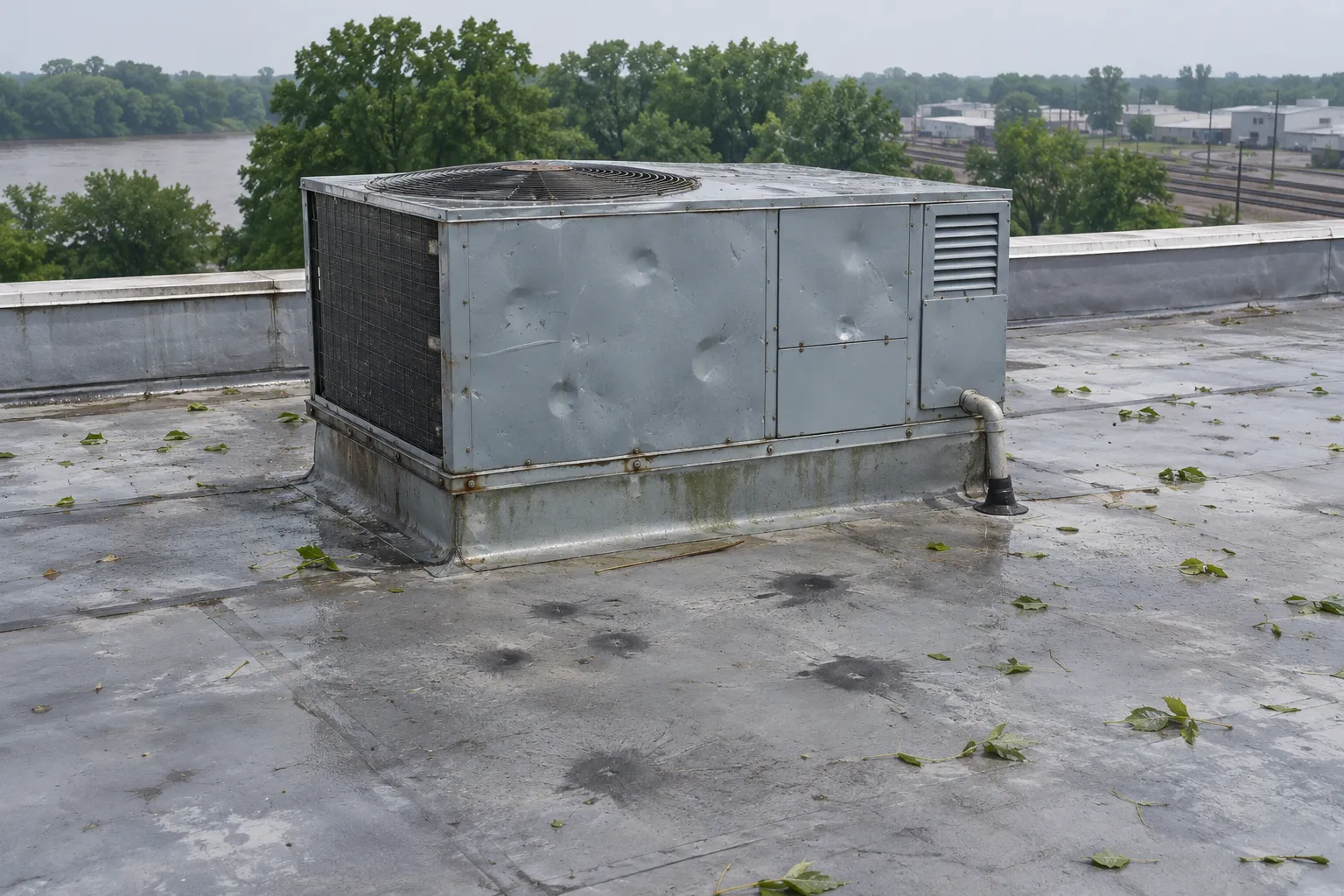
Tar Over Flashing Repair
Tar over flashing repair in Shively means scraping off the old layers, checking the base flashing underneath, and rebuilding it with compatible membrane so the seam can actually bond.

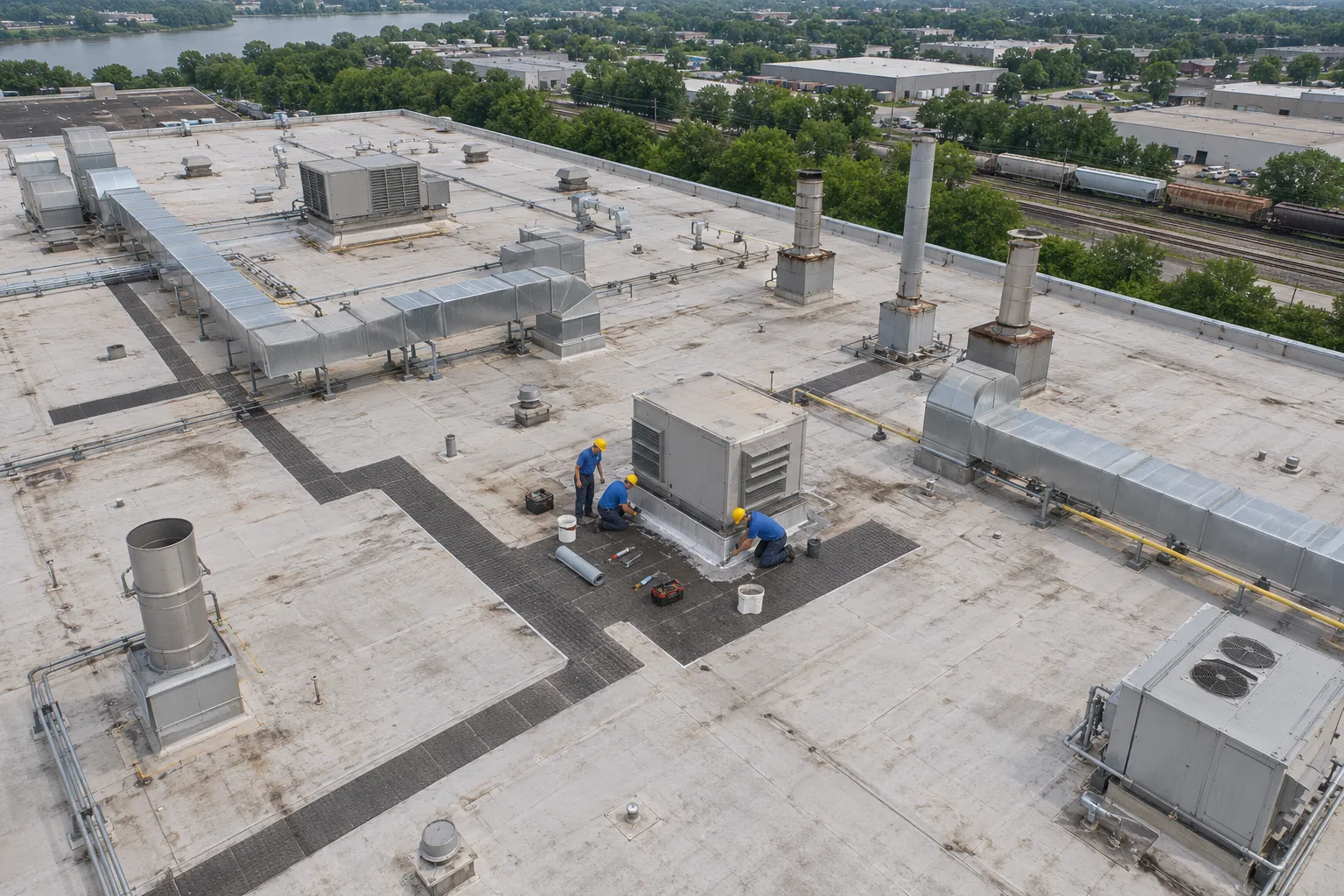
Working as a Shively commercial roof repair contractor, we repair older industrial and commercial roofs where one building carries several roof systems.
Calls to a Shively commercial roof repair contractor often lead to a building that grew in stages. Shively dates to 1938, and its older industrial buildings, near names like the Stitzel-Weller and Michter's distilleries, picked up additions with whatever roof was common at the time.
Each place where built-up roofing meets metal panels, or metal meets single-ply membrane, is a joint that moves differently on each side. Those transitions are where most of the leaks on these buildings start.
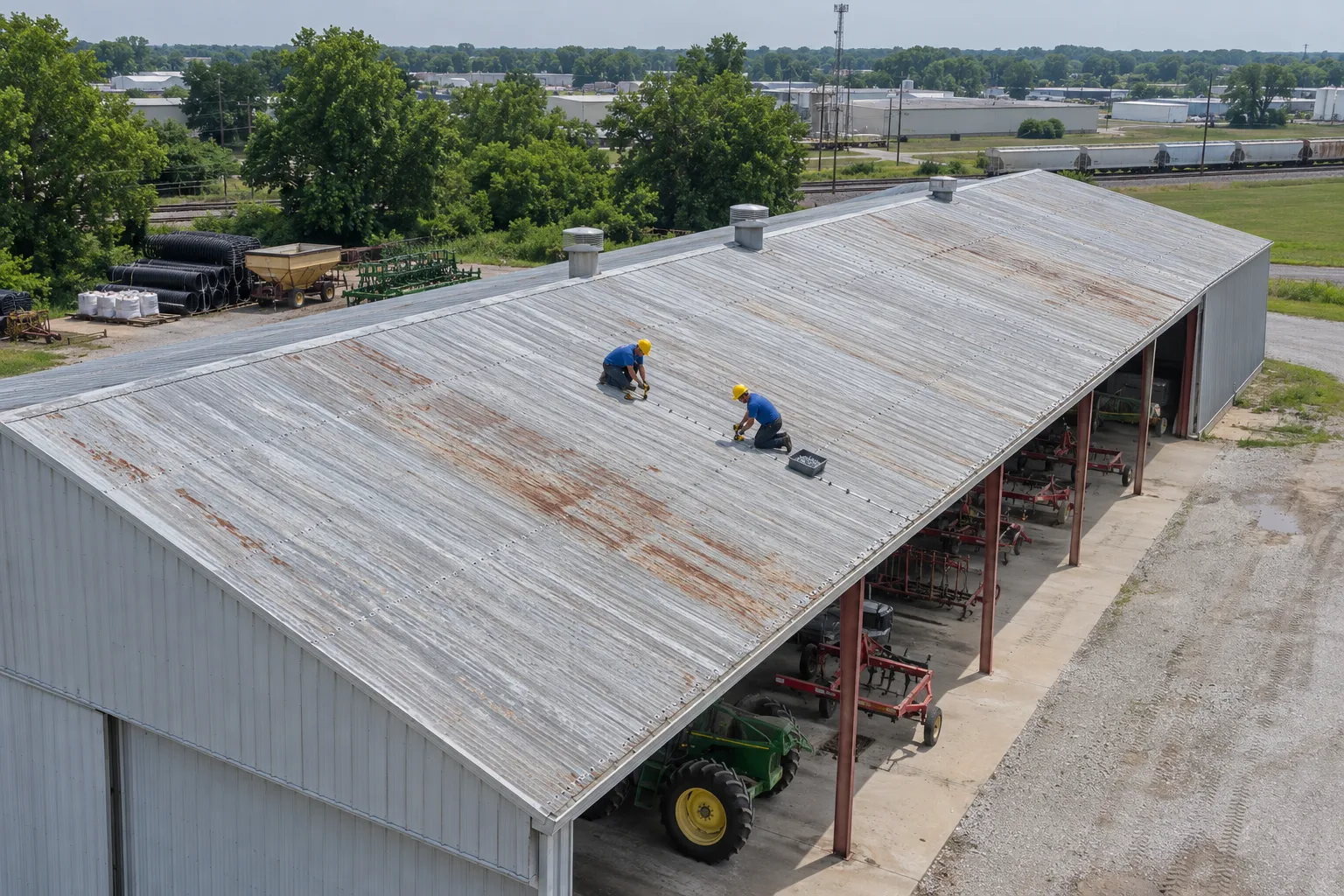
Older plant roofs show their transitions in a few places. These signs point to the joint where two systems meet.
Orange streaks where an addition meets the original wall trace to rusted roof-to-wall flashing above.
Water spilling where two roof levels drain into one gutter shows an outlet sized for half the roof.
Ceiling marks that stop at an interior wall often follow the line of an old exterior wall below the transition.
Water running down a stack pipe inside points to a cracked pitch pan where it exits the roof.
Tar smeared over single-ply or metal hides open seams and holds water against the surface.
The strip joining built-up roofing to metal panels tears as each side expands at its own rate.
Sealant inside the pans shrinks and pulls away from the pipe, opening a path straight down.
Repairing the transitions keeps an older building running without tearing off every roof on it. These are the places the work pays off.
New flashing built for both materials lets a built-up section and a metal section move on their own without tearing the joint between them.
Replacing dried pitch pans with taller pans or proper pipe boots stops water from following stacks and supports into the plant.
Cleaning and resealing roof-to-wall flashing where an addition meets the original building slows the rust before it eats through the metal.
Mapping which system covers which section gives the owner a plan for repairs now and for the areas heading toward replacement.
Older industrial roofs in Shively need repairs matched to each system on the building. These are the three most common.
Tar over flashing repair in Shively means scraping off the old layers, checking the base flashing underneath, and rebuilding it with compatible membrane so the seam can actually bond.
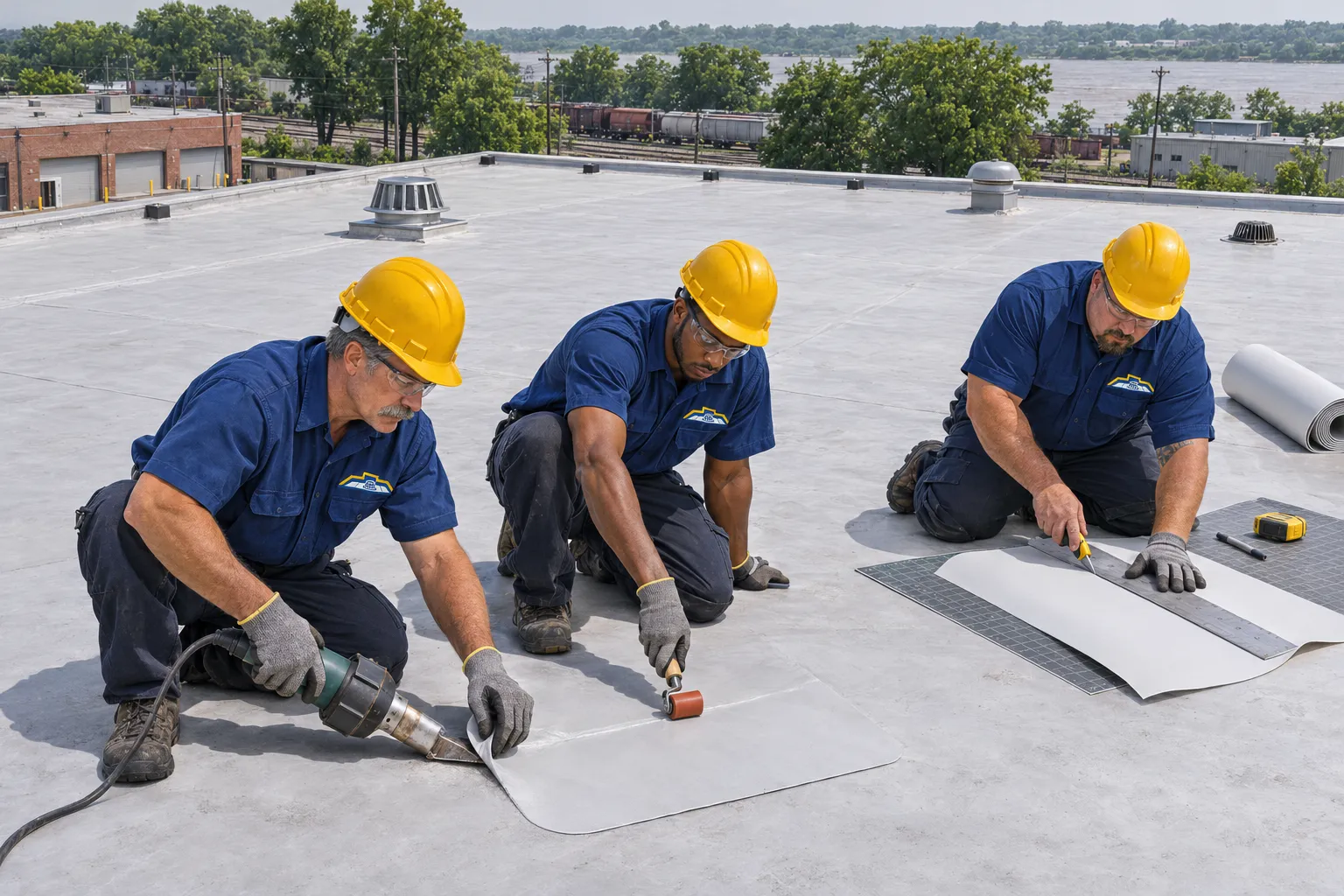
Roof system transitions at building additions in Shively KY get new transition flashing and a sealed cover strip so the two materials can move without splitting.
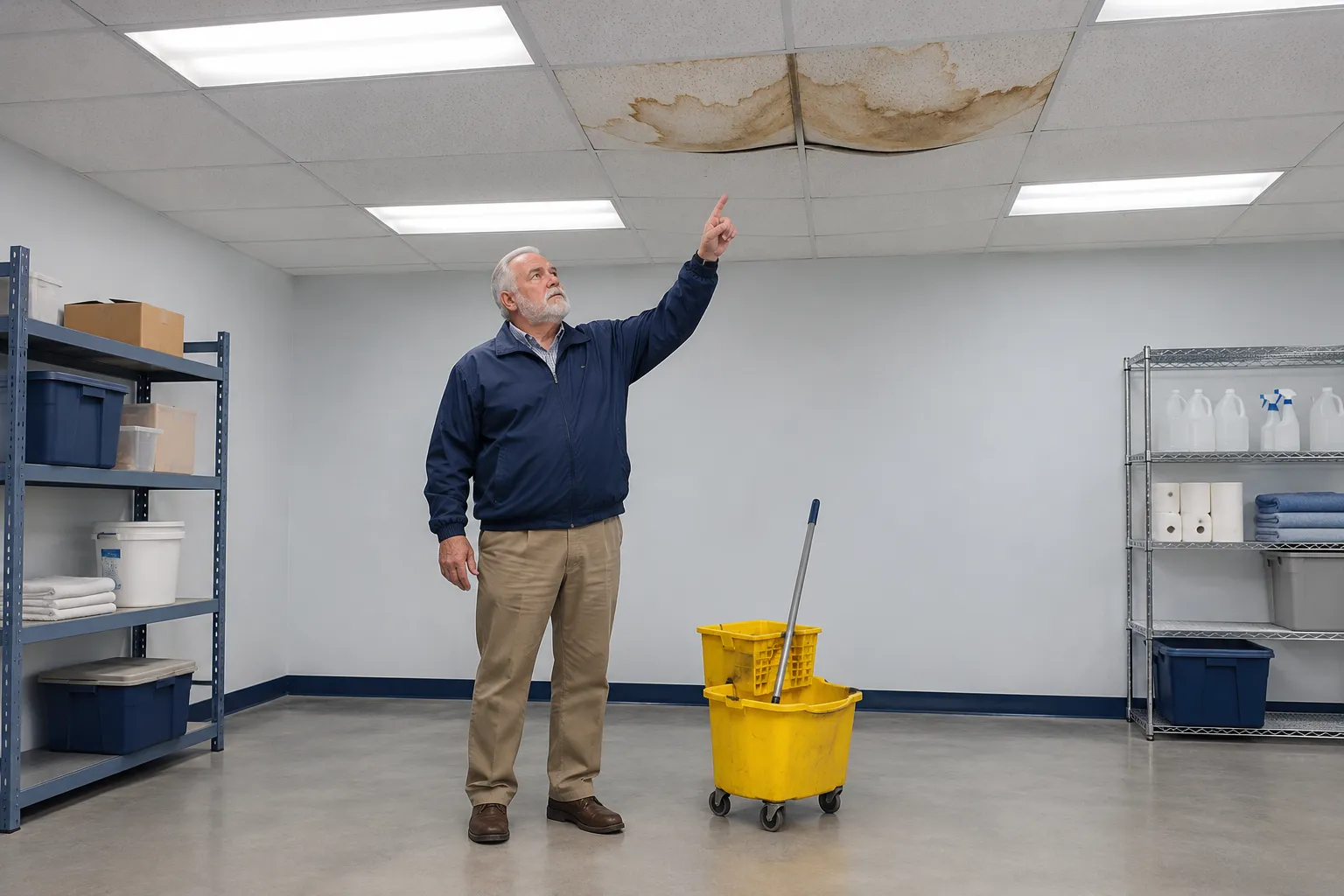
Cracked pitch pans get cleaned and refilled, raised when the filler sits low, or swapped for a curb or pipe boot when the support allows it.
Move product and equipment away from the drip and note which addition it is under. Then call us to line up a repair.
Call UsSend the address and which parts of the building were added later, and we will set up a free inspection.
Schedule Free InspectionOlder roofs with several systems get worked one section at a time, in this order.
We walk every roof section, note where each system starts and stops, and check the transitions, pitch pans, and roof-to-wall flashing above each leak.
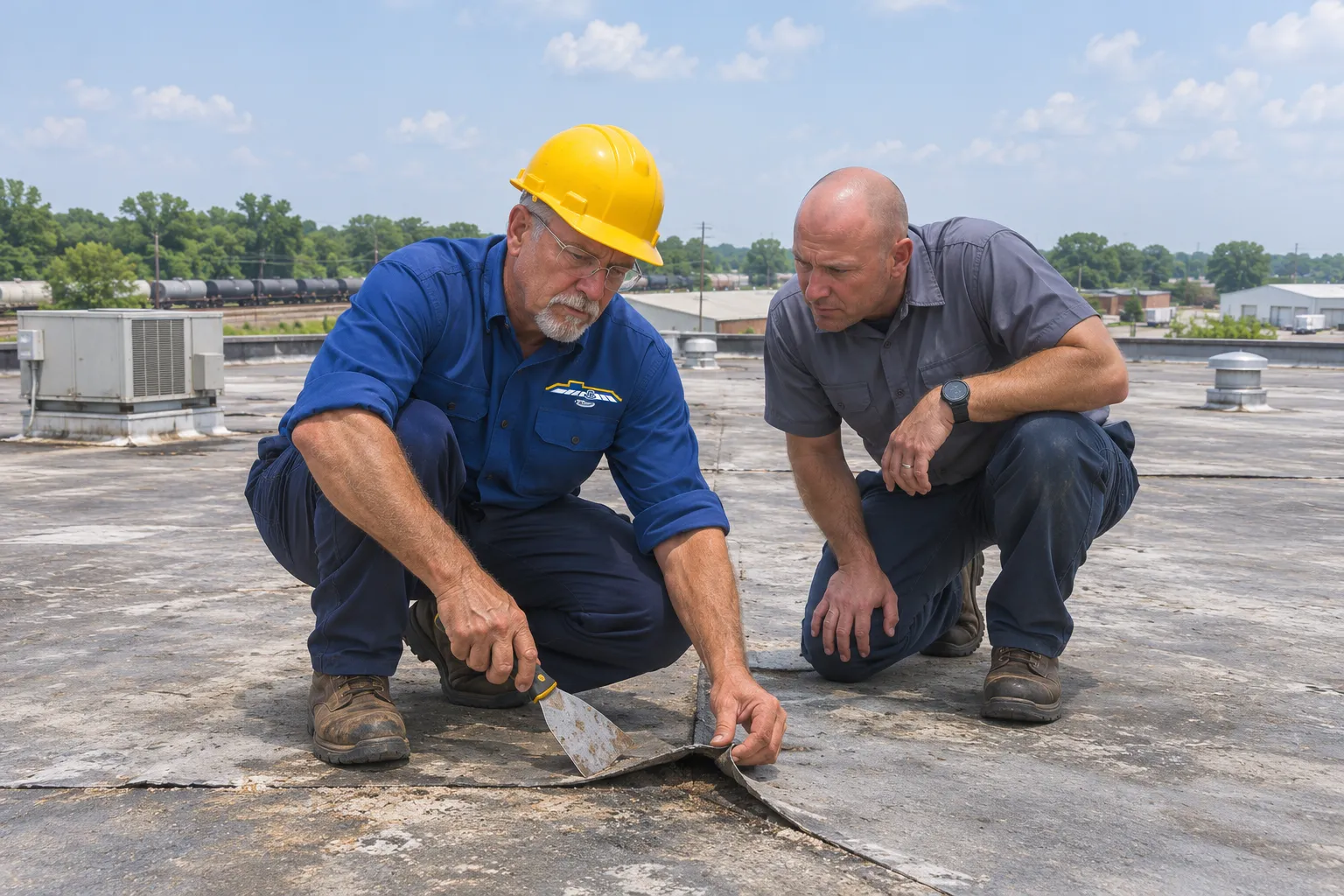
A simple sketch shows which addition carries built-up, metal, or single-ply roofing, so each repair uses material that matches the section it sits on.
Tar and mastic over flashing and screw heads come off, and torn-off material goes straight into a covered container, since Shively Code Enforcement lists debris among its frequent violations.
Transition flashing, pitch pans, and wall flashing are rebuilt with materials compatible with both sides, then seams nearby are probed and patched.
Photos and notes for each roof section show what was repaired and which areas are heading toward restoration or replacement.
Does your building sit beyond Shively? We repair commercial roofs in every town listed below; for a property anywhere else, call us or send us a message.
Retail and office roofs crowded with rooftop units and coping.
Storm leak patches now, section repairs after registration.
Sign brackets, dish mounts, and conduit through older roofs.
Warehouse skylights, fastener rows, and truck-court gutters.
Edge metal, coping caps, and gutter straps after wind.
Office and retail roofs, city permit desk first.
Gutters and downspouts on low ground near the Salt River.
Metal roofs stripped of earlier fixes before resealing.
Answers for owners and managers of older industrial buildings in Shively.
Repairs on older Shively industrial roofs usually turn up generations of patches, abandoned curbs, and roof systems that change from one addition to the next. Common findings include thick tar over base flashing and screw heads, rust at roof-to-wall flashing, and vent stacks sitting in dried pitch pans. Shively dates to 1938.
Louisville Metro IPL issues the building permit, and Shively asks for its own Compliance Certificate as the local step. Ask the city about your specific repair before work starts, since larger section repairs are the likeliest to need the full process.
Two different roof systems meet at that line, and each one expands and contracts at its own rate. The flashing between them tears, and rust forms where water sits against the wall. Rebuilding the transition with flashing made for both materials stops most of these leaks.
Old tar patches come off in the area being repaired. New sealant and membrane bond only to clean material, and tar smeared over a seam often traps water underneath. Patches outside the repair area are photographed and noted so the owner knows where the next problems are likely to show.
Torn-off patch material, old flashing, and scrap go into a covered container right away. Shively Code Enforcement names debris as a frequent violation, so nothing is left loose on the roof or the lot when work stops each day.
Yes, in most cases. Repairs are done one roof section at a time, with the area below marked and protected by plant staff before any membrane is opened. Each opening is sealed before the crew leaves, so production under the rest of the roof continues.
Tell us which addition the leak sits under and what roof covers it. We will set up a free inspection and a written estimate.